← All episodes
Walk-Ins Welcome · Ep. 238
Ep. 238: Can a Virtual Front Desk Fix Your Urgent Care Staffing Problems? – Interview Mark & Wendy Lucas, HiBridge
About this Episode
Front desk staffing has become one of the biggest operational challenges in urgent care. Rising labor costs, turnover, missed calls, and increasing patient expectations are forcing clinics to rethink how they operate.
In this episode of Walk-Ins Welcome, Nick and Michael sit down with Mark and Wendy Lucas, co-founders of HiBridge, to discuss how a virtual front desk can help clinics improve patient service while reducing staffing challenges. Drawing from decades of healthcare and business experience, they explain how remote reception teams, centralized workflows, and AI are changing the future of the front desk without replacing the human touch.
If your clinic is struggling to hire, retain, or manage front desk staff, this episode offers a practical look at a new model that's helping healthcare organizations improve efficiency and patient experience.
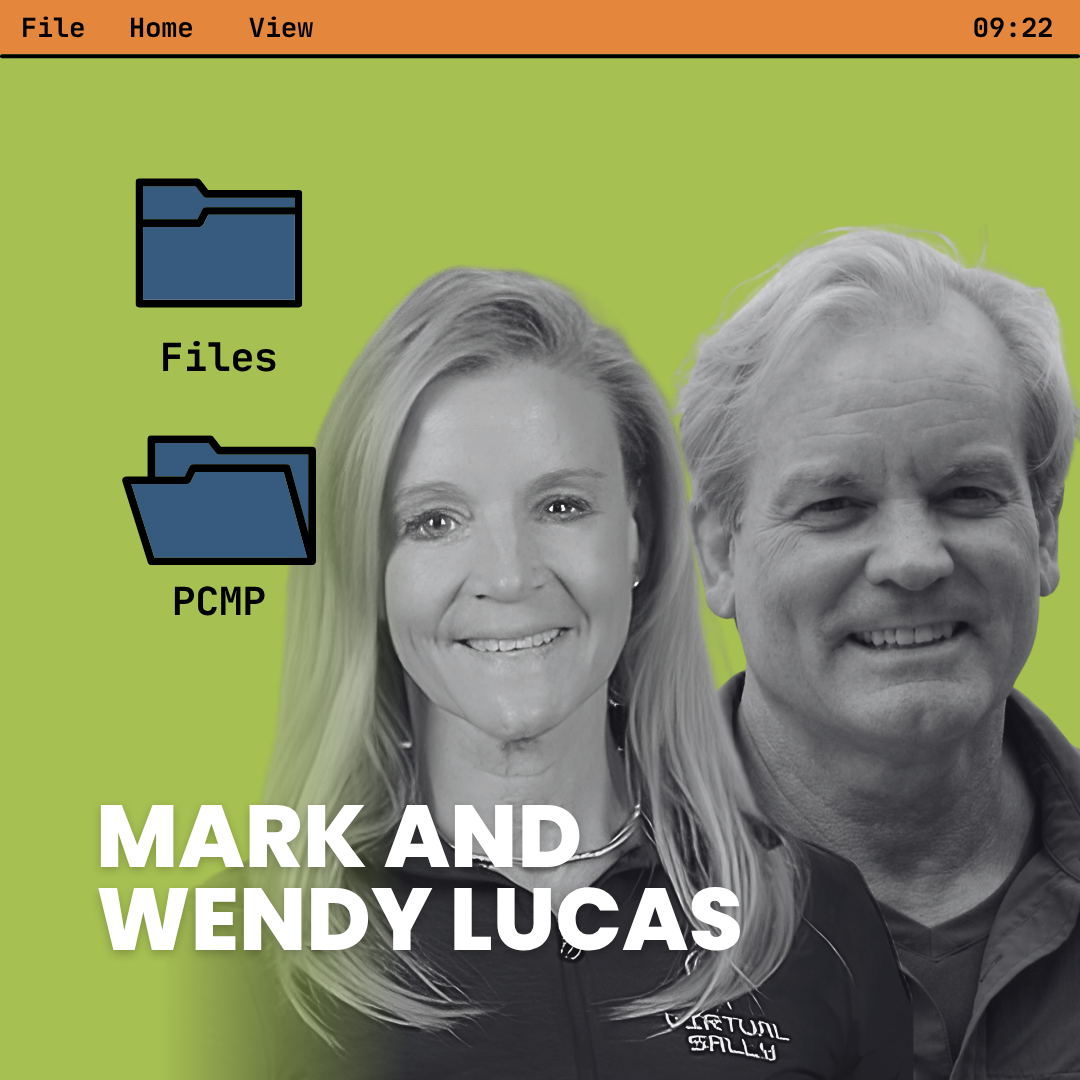
This Episode's Guest
Mark and Wendy Lucas
Co-Founders, HiBridge
Mark and Wendy Lucas are the co-founders of HiBridge, a patented virtual front desk platform serving healthcare organizations across the U.S. and Canada. Wendy previously co-founded and operated a 10-location physical therapy practice, while Mark is a serial entrepreneur with experience in healthcare, technology, and business. Together, they created HiBridge to help practices improve patient experience while reducing front desk costs. Learn more about HiBridge: https://www.hibridge.live/
Medicine probably will be one of the last places for AI to completely take over because people have a lot of ailments, they have pain, they just want that compassion and that human touch.
Watch the Episode
Episode Transcript
PCMP (00:00.918)
Hey, what's going on, everybody? You're listening to another episode of Walkins Welcome with Nick and Michael, brought to you by Patient Care Marketing Pros. We're pumped to have some guests on the podcast today. I know we like to have a lot of conversation around front desk, front desk woes, and front desk solutions. So that's what we're gonna be doing today. But Michael, what's going on, man? How are you? It is we are I feel like we are in the wettest summer I've ever been in. And this we're we're here in Birmingham and it has rained almost every day this month except for like yesterday. And it looks like it's gonna rain.
It's probably gonna rain today. Never ends. but no, so we have a guest on today. This is a b this this guest is very fascinating to me because, like you said, we talk about front desk problems all the time. And in and so far, generally speaking, the solutions are fire your front desk and find somebody better or retrain, or use AI all in, and that seems to be like or just live with it.
Like right. That just seems to be the options right now. Or call center, but or a call center which which those are just like it's those are hard hard to find good ones. but now we have like I call it like a hybrid almost because it's basically kind of like the best of a lot of different worlds all put together because you're having a chance to take your best people and maximize what they're doing. That's right. But it in terms of hybrids called hybrid. So hybrid is a really cool fr virtual front desk system.
And we have Mark and Wendy on today with so they they founded this back in 2015. Wendy was in the PT world for a long time. She had a practice back in 1992 up until sold in in 2020. So she's seen a lot in the medical space. I mean, it's just incredible how much can happen over that time period. I mean, so much. And then, you know, Mark on the other side, now they're married, but Mark on the other side, he's the entrepreneurial guy. Like, he's out of five guys, he has a a dumps or recycling company.
And now he has hybrid. And it's just one of these fascinating things where I feel like Wendy probably had the medical, like, this is something we should probably look at. And Mark's like, I like building businesses. Let's see what we can do and make it all mixed together. And then here we are today. So it's awesome. Mark and Wendy, so glad to have you on. Mark and Wendy Lucas is with us. Say hello to the Walk-ins, welcome audience, and tell us one thing about you that nobody knows.
Mark Lucas (02:13.1)
to go first. Hello.
Wendy Lucas (02:14.422)
Uh-oh. Mine will stun you probably. So most people don't know that I actually know and have touched and live with a not actually physically live with, but around a serial killer. Yeah. I asked. Yeah.
PCMP (02:15.467)
That's
PCMP (02:28.282)
Is the serial killer on with this now? Do you need a blink? That's encouraging.
Wendy Lucas (02:35.726)
No. This was during college. So I'm actually really good at solving problems. I found a way to exit myself from that whole not my relationship, but a friend relationship. So yeah, it's crazy that somebody would in medicine would know a serial killer other than just treating them, right? Yeah.
PCMP (02:43.383)
Now it's
PCMP (02:53.92)
my goodness, that's wild. Yeah, okay. All right, Mark.
Mark Lucas (02:57.24)
I'm not even sure I remember that one. I was like, wow. You kind of know, I was the first franchisee of five guys, Borders and Fries, ended up with 11 stores, 11 stores in Virginia, North Carolina, and I can ride a unicycle.
PCMP (03:06.063)
that's wild. Okay.
PCMP (03:11.894)
That's pretty cool. That's crazy both of which are pretty cool.
Wendy Lucas (03:13.268)
And he did in Walmart Christmas Eve. He wrote the unicycle in Walmart Christmas Eve. Yes.
Mark Lucas (03:18.828)
all around the store.
PCMP (03:18.838)
I'm gonna need I'm gonna need video evidence of that. So I need to see you on a unicycle out of five guys. Get scooping up some peanuts. Yeah. Well, we are pumped to have you on the podcast today. We talked earlier on the intro of the podcast. It's just it's such a challenge at the front desk level. just so many missed calls in the urgent care space. They they go unanswered, it's missed opportunity, it's missed revenue.
Wendy Lucas (03:21.974)
Yeah.
Mark Lucas (03:26.053)
yeah, that's right. I give you treacherous.
PCMP (03:48.061)
And a lot of times we're seeing AI answering services, which are great if you can get them to work the way you want them to. So we are fans of it, but some people do not want that. They don't want an AI solution. They want to talk to a human being. More importantly, they want a face-to-face connection. So here's I'm I'm giving you the beautiful setup. Tell us about hybrid. Tell us what the product actually is.
Mark Lucas (04:11.48)
I'll start out by telling where it came from originally, and then I'll you take over. Yeah, so back in 2015, we still had the PT clinics. my background is actually in technology. And so she had enough front desk. And she said, I want a virtual front desk. And so I got my marching orders and said, all right, we'll build it. So we built it. And it wasn't great at first. I'll be the first to admit it. But just over the years, it got better and better and better.
PCMP (04:13.952)
Love it.
Mark Lucas (04:36.664)
And by the time 2019 rolled around, we had a lot of people coming through, particular physicians that were saying, wow, you got to do something with this. And so we launched a vertical product, excuse me, a virtual product during COVID, which was perfect timing. It was really good timing. And so it kind of took off from there. So I'll let Wendy tell you what it does.
Wendy Lucas (04:56.532)
well, no. I mean, really it's just one of those things you just get tired of the problems, as you've said, you know. at the time we started the developing the product we had five offices. So as you can imagine, and two of our offices were next to urgent care, two were next to occupational medicine and one was next to ortho. So have a lot of experience around different lines of medicine, which has proven very helpful for this. But you know, exactly. It was the call outs, it was the turnover,
you know, stealing, we can tell more and more stories along those lines. But yeah, looking at what could we do to make life differently, and that's what I tell people today. It's like we've got we're in a environment where there's nothing that's impossible. As I tell our programming team, nothing's impossible. It's just how long will it take and how much will it cost to get it done? So we started thinking about life differently. And so we had three goals when we started this. And you kind of touched on them it like with AI with phone calls. A lot of people hang up on them.
Because it's very quick to see, you can quickly tell that it's AI. Now, will that get better? Yes, it will. And there are some components for it. but we wanted to keep that human touch. I think medicine probably will be one of the last places for AI to completely take over because people have a lot of ailments, they have pain, they they just aren't really what should I say, understanding of anything as they come through. They want that compassion and that human touch. We also wanted the product to be able to
Interact with anyone so the patient would not have to do anything in order for it to be just like it was if they walked in there. So our product does provide live streaming video of the waiting room. So it's as if a person sitting in your waiting rooms at at all times. it's just they can sit in every single waiting room. So it's what we call instead of a 3D human, it's a 1D human. And we can control all kinds of hardware, anything they can do, print, scan, take payments, all of those things can be done through the system.
PCMP (06:42.795)
I love that.
PCMP (06:50.924)
Well, I I and that I know you guys will need to kind of paint a visual for the podcast listeners because when I first saw it, I was like, I'm like, it's a screen per se. And there's like a mental hump you have to get over about that because I think there's like an automatic resistance. People aren't gonna talk to a screen. Well, thanks to COVID, they made that conversation a lot simpler. For sure. And then because honestly, during the the heart of COVID.
Everybody had that piece of plexiglass or whatever glass in front of them. So it was basically a screen that point because they weren't gonna hold your hand anyway. Yeah, look around. It was super effective. Super effective. Yeah. So like kind of give like a so let's for the urgent care owners that are listening, like, well, what do you mean like I can do this remotely or whatever and they can still do things? Kind of walk me through as a patient.
Mark Lucas (07:24.6)
That's right.
Mark Lucas (07:28.683)
You
Wendy Lucas (07:30.316)
Yeah.
PCMP (07:42.998)
And I'm walking into the clinic, what is a patient going to see in a hybrid?
Wendy Lucas (07:48.472)
Yeah, good great, great question because it is kind of hard to fathom because we're so used to what I call a co cold kiosk.
Where you have to touch it and basically you just get a lot of prompts and you do those things. You actually rarely ever see a face. Sometimes you will. We talk about faces in teams, but we don't think about like a kiosk. So think about those two things being together. But our system is an all-in-one computer. It has a camera, a wide angle camera at the top that's feeding live streaming video. So think about it like a security officer at a large complex. So they have each of those little screens that are showing them different places of the building.
For us, each of those screens on the reception shot is showing us live streaming video of the waiting rooms. So when a patient walks in, instead of having to wait to initiate a call or touch the screen or do anything, your receptionists can pop right up on the screen and greet them just like they would if they were sitting behind that pex plexiglass. So as soon as as soon as I see you walk through the door, I can pop on and I can say, Hi Nick, how are you doing today? Or how may I help you? And then we can and conduct business just like we always did.
Mark Lucas (08:49.57)
So there's two more.
PCMP (08:49.58)
Does it auto does it auto wake up? I'm sorry, go ahead.
Wendy Lucas (08:52.61)
Yes. Mm-hmm. It does. Yes. Yes.
Mark Lucas (08:53.048)
Go ahead. Yes.
PCMP (08:55.37)
Okay. right. You were saying something. I'm wanna I'm gonna let you speak.
Mark Lucas (08:57.944)
Yes, there's really two parts, right? So there's a clinic part and there's a receptionist part. And so the receptionist can be anywhere. I mean, we have companies that outsource to the Philippines. mean, they literally can be anywhere if they have a good internet connection, if they're fine. So on the clinic side, like Wendy said, you're seeing them visually, just like we're seeing each other right now, except it's just one person, right? And so they interact with the patient, just like a person would do sitting at the desk, the exact same way. And as Wendy said, you can take payments, we can scan credit cards or health insurance cards, we can print locally so they wouldn't need to receive.
or doctor's notes, something like that. Or they can even scan documents too. So all that can be done at the clinical side. On the receptionist side, that's where you're seeing the multi-view windows. So for instance, for us, we had 10 clinics. And so you could see a live streaming video session of each one of those 10 clinics on that same screen. So it allowed the receptions to pop in and out of your offices very efficiently. they could also see, each receptionist could see what the other ones are doing. And so if they put somebody on hold, they could see that. And all these things.
What happened for us is that because of that efficiency, we had 10 clinics, we only need three receptions to work all 10 clinics because they could utilize this, I call it a glorified switchboard on steroids. And so they can see it all. And so we cut our overhead down considerably. And the other part too is that since we only needed three receptions instead of 10, everybody has a turnover problem. And so we just said, well, we'll just pay him more. We'll pay him $3 more an hour.
then the turtle problem went away. So it served, was a lot of benefits that came from it that we didn't even anticipate upfront.
PCMP (10:33.164)
So I I wan I wanna make sure that I I reiterate what you just said. If you pay them more, the turnover slows down. Somebody needs to hear that because I feel like we've been screaming that forever. Right. Well
Mark Lucas (10:38.616)
Yes, correct. It's amazing how it
Wendy Lucas (10:39.854)
tends to
Wendy Lucas (10:44.834)
And I think it's hard when you're looking at your margins. If you're playing 10 or 12 or 15 people more, like in our case, we had anywhere between twelve twelve and fifteen to cover those offices. That's a lot of money. You pay three people a little bit more. It actually becomes far less. And actually the interesting thing too was, and I think we see it even more in this environment, they actually liked not being in the office. You know, I think we forget sometimes how beat up they get up front too. Some of the things that come at them and the urgent cares we've onboarded, the receptionists and have told us.
Man, I love this because I don't have everybody coughing on me or, you know, I'm touching their things and I'm sick all the time because, you know, the things that come in and through there and and just dealing with some of the things that, you know, we all know we have to deal with.
PCMP (11:27.724)
So I'm curious on this because I'm for like a visual standpoint, let's say we have a clinic that wants that's coming on with hybrid. Are they essentially wherever the front desk was, they're just placing this a a screen a a computer, a screen with a camera and so forth right where it was essentially? Is that the mindset usually?
Wendy Lucas (11:47.107)
Yes. Yes. They can actually set it on the countertop in front of that plexiglass if they have room. There's a variety of ways. We send them all kinds of different picture setups and access to different types of ways they may want to do it. Some of our larger clients like to embed it in a like more formal kiosk, like you may see at the airport or something like that. a lot of clients are going with a stand where the kiosk sits and then the printer scanner or whatever they need underneath of that as well.
PCMP (12:13.568)
Well, I think one thing that you guys touched on, but it's just so important is like if you went if like you said you had ten locations, which means you had at least ten receptionists at some point, and with your system you got down to three and was very efficient and like I could pay more people more. But also too, it allows you to to hire higher skilled people, which then fixes some of the experience problems that front desk can create. And which then also, like we talk about phone call stuff, like
Wendy Lucas (12:32.75)
Correct.
PCMP (12:40.524)
These people can be trained on how to convert somebody into an appointment a lot easier than somebody that's like, I'm just here to collect the paycheck and go home. so I just like there's so many interesting benefits here. That's why I was saying at the beginning of the podcast, like it's kind of like a weird hybrid where you still get to use the front desk people, but you use them in like a high performance, high efficient way. And but the burnout is not so bad because they're not sitting there like physically trying to fight with people.
Mark Lucas (13:08.161)
That's true.
Wendy Lucas (13:08.526)
Right, exactly. And exactly. And especially, you know, if you have more than one location. At one location may be getting slammed at a certain time frame and another one they're they're sitting there playing Candy Crush or something. In this system, it's not only that the you know, the the there can be a number of receptionists helping the same office. So think about it if you get a a run on a on a clinic, you would be able to just whoop, like place extra people there and then whoop put at another office. So with this system you can do that because they can see all of it. Yeah.
PCMP (13:35.554)
It's a teleportation system. So, so that opens the door to a question I'm I'm trying to trying to grasp is do I have to hire the employees myself and then put them in this kiosk situation? Or is this is this a giant boiler room full of people that are managing a hundred different clinics? yeah, help me understand that.
Mark Lucas (13:37.845)
Yeah, that's right.
Wendy Lucas (13:39.192)
Transport, yeah, walk and water.
Wendy Lucas (13:56.503)
Yeah, we can do it any way that people want. Some people do want to keep their staff. like in our case, like tell people whoever the cream of your crop are, keep them if that's who what you want to do. Some people have had it with all of their staff, just want to outsource all of it, which we can do. Some people want to keep some of their staff and utilize staffing agencies, either ones they have or ones we have. our staff is
They all work from a facility, either domestic or offshore. They're not working out of their homes. So security and HIPAA regulations are there. They're wanted before they go into the facility. So no app no smartphones, smart glasses, Apple watches, none of that stuff is there. And yes, they are trained in how to perform for front desk services, patient care. And then you if you use our staff, once you train them in your processes.
We document that for you, both video and a written documentation. So if you want to add staff, change staff, all that training after the first time, we take on. So you don't have to, I tell people you go, I'm never training again. Which everyone loves training, right? You're right. Exactly.
PCMP (14:57.57)
I love it. yeah. Or or the retrain and the retrain. And the retrain. That's right. I was gonna say it's you have to build out all these SOPs just to make sure that you train people properly. And there's the high turnover front desk. in your experience, is that a high turnover role? I thought so, but
Wendy Lucas (15:15.5)
Yes. I did a yeah, I did a podcast right after urgent care conference and I did some research for there for that. Presently there are over a hundred and eighteen thousand open health care reception positions. The turnover for that position is between forty-five and fifty percent. The cost of that turnover is between a half and two times their salary. So anywhere between twenty thousand dollars and eighty-three thousand dollars are the statistics. So
PCMP (15:34.412)
Gosh.
Wendy Lucas (15:44.822)
Most positions are turning over at least once, sometimes twice, added the tune of twenty to eighty thousand dollars. So it's expensive.
PCMP (15:53.218)
All right. Hat what do you think is driving that turnover?
Wendy Lucas (15:56.991)
I think it is competition, shortage of labor. We do know that birth rates are down. we have labor shortages, we have people, our reimbursement in healthcare is not going up, but cost of living is going up. And then we have competitors in different markets that can raise their prices to whatever. I mean, I was at a local convenience store and they're offering $24 an hour. So I mean, that's kind of hard to compete with with benefits. So when you start looking at that sort of thing, it's just
It's too hard to compete in the market with where we are. We just don't have the margins to compete.
PCMP (16:31.788)
Real. So let's well, no, there's no doubt about that. and the ones that you you do find to work constantly want more and more and more and more and more. without, I might add, adding any additional anything to them. It's kind of wild to me. Yeah. They're like, well, we want to pay twice as much money, but we don't want to do any more. If not, we want to do less. Yep. So one of the things that I've noticed on the front desk in all of the clinics that we work with is the front desk person does more than answer the phone.
Wendy Lucas (16:32.684)
And people don't want to work.
Mark Lucas (16:41.528)
Sorry.
Wendy Lucas (16:46.414)
Correct. Yeah.
Mark Lucas (16:52.312)
Exactly. That's right.
PCMP (17:01.314)
All right. so if I'm putting in a a kiosk, but I'm counting on that kiosk front desk person that I'm not paying extra three dollars an hour to to do three other jobs inside the clinic, how is this how is this tackling those type of situations?
Wendy Lucas (17:20.258)
Yeah, it's really leveraging that talent over where you're busy and not. So typically you're gonna have more than depending on your volume, and we right-size that. We know based on what you have, what efficiencies you have. So we can do a lot of like for people who want to self-check in, that takes some of the load off. We do correlate the video calls with the phone calls so that we can route phones and video calls based on your staffing.
So we do a lot of those types of things and we know how many FTEs it takes based on your volume of visits and your hours that you're open, days and hours that you're open. So we help you find that sweet spot. And then again, like I said, some people hybrid will fill in for some of those areas where in the past they just didn't have anybody up front or they were using their MA to go up front and do those things. So that they're running back and forth and you're just not creating the efficiencies that you want.
PCMP (18:09.738)
Talking the MA stuff, and one of our biggest, at least mine at least, one of our biggest pet peeves with front desk is they're not afraid at all to say, let me let the let you talk to the provider. And and then our our our push is like, no, no, no. You do that. The provider by default wants to help that person on the phone or whatever. And then they give out enough info and that patient either doesn't come in or, you know, cancels the appointment or whatever, because like, that's all I needed here. And then it's lost revenue.
And so it's just like, I don't know, I I just see it so often where like, yeah, let somebody else talk instead of me talking because I got other things I gotta do. And that goes back to the like the high school person saying folks like, no, no, this is my job first. I can't just like pawn it off as quickly as possible. Or I didn't educate myself well enough on what my clinic actually offers. We've had some comical recordings in the past of do you guys offer X ray and the front desk? I don't really know.
Wendy Lucas (19:05.718)
Yeah, that can cost you so much. And and that's a really cool thing too, as Mark was saying, that we can outsource our staffing and we're able to get high level like nursing level staff for right around twelve to fourteen dollars an hour and these people have completed nursing school. and so you really have someone who knows, you know, high level medical information. Now they'll never answer further than what you want them to do, but they are going to know what's available at your clinic.
the other nice thing about you talk about a kios being cold and those things, but when you're on this, just like we're on this call, we're engaged to this call. We're not doing other things because we know we're engaged. Versus like when you walk into most offices, they're behind that glass or that pexit glass and I always say they threaten you. They look up like, Are you are you kidding? You're interrupting what I'm doing. You really want me to talk to you? Whereas you can't do this on that. You're you know, once you're in that call, you're in that call and there's nothing there's no hiding, I guess I would say.
PCMP (20:03.011)
You know what I you're exactly right because there's such a frustration I have when I'm on a video call and it becomes apparent the person I'm on the call with is distracted and it becomes very personal to me. Like why why are we even talking if you're obviously gonna try to do something else in front of me? So
Mark Lucas (20:20.075)
is now.
Wendy Lucas (20:20.12)
Right, exactly. Yeah. And then the neat thing about our system is they actually see themselves. So the receptionist sees themselves sees their self when they're talking to you. And that actually has helped a lot of people. They're like, I never realized I did that. Or I never realized I do this every time I'm talking to somebody, you know, whatever it is. But yeah.
PCMP (20:35.683)
Right. You need like a little text overlay that says smile more, smile more, smile more.
Mark Lucas (20:40.659)
That's right. Not a good idea.
Wendy Lucas (20:41.246)
Yes. It's amazing what a smile will fix. It's so true.
PCMP (20:44.653)
Yeah. That's true. I love it. Mark, you sound like you want to chime in. I want to hear from you.
Mark Lucas (20:49.944)
Oh, no, no, I was just agreeing, laughing with what Wendy's saying, but it's, it is true. It's a tough job and we've just seen a lot of people get beat up by it. I will add one more thing too, because it's just, because I always keep pulling back to the financial stuff. But the kiosk is, when you put it in, you can put it in the window or whatever. But a lot of these clinics have a fairly large front desk office space. And so we've seen like in our practice, we actually turned all that space into treating space. And so now you're paying for it anyways.
And so why not turn into a revenue producing space instead of just having this empty space where somebody is sitting there answering phones. So that was another benefit we found is just reclaiming that space. Or if you open a new clinic, just doesn't have to be as big. We've seen some clinics with as much as 500 square feet for a front desk. And so it's a big benefit.
PCMP (21:39.246)
You know, you an interesting point there. So we just had this morning our virtual mastermind with our clients is where like urgent cares get to come on and we have issues. How can we help each other type of thing? And one of the things that were brought up, we had an urgent care that has a an office space, like a physical office space that's split with an urgent their their urgent care in their PT slash Cairo. But there's no like true they that was their issue. Like there was no true way of like, well, when you walk up to the single front desk, who are you talking to?
And what what kind of patient are you? And then and we talked about why don't you put up a physical wall? And they're like, Well, that's not the way the building is, it wouldn't work. So now I'm even thinking, like, they could install hybrid and have a d dedicated spot toward the front that would catch all the urgent care patients up front and then allow then, you know, like it would kind of separate it and the cost of that would be completely different versus like finding a new building or chopping up a building or whatever. So it's interesting, like I love the idea, like you maximizing your space.
Wendy Lucas (22:33.486)
Yes.
PCMP (22:37.537)
Where if it's like sitting there wasting a bunch of space, we can maximize it or we have a a very small bit of space, how can we make use of this very tiny spot and make it work?
Wendy Lucas (22:47.34)
Yeah, we do have some clients that do multiple things and they'll ask, are you checking in for, you know, orthopedics? Are you checking in for some of our visual? Are you checking in for contact lenses? Are you checking in for the optimum for eye appointment? So you can make options on that screen. So our welcome screen that they see before they're engaged, if you want to, can be whatever you want to design. You can actually even have it advertising for you. So
Well, patients are sitting in the waiting room and no one's at the front. It can roll like what are your new services? It's flu season. Have you gotten your flu shot? Ask your provider while you're in with them. So you can actually use it to generate revenue and business for you while it's just sitting there, which I can bet you that your front desk person is not doing.
PCMP (23:29.997)
So, Mark, backing up to let's say twenty fifteen when y'all started working on hybrids in the first place, AI wasn't really around much at that point. developing any kind of software cost an absolute fortune. And you had to maybe both of you, I don't know. So I guess the bigger question is who who brainchilded this? Like, how did this even get birthed in the first place?
Mark Lucas (23:56.341)
It was Wendy just getting mad at me one day and saying, I'm one of virtual fund death. I'm tired of this.
PCMP (23:58.028)
Okay.
PCMP (24:02.051)
And and you and you the entrepreneur stepped in and like, I'm gonna fix it.
Mark Lucas (24:06.856)
We've been married almost 38 years, so I've learned my lesson more than once.
PCMP (24:10.145)
Yes. Yes, dear is the answer, right?
Wendy Lucas (24:10.446)
He's actually he's being kind. I am not the brain t. I just said it needs to do this. And we actually partnered with a guy that he went was in college with. it was a roommate of his that does a lot of programming, had done some programming for us on other tasks that we had then and started putting it together. So I always say all I do is tell him what it has to do. Mark and the the his team has to figure out how to do it. And I don't want to hear you can't.
PCMP (24:39.843)
Well we tell our AIs right now. Don't tell me you can't do it. Try again. That's right. That's right. Well, you w with with hybrids specifically, what would you do different today if you were gonna launch it today than you did ten years ago?
Mark Lucas (24:46.323)
Exactly.
Wendy Lucas (24:47.055)
That's right.
Mark Lucas (24:56.44)
How long is this podcast?
Wendy Lucas (24:58.392)
Yeah.
PCMP (24:58.467)
I mean honestly, I'm just curious about I'm curious about how you build companies.
Mark Lucas (25:04.056)
It actually started out very differently because we had this little thing called a Qubi, which was an articulating arm that you could put an iPad on and it could be controlled remotely. We were using it to pan the office, just kind look around because they could use like a mouse. You could pan the office and see what was going on and then we figured out we could actually communicate through it. We started doing that. But then that company went out of business and so we no longer had a Qubi.
And so then we realized that, this thing is really starting to kind of people, it's starting to provide some benefit. Let's see if we can take this a little further. So we hired some developers and I kind of worked it out.
PCMP (25:46.349)
How hard is it to resist incorporating AI into this human touch for you?
Mark Lucas (25:52.099)
We've already done it in quite a bit. It's, you know, AI, it's kind of a junk term really now, because it means so many different things. We used to call it machine learning back in the day. had a, yeah, we had another company back in early 2000s. We did voice to text, very early EMR and a documentation system. And that was machine learning is what it is. And AI more or less is the same kind of thing. It's just has much broader depth of knowledge than we...
PCMP (25:54.776)
Very good.
PCMP (26:01.441)
Right.
Yep. Or big data.
Mark Lucas (26:20.876)
could do through machine learning. Machine learning is repetition. AI is repetition as well, but it also has access to a lot more data, lot more information. But you know, we're not stupid. mean, eventually people will probably go away at the front desk and it will be AI driven. So we're clearly working on that as well. But like Wendy said earlier, you know, the healthcare business is just different than most others. They still, they like that real person. And we even tried some of the humanoids. They're still little creepy. So, you know.
We'll just keep plugging away with what we're doing. But yeah, it's certainly been you last night.
PCMP (26:56.247)
Well, I love the fact that you're at least thinking of that situation in that circumstance. Wendy had brought up earlier, hey, we're just not having babies the way we used have babies. You know what I mean? And you know, honestly, that bears out true in the world, my world, where none of the no nobody wants to have babies. That's the wildest thing. So like that doesn't seem to be birth rates don't seem to be climbing for whatever reason. So
Mark Lucas (27:05.976)
That's really funny.
PCMP (27:22.903)
With there has to be a solution at some point to replace this dwindling workforce. So I I I love the fact that y'all are drawing that conclusion and putting that solution in place. with that, let's talk about how people are going to interact with you for the first time. A clinic is hearing this, they're like, Okay, I I've got eight or nine or ten, or maybe even three or four locations or fifty locations, whatever. this sounds like a solution that we need. How do I even start this conversation with you guys?
Wendy Lucas (27:53.101)
Yeah. So we usually set up a call so we can kind of get to know what their clinic needs are and then kind of walk them through the technology and actually show it to them. we we have simulated clinics so we can show you just how it looks from the patient side, how it looks from the reception side. and then we have a number of ways to to come on board. You can pilot and and see how it goes for you. You can as I said, you can open a few clinics with it and just add as as when we did our practice, we didn't do all
Mark Lucas (27:53.378)
You want to it.
Wendy Lucas (28:21.686)
you know, five at the when we first started. we did a few and then we just added them and then pretty quickly we were adding over and over. It's actually one of our cutest stories when we first launched, we have a lot of customers in California. We have this one guy, he's he's just really fun, but he was like, you know, I'm gonna keep my people.
And then as it went along, he got more and more frustrated with his people and especially costs in California. And he called one Friday night. For us, it was 10 o'clock. For him, it was seven, because we were in Virginia. And he was like, I had somebody quit. It was a Friday night. I was like, Okay, I'm really sorry. He goes, I'm not sorry. Send me another kiosk. So he was no longer beholden to his front desk either. You know, we feel like that, you know, they they control a lot of strings for us. And when we get back some of that power, it's really nice.
PCMP (28:49.971)
Yeah.
PCMP (28:56.208)
Yeah.
PCMP (29:07.565)
Well, I can relate to that. I I'm I have no intention of letting any of my team go, but there's in some circumstances that I can think of right now where if they were to leave, I would not have the need to replace them. Right? And that's just
Wendy Lucas (29:20.11)
Yeah, or knowing that you have a replacement, you have a solution. Like you're not just going, my gosh, you know, I'm up all night. What am I gonna do tomorrow when I don't have something? You have a solution in place.
PCMP (29:23.16)
Yeah.
PCMP (29:28.035)
That's right. Yep. So so on that right there, what kind of time frame is it from hey, when I like this product, what do we do next? From that conversation to like your product is in their clinic functioning, how long is that time?
Wendy Lucas (29:44.195)
Yeah. Our typical timeline implementation is two weeks. we've done it as fast as a week from Virginia to Alaska. So a lot of that was shipping. and again, it depends if you use our staff or yours. If your staff is already trained, it can be all it takes is getting it there. Our product is very intuitive. I say we we copied after Apple, so all the icons for how to operate it are very intuitive. It looks like a phone when you're answering it. It looks like a copy or when you're making a copy or printing something. So everything is very intuitive.
PCMP (29:47.874)
Okay.
PCMP (29:52.824)
Yeah, yeah.
Wendy Lucas (30:14.154)
and it arrives plug and play. If you buy hardware from us, all you have to do is plug it into Power and Ethernet and we come on and configure everything for you. We do all the training for your staff. We provide support and all of our updates are included in our software fee because, you know, we're always improving. We do at least a quarterly release of new features and new activities, if not more.
PCMP (30:35.885)
Think one of the things that I appreciate is one, while you're on the podcast, y'all haven't this isn't a startup, guess is what I'm trying to say. That y y'all have an established business model that's been put into the marketplace that is seeing very strong success across multiple healthcare verticals. how long have you been in the urgent care space specifically?
Wendy Lucas (30:59.694)
We actually launched with the urgent care conference, as far as like getting into that before. Yeah, we have we also do participate in nine other medical verticals besides, you know, urgent care and and therapy and stuff, but orthopedic, urology, gastroenterology, rheumatology, general practice. So it is it's neat. You know, front desk to the front desk, right? It's just a little bit different what we have to do. Yeah.
PCMP (31:03.768)
I love it.
Mark Lucas (31:19.746)
I can't help.
PCMP (31:19.829)
Right. That's it. You got it.
Mark Lucas (31:22.904)
I do have a funny story that one of our good friends, he's an urgent care physician and he has his own practice and it's right next to one of our PT clinics. And so we had hybrid in there and he could see every single day. so, you know, he was struggling a little bit with his business and he'll call me and ask me business stuff from time time. And he said, so I need to find a way to cut my front desk costs. And I said, well, and he always says, me practice this. He probably has four people up front. And he says, he calls them his girls. He said, I love my girls. You know, I need to have my girls.
And so he said, I need to cut my costs and generate more revenue. And I said, well, the solution is right in the same lobby that you currently have. And it's hybrid. And he goes, yeah, you may be right. So you could probably do one person that front does instead of four. And so guess what? He's becoming a customer now.
PCMP (32:02.634)
Right.
PCMP (32:11.245)
Well, I think one of the best ways to approach hybrid is is not to come in and just replace your entire staff, is to say, let's have a conversation. Because attrition is so high, I would rather have the solution ready to go than just have it, you know. I I know somebody's gonna be quitting in the next three to six months or or even month, right? I know it's gonna happen because we've seen it. What if I already had a solution ready to play out? That's that's the play in my book.
Mark Lucas (32:17.963)
No, no, no.
Mark Lucas (32:41.304)
That's right.
Wendy Lucas (32:41.346)
Yes. You ask about keeping staff too. And I think urgent care has a lot of trials that traditional medicine does not have 'cause it's late hours and it's Saturdays and Sundays. And not many people in America want to work on Saturday and Sundays. They don't want to work theory. But you know, that is a nice thing too. You can utilize their staff just for Saturdays and Sundays. There was a cute guy at the urgent care conference. He's like, Yeah, I get the phone, I hear they're sick and I tell I hope they feel better and I
PCMP (32:55.811)
I saw that, Wendy.
Wendy Lucas (33:09.954)
Hope I hang up before I say, I know you're lying. I was like, okay. But yeah. But yeah, I mean, some of groups will just use Saturday and Sunday. You know, we have a minimum of twenty hours so a week. So, you know, let them work your late hours and your weekends. And just like you said, start with something that helps you and everybody wins and then you have a solution. If other things transpire, again, you have control. You're not behoven to whatever happens up front.
PCMP (33:15.191)
That's funny. Well look.
PCMP (33:36.696)
Yeah, I didn't even think of it as a rollover process. Yeah, it is like a good like rollover slash, all right, we're going to commit to the rollovers now, plan A instead of plan B. Like that, nothing wrong. I mean, we kind of see that in some of our stuff. Right. But even like the talking about the idea of, hey, we can increase your quality of life because you can do this from home per se. You don't have to be in the clinic every single day. Cause we have we deal with that at our own own agency. Like we have a hybrid model and people adore.
being working from home, but they also don't mind coming into the office to interact with human type interaction type stuff. so like, but cause traditionally met like urgent care, you have to be in person like every position. Like there's no like except for maybe owner manager that can work from home, but everybody else has to be there. And now like, actually you can work from home. So if this works out better for you and works out better for everybody then then we all win.
Mark Lucas (34:27.928)
That's right.
Wendy Lucas (34:28.28)
Right, exactly. And you know, I know people have asked me about what I'm gonna do about the emergency that you know falls out in the in the waiting room or is having a heart attack. We actually have that system solution as well. So we're seeing that waiting room live time. So we also have areas that we can we created a back area so we can also see the provider I call it a bullpen. people call it different things, workstations, whatever. So if I were the receptionist and your lobby of your urgent care, I see a person struggling, throwing up, you know, falling out, whatever it is.
I can actually call, I call it a code red in the back. We can term it whatever the practice wants it to be. I can see when your providers come to the waiting room. I can see when they leave the like if they're all in rooms, I can see that. When they come out, I can see that. And meanwhile, I can also be calling 911. So I'm not, if I'm in person, I've got to come out there, be in the waiting room, I've got to get them back or whatever. Meanwhile, no one's calling 911. So all of those things can happen simultaneously and quickly. And we're, you know, we're right on target with what's happening.
PCMP (35:25.409)
Love it. Yep. Hybridge.live is the website. We'll put that down in the show notes. And I want to encourage anybody who may be struggling with their front desk from the standpoint of either filling the role or seeing high turnover, or maybe you just need a more cost effective solution, go to hybridge. They actually have a really good video of how the thing works. I went and watched it.
Probably about two hours ago before 'cause I wanna I wanted to understand it before I got on here. I'm like, I don't know how this works. Yeah. and then two, you get a chance to meet Mark and Wendy Lucas and very cool people. We had a a a chance to interact with you at the Urgent Care Association conference in Chicago. My team loved hanging out with you guys. So I got nothing but positive feedback. I wasn't there personally, but my team really enjoyed interacting with you. what's one thing that you want to leave with the audience?
before we go off here.
Mark Lucas (36:19.136)
When? Okay. One, sure if you go to highbridge.live, it's high, H-I bridge, not H-I-G-H. So there's no GH, just high bridge. This is kind of a, you you mentioned I've been an entrepreneur for a long time, but this is really a labor of love. And Wendy's mentioned this before. This product actually helps people in a real way. I mean, it impacts their bottom line. You know, a lot of people's medicines, Wendy mentioned, reimbursements has been cut or they've just
Wendy Lucas (36:20.387)
You take
Mark Lucas (36:48.44)
gone flat, but the cost of doing business, as everybody knows, has really dramatically increased. And so we just see, it's so gratifying for me just to see people, we're solving a real problem. It's not costing them additional money, it's cutting costs. And so we had another great example, had a guy up in Manhattan, New York, and he was just a single guy, single practice, but he was paying his reception $70,000 a year. That's the only you could get one in New York City.
And so he put hybrid gen and we got him a receptionist from North Carolina and $15 an hour. They love her accent. And, uh, and it's just, it's, but this guy gets emotional. He's talking about how much it changes his life, you know, and we've heard the same thing from even much larger practices. They've cut their costs dramatically. And, and even things like the copay collections are way up. You know, if you don't collect the time of service, you might as well write it off. And so we've seen copay collections as high as 95, a hundred percent now.
PCMP (37:28.225)
Yeah.
PCMP (37:46.893)
Yeah, you'll have that built right into the kiosk, that's all. Like you can tap your card right there, get that money in. I love that.
Mark Lucas (37:49.56)
Yeah, yeah, people. Yeah, it's it's our card on file. You're exactly yeah. Yeah, so so much easier, but so.
PCMP (37:55.757)
Y'all talked about the printer. I'm over here like I like to tap to pay. That's what I care about. I don't want I don't want any paper.
Wendy Lucas (37:59.095)
Yeah.
Mark Lucas (37:59.096)
Yeah, sorry, exactly. And we're going to do multilingual too. if you're somewhere that's maybe Spanish speaking or whatever, we can do that as well.
Wendy Lucas (38:01.518)
Yeah.
PCMP (38:04.483)
Amazing.
Can you do Russian? There was one area where we we had a group of of it was a healthcare provider and it was a very Russian area. I didn't even know that was a thing. In the Miami area, there's a huge Russian community. Who'd have thought? Yeah, I love that. Everything's figure out, right? Well, I
Mark Lucas (38:10.564)
Ha
Mark Lucas (38:19.978)
Interesting. We'll figure it out. That's right. That's right.
Wendy Lucas (38:22.446)
We can.
We do. I think we have twelve different languages and I'm sure Russian is one of them. So
PCMP (38:30.307)
At the very least, you can get your AI bot to s to to stand up. And we have an AI bot named Victor who hangs out with us. So we know all about yeah. So well look, we really appreciate y'all coming on the podcast with us today. I want to encourage our listeners, get into the show notes, click on, click on the link, go go schedule a walkthrough of the product, go watch the video. I think you're gonna really like how this is gonna affect your practice. It's gonna have a positive impact. So thank y'all for coming on. I appreciate you taking time with us today.
Mark Lucas (38:33.73)
We can figure it out. That's right.
there you go. Very cool.
Wendy Lucas (38:58.262)
Thank you. Thank you. Appreciate the opportunity.
PCMP (39:01.826)
And as always, we thank you for listening to us and we'll catch you next week. See you then. See ya.


Free Clinic Audit
Want the Strategy Behind the Episodes?
Book a free clinic audit and we'll apply these ideas directly to your clinic.
Schedule a Call + Free Audit