
← All episodes
Walk-Ins Welcome · Ep. 224
Ep. 224 The Future of Urgent Care + AI – Interview with Jonathan Moss from Experity
About this Episode
In this episode of Walk-Ins Welcome, Nick and Michael sit down with Jonathan Moss from Experity to talk about one of the biggest missed opportunities in urgent care, repeat visits.
This conversation breaks down how AI is changing patient engagement, from the moment someone searches for care to the follow-up after they leave your clinic. Jonathan introduces CareAgent, Experity's AI-powered patient engagement platform, and explains how it helps clinics reduce manual workload, improve communication, and create a more connected patient experience.
They also dig into what urgent care operators often miss, the gap between acquiring a patient and actually keeping them. If your clinic is focused on growth, this episode shows how better engagement can turn one-time visits into long-term patient relationships.
This Episode's Guest
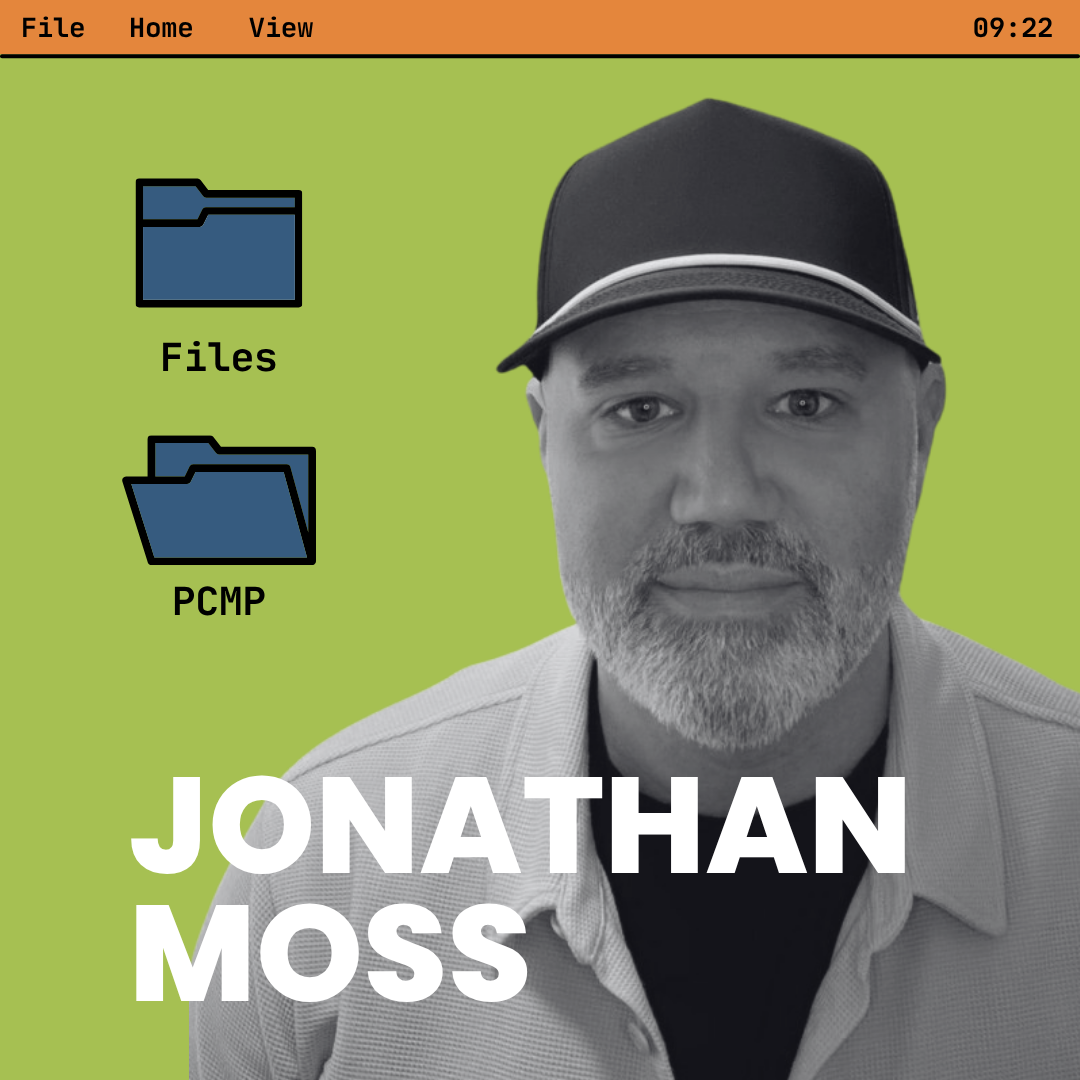
Jonathan Moss
EVP & GM for Patient Engagement and CareAgent, Experity
Jonathan Moss serves as EVP & GM for Patient Engagement and CareAgent at Experity, where he leads the development of the industry's first AI-native clinical intelligence platform. His work focuses on transforming how urgent care clinics connect with patients through a multi-agent system that automates communication, personalizes engagement, and unifies clinical and commercial workflows.
Through Experity's platform, Jonathan helps power patient engagement strategies across more than 3,000 clinics, enabling healthcare organizations to improve access, streamline operations, and build stronger patient relationships at scale.
You let them out the door and then you hope, you just hope and hope's not a strategy, that they come back the next time that they need to see you.
Watch the Episode
Episode Transcript
PCMP (00:00)
Hey, what's going on walk-ins welcome family. You're back for another episode with Nick and Michael. As always, we want to make sure that we're getting you more patients delivering better care. And today we'll be talking a lot about repeat visits. And then of course we want you to scale. ⁓ One of the best ways for us to help ⁓ you grow your clinic is to bring experts in the industry on. We have another one with us today. I'm fired up about that. Michael, what's going on? Man, we, it's funny you talk about what's going on. We had the craziest weather this past week.
We're here in Birmingham, Alabama. And this past weekend, had, got sunburned on Saturday, tornado Sunday night and a blizzard Monday morning. I wish I was making that up, but it actually happened. ⁓ it was to the point where we were on a call with a client. I'll look out the window. I was like, hang on. I'm sorry. I'm being distracted right now. It is snowing hard outside and we're here. does not snow here. No, not in Birmingham. And, ⁓ it's so like, it's one of those things like what in the world's going on? We're like, wait, it's March.
in Alabama. We're gonna have crazy weather and then it was like 25 degrees and then today is gonna be 80 degrees and it's only been three days since the snow. It's just a whole lot. Anyway, that's what's been happening in the weather world. But no, so we have a great guest on today. This is actually fun to me because he is part of Xperity and Xperity is a big, big player in the urgent care space. So we're super honored to have him on.
But Jonathan Moss, he is the EVP and GM of Patient Engagement and Experities. He's been in there for about two years now. He says that people are close to him calling him J Moss. We've been saying J Moss. That's his rapper name. Yeah, we'll call it his rapper name, his DJ name. Jonny J Moss. DJ Moss. We've already established. But Jonathan Moss is probably how you know him. If we start saying J Moss, that's why. But Jonathan, thanks for having me on today.
J Moss (01:34)
Eeww! ⁓
you
PCMP (01:49)
Man, Jonathan, welcome to the podcast. We're fired up to have you say hello to the Walk-Ins Welcome audience and tell us one thing about you that nobody else knows.
J Moss (01:56)
What's up walk-ins welcome. Thanks for having me by the way. And I feel you cause I'm just up the road in Nashville from Birmingham obviously. So you know that weather feels like it could be in a movie or something. So it's, been, it's been crazy and actually funny enough you teed me up. So I was trying to think about what I was going to say and I was trying to go a little chill on the, you know, what, what someone wouldn't know about me, but actually I was a DJ, ⁓ in college and that's how I got my beer money. As I say.
PCMP (02:02)
That's right.
It was. was.
J Moss (02:24)
But I met I met my wife that way so my wife and I met as I was DJing in college So yeah, so there you go something that most people don't know about me ⁓ So, ⁓ maybe we should DJ okay, it's funny. All right I'm gonna tell y'all just cuz I like you all just because usually my wife gives me a bunch of crap about this but my DJ name was DJ boss moss, so
PCMP (02:32)
So what is your DJ name, DJ Moss?
you
DJ boss boss. All
right, boss, boss. We're gonna have some conversation. feel like there's some sarcastic, playful, uh, answer that goes around the house and J Moss. Oh man. That's fantastic.
J Moss (02:55)
Yes. That's why I'm always hesitant
because every time I say it she gives me a bunch of like she just goes on and on. anyway.
PCMP (03:04)
boss moss. Yeah, we'll never, we'll never live up to our own expectation in our, in our spouse's eyes. You are no longer Jonathan or J Moss. You are boss moss. But I have to ask, ⁓ like, ⁓ since you have the background and being a DJ, your thoughts on Shaq being a DJ. Go.
J Moss (03:11)
You
Man he actually I'm surprised how good he is. I mean he's I wouldn't go it I Would I wouldn't put him up there with the you know top echelon or anything? But like just a guy who comes on bit and how tall he is imagine I mean trying to do the turntables with your length and I mean But he's really good so kudos for him to doing something he enjoys late in life
PCMP (03:24)
That's what we've heard. I know.
Right.
I love it. Well, let's, let's take a hard right turn off of this blip straight into Xperity. So we, we all came back from the Xperity conference a few weeks ago. And one of the things that, that Xperity has, has launched and is constantly what we call launch, iterate and improve is this new care agent. And I could talk about care agent, but I've got you here. So let's talk care agent. What is it? How do people use it? And what are you most excited about care agent?
J Moss (04:11)
Yeah, so Care Agent is kind of how we're re-imagining patient engagement. So today, if you think about it, software is really built in kind of this linear way. Like you find care, you're able to book care, and then you kind of go through this linear path. And also the way software is built is it's got a lot of form fields, it's not intelligent, you got a lot of stuff that you're putting friction into the process. And so with AI now, the way we've kind of tried to reimagine this,
is how can we make a very seamless journey that AI is doing a lot of the work, both on behalf of the patient and the clinical staff in front desk. So it's really a tackling those workflow challenges and that it's intelligent enough to where we're basically understanding all of the different data sources that we have about the patient, the things about the clinic. And it's basically 24 seven concierge, if you want to think of it that way.
for the patient to be able to extend your brand out. So we are super excited about all the capabilities that we're building with this kind of orchestration with patient engagement. The way you activate is we can just activate it for you and we can activate a care agent. turns on one of our biggest ⁓ uses of it today is discharge documents in labs. And so if you think about that, there's a ton of value both for the patient and for the clinical staff on saving time, saving workflow, saving manual effort.
and then just really getting your brand front and center. again, super excited about this. We have a lot of ambition and a lot of things that we're building around this all this year.
PCMP (05:43)
feels like in the past leading up to this moment, Urgent Care has just been a service with very little capability to build as a brand. There's a couple of done it. The AFCs out there have done a good job of it. The fast paces have done a good job of it. And there's a select few that have built on brand rather than it just being Urgent Care. But it feels like Care Agent is giving you that layer of branding. what I'm not talking about your logo. I'm not talking about even your brand voice.
J Moss (05:53)
Yes.
PCMP (06:09)
I'm talking about for the first time, a real legit opportunity to follow up with your patient. Thoughts on that?
J Moss (06:15)
Absolutely.
Absolutely. Yeah. Yeah. And I think what we've built is actually starting to make it economically viable and urgent care to do that. Right. There's been this situation where like most software today or most ways to follow up require someone to do it, right. It requires someone to sit down, to look up things, to start engaging or, or, or in even in software today, programming campaigns and things. And so we're trying to flip that to where we can help you nurture
you know, an ongoing relationship because look, at the end of the day, you've spent all this money to acquire this customer, right? This patient that comes in. You've done everything training wise, incentive wise, care wise to give them a great experience. You let them out the door and then you hope, you just hope and hope's not a strategy, that they come back the next time that they need to see you. They go to Google or wherever and you're hoping that they come back. But instead,
you have this ability to have your brand front and center. Like you said, even though, even though the product's called care agent, it actually is white labeled to your brand. So to your point, your brand is front and center, even though it's powered by us. And I think that's important because when you see patients, they trust their local healthcare brands more than they do anything else. And so having your brand front and center, it also keeps you top of mind. So, I mean, you think about the time between urgent care visits.
PCMP (07:19)
Right.
J Moss (07:36)
you it's not like I'm coming right back. Sometimes they do, but sometimes it's not until the next episodic event or something, right? And you want your brand to be front and center. So the more that you can nudge them and be there to provide support, to provide ongoing communication is super critical. And I'll give you one more thing about this too. If you look at the statistics right now, the majority of conversations and bookings that happen, ⁓ you know, for urgent care actually happen outside of the clinical hours.
So this gives you a way to expand your coverage, whether it's geo-based because of distance, or it's also time-based because you're only open certain times. This gives you, again, that ability to have that brand front and center. So yeah, super powerful.
PCMP (08:19)
Michael just got a Samsung S20 something around. And I have an iPhone and got a Mac right here and I've got a Mac this and a Mac TV, all the Mac things. The point I'm trying to make, I don't have a problem with Apple. That's not my point. a PC. The point is,
J Moss (08:35)
All the Mac things.
⁓ you two are like the PC Mac Mac.
You should do that commercial PC Mac.
PCMP (08:45)
Probably looking well,
no, I don't look like Jonathan Long, but that's so, but, the point I'm trying to make is, is like, there's this whole experience that keeps me in that ecosystem and keeps me coming back to Apple for better or worse. really want to go play with your phone and I want to hang out with it. And I want to, like, I want to see what it does different and all that. But am I going to? No, not a chance. I'm in this ecosystem where it's got all of my stuff and too painful to change. And I feel like.
You know, for better or for worse, I'm going to say for better because it's been missing for so long. Everything's been so fragmented that now with Xperity and CareAgent pulling it all into this ecosystem that allows you to have this brand voice that is going to have everything, ⁓ forget your brand for two seconds and not you, Jonathan, clinic owner, forget your brand for two seconds. Imagine if everything they had was in your ecosystem.
and you're making yourself very sticky. And that sounds to me like what care agents not only going to be a benefit and a blessing ⁓ and a powerful tool for both the clinic and the patient, but it makes it super sticky. Is that part of the goal?
J Moss (09:54)
Absolutely. you know, and if you look at some of the stats, right, it's like 80 % of patients leave because they had some sort of poor navigation experience, whether that's the digital tools that you have, the administrative that you're putting burden on them, ⁓ or other reasons. And I think, you know, what we're trying to do to the exact point you just made is we're trying to solve that with, we look at it as we want every patient interaction in the same channel. Now, what do I mean by that?
It means that they get a similar experience regardless of if they're in text, if they're on the web, if they're on their phone, if they're in a web browser, wherever they are, they get that same experience. That's your, your branded experience. That's pulling all of these other things together. It's pulling booking together. It's pulling surveys, it's pulling referrals, it's pulling documents, it's pulling all the things that you can think about that happen from the time the patient is look, finding care.
to the ongoing care outcomes, it's putting that in that one channel. And so there's no more like, have to go to this tab to do something, or I have to log into this place to do something, or I have to go all, have to go up to your point fragmentation, it's all over the place. We're trying to pull that into one branded experience for that patient and let AI on the backend handle all the workflows of all the dispersed tools and everything that you use or have to use to power your urgent care. That's exactly what we're
PCMP (11:17)
love it. know, kind of, as you're explaining it, in my mind, it's almost like a concierge communication tool where it was one of the things that you know, we hear in the industry, like, should my urgent care become a concierge type urgent care type thing, and then it falls on its face, because it's just it's not the same model. But like, this is kind of a bridge of that where, and for those who don't understand what concierge is, it's more of a premium model of
It's not necessarily primary care. a little different, but it's a it's almost like old school care on demand would be the best way to care on demand essentially. And like in this care age is almost kind of creating that care on demand mindset for an urgent care without the heavy resources and like SOPs and just manpower to make it happen in urgent care. So I'm very fascinated. Like, like, could you talk about trying to keep those patients engaged and coming back?
J Moss (11:51)
Turn it on, yeah.
PCMP (12:11)
where if it just becomes that simple for them to do the things they need and receive the things and they're not trying to hop through different systems and everything like that, like this makes sense. the idea of you're just elevating the experience, but you're not forcing your urgent care operators to elevate everything internally to make it happen either. Like you're letting care agent kind of take over some of the heavy lifting.
J Moss (12:33)
That's right. In fact, our goal with this is to actually take more off of them. So to be able to provide that type of concierge experience, you're exactly right, number one. Number two is, is that because this is heavily embedded in workflows, we're trying to take things off. So for example, I'll give you some stats around those two use cases I shared previously since I shared them already. So like, for example, discharge. So typically a discharge, if you think about it, you have a patient that sits in a room.
PCMP (12:37)
Right.
J Moss (13:01)
for probably five to seven minutes on average is what we see. Someone then has to go print the discharge paperwork, then they have to go get the discharge paperwork, and then they have to then go hand the paperwork, and then the patient leaves and probably throws it away or never looks at it. There's so much waste in that process from administrative time, ⁓ patient time, and then you...
PCMP (13:15)
Exactly. ⁓
J Moss (13:25)
are opening that availability and capacity up five to seven minutes sooner to room. if you've got wait times or if someone's online, one of the biggest drivers to visit is availability. So the more availability that you can have, ⁓ this helps you open the door. Let's think about labs for a second. So, ⁓ today someone sits down whenever they get a chance, they pull it up, they have to call someone. How many times do you answer the phone? Like you're working, you're busy, whatever. I don't get you. I get your voicemail. Hey,
Call me back when you get a second. Okay, great. They call you back. Guess what? You're seeing a patient. So now you're in this phone tag back and forth for days to try to just get this communication. And so we're seeing that time saving reduction for being able to deliver it. Now, what have, so you're getting that workflow savings now, or time savings. Now what happens on the patient side? Well, I get my access to my information quickly.
it's always available to me. let's say I do want to go see it or I do want to look at it or I do want to ask questions. It's right there for me and I can always, I can ask questions about it. I can get the information that I need right to my phone, whether it's your iPhone or your, your S 26 on your Samsung, whatever phone that you have, you get it directly given to you. So it's just that ongoing experience. And I'll say one more thing about this because what we've talked about so far,
is really what I would consider somewhat more clinical driven or reactive. What AI can also do is be a little bit more proactive. And that's what that's some capabilities that we are in the midst of building right now. What I mean by that. Ultimately, let's say that you want to follow up in two days post visit. All you got AI, I'll do that for you and it can answer any questions. Right. And then it can help them book if they're not feeling well. Let's say it's flu season and you want to you want to message them. Let's say that it's
sports physical time, or let's say it's, you you're offering a new service, whether it's again, health and wellness or telehealth or whatever it may be. You can then just have AI have start having conversations with your patients proactively to let them know, to get them back in, et cetera. So you've got this kind of what we call patient driven interactions. You have clinical driven interactions, and then you have these proactive nudges as we're calling them to kind of nurture.
and keep your brand top of mind and really care about the patient and build these relationships. So I think in those three lenses, AI can help you with all that. And you don't have to go hire a staff to do this. You can do it with what you have today because it helps you. It's able to do all these things for you.
PCMP (15:53)
So as I helped me visualize this, talking about the proactive side, I know you said some of us in development right now, but is it, are you saying like, the AI agent will understand the patient, say, there's some triggers in here that will trigger me to reach out for certain things. Maybe it's a follow up, maybe it's a sports physical, maybe it's just a seasonal item. So it's like proactive campaigns, basically, in our eyes. How is it community directly communicating with the patient? it
to have that to start that new like if I haven't been to that clinic in two months, how am I getting that initial conversation from care agent again?
J Moss (16:31)
Yep. So, so typically what we're doing is we're sending you a text message, letting you know that there's something new and exciting or something that's about your care or something that, you know, about the clinic visit that you had. And the reason that we decided to go text message first to be, you know, the interaction point is what you see, especially today is that there's about a 97 and 99 % engagement rate and response rate in text messages versus, you know, a small, single digits for email.
and only like 20 or 30 % for call. And so you initiate it from there, but at the same time, that's your proactive. You can also get to CareAgent on somebody's website. So if they were searching for you, whether it's Google or on your brand, you can actually initiate CareAgent there too. So there's a multiple ways we call it omni-channel. So for those that are in retail and we're in retail, it's an omni-channel type approach, but to engage them, we send them a text message to engage them.
PCMP (17:00)
Yeah.
J Moss (17:27)
you know, with something exciting, something new, something that's critical, whatever it may be to get their attention, to be able to open up CareAge and start communicating and having a chat with
PCMP (17:36)
All right. let me me join in. This is something we push our clients to do themselves. Please reach out. Quick story time into a question though. There is a lady named Latoya who about once a month I get a automated voice message asking for her. If this is not Latoya so and so please hang up now, which I will never do.
Because I love the drama. And then after she will pause it goes, you need to pay your bill on this, that, and the other. And I'm just seriously told you, that's all I know. And I know she owes somebody money. I got a monthly taxes. Hi Douglas. You still owe us this much. Please act now. Like we're going to send you straight to hell. You're going to die later. your payment is getting smaller and smaller as like, that's right. That's right.
J Moss (18:06)
You
you
PCMP (18:32)
Can you just play anything? I'm losing it. But anyway, I listened to 100 % of the automations that come from Lithuania. That being said, how is care agent, hey, if this isn't Nick, please don't listen anymore. And now all my personal health information is being communicated. I get a feeling care agent has probably done something to work around this. How does that?
J Moss (18:34)
Just a dump.
You
Yeah.
Yeah. So, so the way that we look at it is anything that's HIPAA compliant or anything that needs to verify, right, is, is done through an authentic authentication process. So let's, let's start with the first, the first thing. So the first thing is I have your phone number because I text you, right? So that's authentication point number one. Now, if I can have a conversation with you in text, if it's about maybe booking an appointment or something like that, but let's say I want to go to your health information, like Discharger Labs.
PCMP (19:04)
Okay, cool.
J Moss (19:21)
Once you open up that secure tokenized link in the text message, it asks you authenticate with two other pieces of information, your last name and your date of birth. So now I have those three pieces of your information and I can tell you that there is like a 0.00001 % chance that someone in the US has your same phone number, your last name and your birthday, that's not you. And what that also does is as I was talking about earlier with all these different logins,
you don't have to remember a username and password. mean, think of how many times that you forget a username and password and that stuff. You'll never forget your last name and date of birth, or at least hopefully you don't. And so you should always be able to easily log in.
PCMP (19:58)
time.
that point you're looking for a neurosurgeon or something like that to help you. Well that reminds me like moving to my new phone was a pain even I was going from Android to Android. does not just copy over all your passwords. I'm just sitting there like logging in. I haven't logged into this without my thumb in two years. I don't know what the password is. I going to say I use thumb prints or face ID or all that to not have to remember those kinds of things. All right. So
J Moss (20:07)
Exactly,
That'd be too easy.
PCMP (20:32)
We need to think now I am, I am knee deep, waist deep, head underwater, digging into AI and what's happening and, all the things that are going in there. Couple of things. One is, is there's just, there's just a lot of noise around AI, also like a little bit of fatigue. And here we are on episode, whatever this is, conversation, whatever this is about how AI is stepping into a clinic.
J Moss (20:51)
Mm-hmm.
PCMP (20:59)
So I got to ask like, where do you think urgent care operators are overestimating or underestimating the impact of AI even at the level care agent is using?
J Moss (21:08)
Yeah, so I think I'll start with the underestimated just because it'll give me, it'll give me a second to think about overestimating. So again, total open book. So underestimating I think is how much of the workflow, number one, it can handle for you.
PCMP (21:15)
Okay. Sounds good.
J Moss (21:26)
And setting up kind of these human in the loop type approaches if you need it. And so I think that, you know, it can take on so much for you. And that's why we built CareAgent was really tackle some of the most complex workflows that no one has tackled so far, as well enhancing the experience. think that's number one. Number two is what we call intelligence and context. Because AI has an infinite knowledge when it's connected to the right data and the right context.
Because I know who you are, right? I can start, I map your relationships. So if I'm a dad, I have two kids. So if I'm doing appointments for my son or my daughter, it will know me and it will know who my son and my daughter are. know their birthdays and know their information. I can pull, it'll be able to pull in all of their medical history and things like that. Cause we're terrible historians of our own medical history, right? I mean, can't tell you much about anything.
PCMP (22:24)
Right. When I was helping my grandmother out years ago and my cousin was with me, she is like, here's all the, she's like, here's her bag of prescriptions. Here's a list this. I'm like, how do you keep up with that?
J Moss (22:24)
And so I think like.
Yes.
You're exactly right. Right. And so, and so once AI knows that it can just keep that in its memory about you and always say, Hey, you were on these medications this year. Here's what this looks like. And then if you have a question, well, I have this yellow pill in this blue pill, which one or what? Okay, great. Just ask. And he'll tell you which one's what of the medications that you're on. And so I think we're, ⁓ we're completely underestimating how much of the waste and, ⁓ and friction that it can remove.
And that also causes downstream impacts like billing and all those things. So I really think that's, that's the biggest thing. think overestimating could potentially be what I hear a little bit is more so on the clinical judgment side of things. ⁓ and I think it's going to continue to get better and better. There are already like publicly or sarmedically trained, LLMs that you can use and things like that. And obviously, if those that keep up, you see alpha fold from like Google, they can do protein folding. They're doing all kinds of things with cancer and everything else, but
I think that it is very important to, and this is kind of where we've stayed away from so far is clinical judgment, because I think it's just too soon. It's too immature. And that's when you start bringing that into the fold and just relying on AI. So as you know, we've got a kind what we're calling our touchless EMRs AI scribe product. It's not there to give you clinical judgment. It's there to help you, number one, get all the information.
and get it in a structured format so nothing's missed. And number two, help map relationships between what the patient told you, what you know, but then also other things that you may not have time to understand about the patient's history. And so it's there to provide you an accelerant and give you more information, but it's not there to make the decision for you. And so I think making sure that we keep that out of it right now is to me, is where potentially people could be overestimated this soon, this soon in the cycle.
PCMP (24:29)
For sure. Well, I know we went through this futuristic AI powered clinic. I'll just leave it at that. Yeah. And Michael has some ankle pain. Oh, no. That's because he took two bullets to the ankle according to Scribe. That was a sin printer, He did. He doesn't even know about that. So we did the little walkthrough tour live demo and I was describing, cause like, you describe what's going on so the Scribe could kick in?
J Moss (24:40)
⁓
PCMP (24:56)
And I was describing like an actual problem that I have, but somehow instead of me hurting my ankle due to two vertebrae bulging disc, it thought it said had two gunshot wounds to the ankle. AI was tired that day. Yeah, it was, it was done. We were laughing about, but we're also like, well, this is extremely loud room that we're in and all the things. And I'm a low talker. Most voice things have trouble with me.
J Moss (25:13)
Obviously.
PCMP (25:24)
But it was just entertaining because we're all kind of chuckling at it. But it's real. Like that's just the nature of things aren't perfect, but they are, like you said, getting better and better and better. But they should always, like we say with AI, you should always verify what it's doing and not just assume it's a hundred percent correct, a hundred percent of the time. Yeah. I mean, I've gotten myself into a mess a couple of times with AI where I'm like, okay, I know it's smart and I know it's likely smarter than me, but I'm over here going, but that don't check. That is not accurate. And I had one get into an argument with me one time, which was fun.
Yeah,
that was, that was Claude, but this was early days of Claude. Claude was like, no, you're wrong. No, it didn't even say that. goes, I think you need to check your ⁓ integrity. Yeah. was like, man, it was, it was straight for the jugular. It was no joke. I'm like, you're to go me in my sleep later. Thank you. Please. And thank you to the AI. ⁓ Well, here's what I want to do real quick. And you got, you got two types of people listening in the audience right now.
J Moss (26:05)
it called out the integrity, no.
PCMP (26:21)
The ones who use Xperity and the ones who don't use Xperity. I could narrow that down with all kinds of things, but we're going to say that. But is Care Agent only for Xperity users or is Care Agent for everybody? Let's clarify that.
J Moss (26:36)
Okay, so, and when you say Xperity, I assume you're saying specifically the EMR, okay? So if you, yeah, so regardless of if you have Xperity's EMR or do not, you can use our patient engagement solution, which CareAgent is part of that, that's correct.
PCMP (26:39)
EMR. Yep, correct.
Thank you for clarifying that. So Care Agent is EMR agnostic. I love that. So it'll integrate into the one that you're using. ⁓ And then for the ones who are like, okay, can you clearly tell me what problem this is solving for me? What clear problem is this solving for a clinic?
J Moss (27:06)
Yeah, it is basically tackling all the manual, what I would call manual tax in the workflow of the patient journey from the pre-visit to post-visit. So anything that you can think of that is manual tax that your teams, whether it's your clinical staff or your front desk has to do, it's really tackling those workflows so you can spend more time with the patient and on other things than the manual administration.
PCMP (27:30)
Awesome. And I know somewhere on here will be a QR code for you to scan. you're watching this on YouTube, if you're listening to this on one of the podcast channels, we'll have a link in the show notes, but with this link, ⁓ J Maas tell us what can we expect ⁓ for them to engage with you or your team about CareAgent on this demo? can they expect?
J Moss (27:34)
You
Yeah, yeah. So basically what we are actually showing you, what we've built is to show you how Care Agent would work from the very beginning. So when someone's trying to find care, whether it's on Google, know, in chat GPT, wherever they're trying to find care on your branded website, all the way through the post visit journey of the smart nudges we talked about, the referral, the referrals, the prescription management. So everything from soup to nuts, if you will, end to end, we will be able to show you in this demo of how Care Agent can become.
that one channel for every patient interaction. And again, as I mentioned, it will help, know, then you will actually, so when we show this to people, like, I can see two things. One is how it will eliminate that manual tax for me, but also how it drive better patient loyalty and more patients in my door. And that's ultimately what you want to do.
PCMP (28:43)
love it. I love it. Well, I'm going to switch gears on you because I have found a fun way to start closing out our podcast that I enjoy doing. ⁓ It's our rapid fire section where I get to fire off questions at you real quick. And you just say the first thing that comes to your mind. All right. ⁓ It's just a hamburger or hot dog. Okay. Beautiful. ⁓ If now the real question. Yeah. One workflow, every urgent care, one workflow, every urgent care should automate today.
J Moss (28:58)
boy. Alright.
hamburger.
Oh no, I was like, that was easy.
Discharge.
PCMP (29:15)
Discharge. All right. Text, phone, AI chat. Which one wins long term? Michael, you want to shoot off a couple? Should they build versus buy when it comes to AI tools?
J Moss (29:21)
AI check.
they should buy because they're not technologists. sorry. You said one word. Sorry. Bye. ⁓
PCMP (29:33)
⁓
You can say whatever comes to your mind. Doesn't have to be one word. ⁓ It just tends to be one word. Front desk of the future. Is there going to be a smaller team or a bigger team? Do you think it'll be any team at all?
J Moss (29:38)
okay, okay, all right.
I think they won't be considered front desk. I think they'll be considered more concierge experience ⁓ related. ⁓ Cause we envision and sorry to go long on this, but we envision to where we can get to the point that we know again, who you are, when you're coming and it's so tied into the workflows of the, ⁓ of the clinic that when you show up, your room is ready. Imagine that you show up, they have all your information. They know why you're there. Your room is ready and you're escorted back.
That's exactly what we're trying to tackle.
PCMP (30:21)
Love it. Just imagining the idea of I walk in, they say, Hey, hey, Michael, glad to have you. Please come on back. I know this is the issue while you're here. The doctor will be seeing you in just one minute. And then here they go. And then boom. it would be an honestly like seeing your name and stuff on the screen in the medical room, like the exam room, like all of that stuff just seems so ideal, almost futuristic to me. All ⁓ right. Domino's or Pizza Hut.
J Moss (30:48)
Yeah.
Dominoes.
PCMP (30:51)
All right. And for, for a good measure, Papa John's are dominoes. Okay. My man, where your head's at. All right. Typically I lose it at Papa John's. All right. My last question you can answer in one sentence and then we'll close out. ⁓ What will the urgent care look like in five years?
J Moss (30:56)
Dominoes.
so I, you said one sentence, all right. Urgent care is transitioning in my mind to on-demand care. And I think in the future you will see where, ⁓ everyone uses urgent care at whether it's digital, physical, et cetera, but it will be the care that they go to, ⁓ for every, almost everything that they need on an episodic or ongoing basis. And so I really see that as becoming instead of it's less urgent and more on demand.
PCMP (31:39)
love it. Nice. Well, we've been having a conversation with DJ Moss, Moss, Moss, Jonathan Moss with Xperity and ⁓ talking all about care agent and helping you get repeat visits. Jonathan, man, I can't thank you enough for being on the podcast today. Absolutely. Well, thank you guys for listening and we'll catch you on the next one. All right. We'll see you.
J Moss (31:53)
Thanks for having me.


Free Clinic Audit
Want the Strategy Behind the Episodes?
Book a free clinic audit and we'll apply these ideas directly to your clinic.
Schedule a Call + Free Audit