
← All episodes
Walk-Ins Welcome · Ep. 207
Ep. 207: Healing Healthcare with Insight, Innovation, and Intention – Interview with Josh Russell, MD, Chief Medical Officer at UCP Merchant Medicine
About this Episode
When it comes to urgent care, Dr. Josh Russell is the real deal. Chief Medical Officer at UCP Merchant Medicine, editor of UC Max and CorePendium, AI advisor, board-certified medical editor, and now host of the new podcast The Focused Exam-Dr. Russell brings the rare mix of clinical excellence, tech-savvy, and straight-up curiosity that today's medical landscape desperately needs.
In this episode, Nick and Michael sit down with Dr. Russell to explore the real-world impact of AI in urgent care and how tools like Intellivisit are redefining patient flow, documentation, and burnout. From automating charting and streamlining care delivery to teaching clinicians how to embrace a growth mindset, Josh unpacks how AI-when done right-can help bring humanity back to medicine.
And yes, we also talk DJ names, Jeopardy dreams, and the one thing patients really want (but rarely ask for) in a visit.
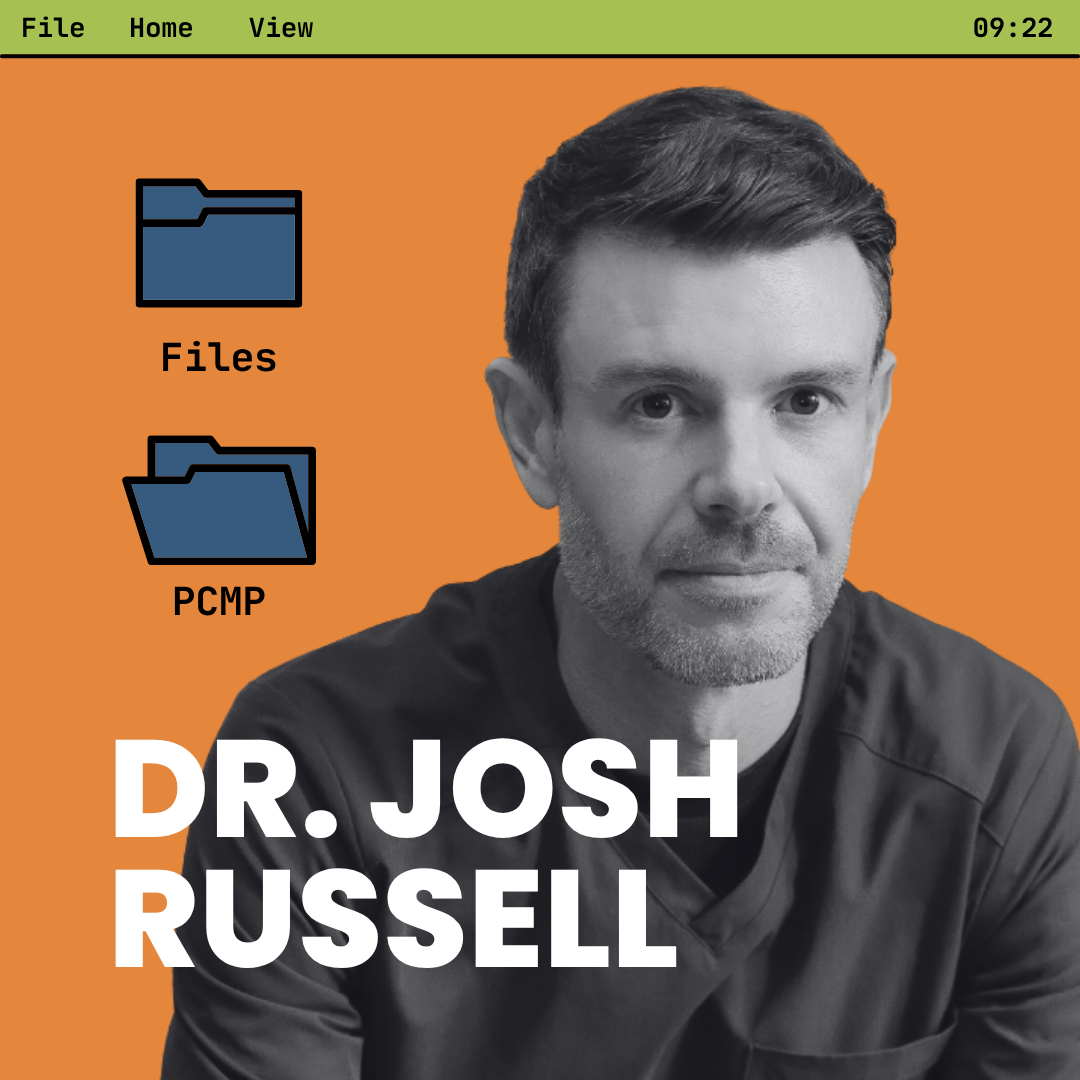
This Episode's Guest
Dr. Josh Russell
UCP Merchant Medicine
Dr. Josh Russell is the Chief Medical Officer at UCP Merchant Medicine, a board-certified emergency physician, medical editor, and host of the upcoming podcast The Focused Exam. With deep experience in clinical care, AI-powered workflow design, health tech strategy, and physician coaching, Dr. Russell is on a mission to rewire what success looks like for modern clinicians. He's also a trivia enthusiast, aspiring Jeopardy contestant, and hobbyist DJ under the name Ultra Sound. No, really.
🔗 Resources & Mentions:
We went into medicine to talk to patients-not interact with a computer. AI should help us reclaim that human connection, not replace it.
Watch the Episode
Episode Transcript
Expand
PCMP (00:00)
Hey, what's going on walk-ins welcome family. We're glad to have you back for another episode. As always, we're here to help you get more patients, deliver better care, get repeat visits, scale your clinics. And the best way for us to do that is to bring amazing people on as guests who know more than we do. Yes. Are doing it better than we do it. All the things Michael, what's up, man? How are you? It's good to be back on here. ⁓ Last week we were in Miami for some agency related things, which is always fun. Kind of throws our week off. ⁓
Well, Nick and Michael, thank you so much for having me. I'm really happy to be here and excited to talk about urgent care, AI, but we'll start off, I guess, on the lighter note with the icebreaker question as usual. So ⁓ one thing recently that's been a passion of mine and something that's a good way to unplug, which is kind of ironic because it's all about being plugged in as I've started DJing on the side just as a hobby.
out.
Well, I've liked ⁓ various types of electronic music, mostly house music for a long time. And I've seen the DJs up there and they have so many knobs and buttons, right? And I had this idea in my head that it was something I couldn't do. And whenever I have this fixed notion about a self-limiting belief, I like to challenge it. So I asked myself, is there somebody who's less intelligent than I am who's figured this out? And the answer is probably yes.
I've got two questions that are DJ related. I'll ask. I'll ask about the same time and you can answer however you want. First question is how are you incorporating AI into your music selection? Second question, your thoughts on DJ Shaquille O'Neal. Josh Russell, MD (02:47)
Sure.
love it. Josh Russell, MD (03:24)
Shaq may have been a better basketball player, but I like Ronnie's music better. PCMP (03:28)
I'm gonna I'm gonna lean into the AI question there. You use it at all for your your playlist mixing. Josh Russell, MD (03:37)
It is baked into a lot of the software. So you have to find music that matches most importantly in key and ⁓ tempo is to a certain extent important, but there are tracks that go well together and tracks that don't. And if you've heard a set where a DJ is not very attuned to how tracks are going to bleed into one another, then they're probably not using AI, but that is definitely the like lion share of time that a DJ spending is probably track selection. there's
Well, Apple Music is trying to bridge this gap a little bit and it's just not going well. All I'm hearing now, if you're a doctor that's facing burnout, just put on some headphones and get some equipment and then just go to town. That's what I'm hearing. Josh Russell, MD (04:27)
Hahaha
I feel like there's a Guinness World Record coming up of some sort. Sure. Well, very good. Awesome. Well, so kind of, so we touched on your background just a little bit. You can deep dive on that. It kind of gives us a full background for those who don't know who you are. And then I know we want to focus on some AI things because you have some very fascinating background on the AI side from Intellivisit to what it looks like inside the clinic. And then like the challenges and the liabilities of AI, I want to go through all that today. Josh Russell, MD (04:53)
Ha ha ha!
Yeah, and Televisit specifically, we were talking offline and I just want to start there. ⁓ It's seeing over a million patients. What is it? How are doctors using it? I feel if there's a million patients, pretty much everybody that's listening knows what it heard of it Let's get it from your perspective. How is this being used? Josh Russell, MD (05:39)
Yeah, so we are just at the cusp of the million patient mark. So hopefully it'll be there by the time this is released. But Intellivisit is a tool that's designed to use the experience and education of physicians, but give that to a medical assistant or a nurse LPN at the outset of a visit so that the patient is given the
Yeah
It's a great question. And the part of medicine that I enjoy, and I think most people that got into a field of medicine where they're actually interacting with patients, is having that moment to connect with someone, give them the answers that they're seeking, have some time to do some teaching. I mean, doctor comes from the same root word as teacher. And a lot of what we're supposed to be doing is teaching patients, especially in urgent care when people have self-limited illnesses, almost as a rule.
You know, you said something that I haven't heard very often was the importance of education, of educating the patient on what's going on. That's a good point. We don't hear that very often when we do interviews and so forth. Like we focus on like, well, it's the doctor to be a doctor, but they don't talk about the education side, ⁓ patient education side. I'm curious just from your own viewpoint, are patients receptive to education and does it create anything?
I think it's huge, hugely satisfying for patients to better understand what's going on in their body. Now that has to be caveated a little bit by saying, and this is, I think probably the top five axioms of all medical principles is from an attending I worked with, he said, no one cares what you think until they think you care. And that is so important to keep in mind is that
Interesting thought there. Josh Russell, MD (14:53)
Does it distinction,
Well, I like that you dug into the fact that you asked them what their true concern is. ⁓ Recently had to go to a orthopedic urgent care, which is kind of a niche within a niche. ⁓ And he asked me what my concern was in a different way than just what is your concern. But my concern wasn't whether or not my knee was hurt. My concern was whether or not I was going to have long-term effects and, and really struggle with carrying my own weight or these kinds of things that never even
yeah, 100%. I mean, we're all the same species. We're living lives and every illness exists in the context of our broader life. And if you're focused only on like diagnosis and treatment of an illness and not the impact of that illness or that treatment for that matter on the rest of your life, then that's quite short-sighted. But in getting back to the reason why these efficiency tools and Televis is the one I'm most familiar with are so helpful is because it takes all this stuff that has to happen for billing, coding,
I love that. And also you're going to be able to help frame your solution in such a way that they're going to buy in. Yeah. Right. Like the answer may be Tylenol, but at the same time, if they're adverse to taking things for whatever reason, recent news, I don't care what, then, you know, helping them understand what their ultimate goal is, is going to play into how the medical care is executed. Yeah, because they talk about medical care.
Right. PCMP (17:49)
it'll slip into documentations or it'll slip into content or whatever. ⁓ Knowing that these scribes and television, these types of things that are, that are coming in and they're creating these AI ⁓ overviews, whatever you want to call it. How are hallucinations playing into that and how our doctors or medical professionals leaning too much on the AI. Josh Russell, MD (18:14)
I mean, you bring up a great point and so many intersecting issues with what you just raised, Nick. So the first thing is that hallucinations are a byproduct of AI's programming and specifically large language models. So AI is a very broad blanket term, but our large language models everyone's familiar with probably now are chat GPT, Gemini, Claude. Those are.
Right. I love that. love that. That's like, I mean, think about when we use Chant GPT for ourselves, like we want to see how it came up with those solutions. Show your work. Yeah, show your work. I feel like I'm the teacher now. Show your work. Like, thanks for the answer. But I want to know how you got there. But makes sense. Josh Russell, MD (21:04)
⁓
I love that. I just wanted to kind of confirm for anybody weary of using AI, ⁓ you've probably explained it better than anybody I've heard say it. ⁓ And that is the prime directive. I love that you said it that way. ⁓ Because, you know, with custom GPTs and custom AI is you can create your own prime directive. And it sounds like that's what Intellivisit has done is here's what you are here to do. Everything else is secondary. And here we go. We're off to the races. I'm going to feed you a ton of information.
clinicians themselves, how are they getting that wrong? Well, that's... Well, first of all, I hope that no one's feeling ashamed if they're feeling that way because the system is set up in a way that it's really, really hard to be a human being and have the normal characteristics of a human being and thrive in the modern medical establishment and that's so multifaceted. But I think one of the main... PCMP (22:24)
Yeah, they're getting it wrong. Josh Russell, MD (22:49)
things that I see is that there's a tendency for clinicians to ⁓ feel that their only options are clinical practice. And there is so much reward outside of clinical practice that I wouldn't say that this is my plan to do all these different things that I've done with my career, but you can use your clinical skill set and education knowledge base for so much more than caring for patients.
for sure. And you are a advisor, or least a health tech advisor. Are you incorporating this into how you're talking to physicians on getting outside of their bubble a little bit, learning a new skill? Is this something that you're working with people on? Josh Russell, MD (25:18)
Yeah, one of the main things that I have to address at a fundamental level is that the mindset of an entrepreneur and the mindset of a physician are basically diametrically opposed. So when you're a physician, you're taught like you can't make a mistake ever. You have to do everything you can to just make sure you get it right. And it leads to a lot of conservatism. It leads to deliberate ⁓ sort of decision-making in a way that is PCMP (25:31)
You Josh Russell, MD (25:48)
you know, directed with good intention and appropriately towards patient safety. However, anyone who's tried anything entrepreneurial or, you know, had their own business understands you're going to make a lot of mistakes and that's how you learn. so you have to really take your clinician physician hat off and put on your entrepreneur hat and say, I need to try things and great is the enemy of good. But if I don't start trying things, I'm not going to learn what works and what doesn't work. ⁓ And that PCMP (26:01)
Right. Josh Russell, MD (26:17)
mindset is very foreign to a lot of physicians, but once they embody it, think a lot of them have quite a bit of fun, you know, doing trial and error. It's really just ⁓ a sort of ⁓ N of one application of the scientific method, A-B testing, things like that. PCMP (26:33)
I love that. And I agree with you. There's been ⁓ certain times in my adult life where I've stepped out and tried something completely new, completely foreign to me. And the knowledge I acquired and the challenges that I went through, actually all of that adversity to do that other thing made me better at what I do on a daily basis. ⁓ It changed the way my brain is wired.
I love that you share that. Yeah. Yeah.
That's right.
And I was having a conversation, I was at my med school reunion a couple weeks ago and I was talking to a few classmates and everyone was just kind of shocked with my career path as I forget how divergent it is from most clinicians. what they're doing, especially if they're working in academic medical centers, they're surrounded by other doctors who are just working as doctors and you, we.
Love it. All right. So I want to switch gears one last time before we wrap up the podcast. In the fashion of stepping out of your comfort zone of the day to day, especially you being a doctor, you had mentioned that you aspire to be on Jeopardy. So what I did is I wrote a question in Jeopardy fashion.
Hahaha.
Love it. Love it. There it is.
Yeah, well, it's just in the process of getting off the ground. It's an idea that I've had in my head for a long time and I worked with a friend and mentor, Dr. Rob Orman, who has his own podcast that's called Stimulus, which is amazing for clinicians and non-clinicians alike. But what we try to do is just figure out how do we get to an MVP, which is the minimum viable product that you can release into the world, understanding that it's going to be imperfect, but you learn from how people respond. And until things are out in the world, you don't know it's
it didn't get much better than that. ⁓ I know it's a new podcast. How many episodes have you done? Josh Russell, MD (32:31)
Well, so I'm waiting to release the initial bolus, but on the website I do have all of the other podcasts that I have appeared on that people want to hear me talking about stuff like what we've been talking about. And then when the initial bolus comes out, it's probably going to be waiting for about another episode or two to get recorded just so I'm not under stress. I was taught by a mentor in podcasting that the main thing you have to be is consistent. And I just don't want to, you know, PCMP (32:35)
Okay. Josh Russell, MD (32:58)
get off on the wrong foot in terms of consistency. You guys obviously do an amazing job at that, having your podcast be ⁓ something like the morning news. People know when it's gonna arrive on their doorstep and I don't wanna be somebody who's dropping podcasts sporadically, because that's, I'm told by people who know more than I do and have more experience, you guys would know better than I. That's ⁓ not the recipe for success. PCMP (33:20)
100 % agree with that. like it's one of those you people like to expect something consistent, right? They like the consistency side of things. We've been doing the weekly thing from day one. And yeah, we I mean, we record for those you're experiencing this in a different way. But almost all of our recordings are Thursdays at one. we just have a set in our recurring calendar, no matter what's happening on record mindset. And then you know, we initially like preloaded. So we initially did like
Yeah, yeah, absolutely. PCMP (34:45)
So Dr. Josh, let's close up here. ⁓ How can people find you? We're going to put all of this in the show notes, but tell us how we can find you ⁓ and connect with you. And then we'll take us out. Michael, take us out. Josh Russell, MD (35:00)
Sure, well, ⁓ my website's the best place for if you're looking for me as a speaker potentially for an event, if you want to talk to me about consulting for your business, if you were interested in coaching and getting assistance in figuring out a path forward outside of just being a clinician, or wellness for executives is another form of coaching. All that is on thefocustexam.com.
Excellent. Well, thank you, Josh, so much for coming on. Audience, thank you all for listening and we'll catch you on the next one. Hey, thanks for being a guest. We'll talk to you soon. Josh Russell, MD (36:03)
Bye bye, thanks.
Hey, what's going on walk-ins welcome family. We're glad to have you back for another episode. As always, we're here to help you get more patients, deliver better care, get repeat visits, scale your clinics. And the best way for us to do that is to bring amazing people on as guests who know more than we do. Yes. Are doing it better than we do it. All the things Michael, what's up, man? How are you? It's good to be back on here. ⁓ Last week we were in Miami for some agency related things, which is always fun. Kind of throws our week off. ⁓
We're catching back up a little bit, we love and this is right now in guest season, it feels like, which is awesome. Well, honestly, we have one of our probably most decorated guests that we've had a long time, I would say. So we have Dr. Josh Russell with us. He's the chief medical officer at UCP Merchant Medicine, former editor of UC Maxx, former editor of Juiceme. He has, I have to say this, he's probably knows so much more about urgent care than we'll ever understand. Probably.
And so whatever he says today, you should probably take the heart. I went to gas. Yeah, I don't disagree with that at all. Well, Dr. Josh, we're glad to have you on the podcast. Say hello to the Walkins welcome family and tell us one thing about you that nobody or a few people know.
Josh Russell, MD (01:09)Well, Nick and Michael, thank you so much for having me. I'm really happy to be here and excited to talk about urgent care, AI, but we'll start off, I guess, on the lighter note with the icebreaker question as usual. So ⁓ one thing recently that's been a passion of mine and something that's a good way to unplug, which is kind of ironic because it's all about being plugged in as I've started DJing on the side just as a hobby.
something totally unrelated to everything else I do professionally, but it is a good way to like reset at the end of either a long clinical shift or a long day of meetings. So my DJ name, at least tentatively, probably, hopefully long-term, because it's a big deal to change your brand is Ultra Sound. ⁓ Pun intended. Ultra Dot Sound is actually how you find it.
PCMP (01:51)out.
That's actually fantastic. I have to say, what triggers you to say, you know what, I'm going go DJ to relax.
Josh Russell, MD (02:02)Well, I've liked ⁓ various types of electronic music, mostly house music for a long time. And I've seen the DJs up there and they have so many knobs and buttons, right? And I had this idea in my head that it was something I couldn't do. And whenever I have this fixed notion about a self-limiting belief, I like to challenge it. So I asked myself, is there somebody who's less intelligent than I am who's figured this out? And the answer is probably yes.
There must be something that I believe about myself that's not true. So I have a couple of friends at DJ as well and the cost of equipment's really come down, the size of equipment's really come down. So I just decided to dive in and give it a shot and it's been fun. I've been doing it for about four months now.
PCMP (02:43)I've got two questions that are DJ related. I'll ask. I'll ask about the same time and you can answer however you want. First question is how are you incorporating AI into your music selection? Second question, your thoughts on DJ Shaquille O'Neal. Josh Russell, MD (02:47)
Sure.
Well, I don't know you guys remember, I'm going to address the Shaquille
O'Neal one because Ronnie Cycley, who was a center who almost directly followed in Shaquille O'Neal's footsteps and anyone who was a child in nineties and an NBA fan might remember him, but if not, you probably don't. was Lebanese, is Lebanese and ⁓ he played at the Magic right after Shaq and then he went to the Heat right after Shaq left. And he is also DJing and between DJ Shaq and DJ Ronnie Cycley.
PCMP (03:21)love it. Josh Russell, MD (03:24)
Shaq may have been a better basketball player, but I like Ronnie's music better. PCMP (03:28)
I'm gonna I'm gonna lean into the AI question there. You use it at all for your your playlist mixing. Josh Russell, MD (03:37)
It is baked into a lot of the software. So you have to find music that matches most importantly in key and ⁓ tempo is to a certain extent important, but there are tracks that go well together and tracks that don't. And if you've heard a set where a DJ is not very attuned to how tracks are going to bleed into one another, then they're probably not using AI, but that is definitely the like lion share of time that a DJ spending is probably track selection. there's
couple different applications that I'm playing with. I haven't found the best one yet. if you have a comment section, anyone wants to drop their favorite AI software for track selection, I'll be happy to hear what the crowdsourced answer is.
PCMP (04:22)Well, Apple Music is trying to bridge this gap a little bit and it's just not going well. All I'm hearing now, if you're a doctor that's facing burnout, just put on some headphones and get some equipment and then just go to town. That's what I'm hearing. Josh Russell, MD (04:27)
Hahaha
Yeah. Well,
it's kind of crazy. I can't find an example worldwide of a DJ, at least of any renown that's also a physician. if there's a niche that's still left in this world, it's not many, go for it. And I'm having a good time.
PCMP (04:49)I feel like there's a Guinness World Record coming up of some sort. Sure. Well, very good. Awesome. Well, so kind of, so we touched on your background just a little bit. You can deep dive on that. It kind of gives us a full background for those who don't know who you are. And then I know we want to focus on some AI things because you have some very fascinating background on the AI side from Intellivisit to what it looks like inside the clinic. And then like the challenges and the liabilities of AI, I want to go through all that today. Josh Russell, MD (04:53)
Ha ha ha!
That sounds like a great conversation.
PCMP (05:21)Yeah, and Televisit specifically, we were talking offline and I just want to start there. ⁓ It's seeing over a million patients. What is it? How are doctors using it? I feel if there's a million patients, pretty much everybody that's listening knows what it heard of it Let's get it from your perspective. How is this being used? Josh Russell, MD (05:39)
Yeah, so we are just at the cusp of the million patient mark. So hopefully it'll be there by the time this is released. But Intellivisit is a tool that's designed to use the experience and education of physicians, but give that to a medical assistant or a nurse LPN at the outset of a visit so that the patient is given the
appropriate medical interview for their presenting complaint and that information is collected and it will standardize which tests are going to be ordered based on that. So if you can imagine a patient checks in instead of waiting for a PA nurse practitioner physician to see them, an MA is given the list of yes no questions up to 20 questions to ask and then those answers are translated into should I run a strep test, a flu test, should I get a test x-ray, get a urinalysis, those
tests are collected. And so by the time the clinician is ready to see the patient, first of all, they get to see a full summary of everything that the patient is experiencing related to their illness. Before they even walk in the room, the MAs had a lot of the small chat conversations with the patients feeling like they've had someone to talk to and they don't, the clinicians time is not occupied with the, my, you know, brothers, you know, got this and I just had a flight and I'm really tired, whatever.
and the clinician can go and verify the answers. Oftentimes the test results are ready and available at the time that they're seeing the patient. So it's a one touch visit for the PA or nurse practitioner. They walk in the room, they say, just confirming you've had a cough for two weeks and I looked at your chest x-ray and it's normal. And we didn't think a COVID or flu test would be helpful because ⁓ there's no treatment for ⁓ this phase of illness. It's probably bronchitis or a post-viral cough. And here's...
the cough suppressant. But what the clinicians love about it is that it writes the note for them. So all those answers are translated into prose and they'll take what would have been a first of all, very repetitive process of writing 40 or 50 of the same or very similar notes at the end of a shift or, you know, after the patients left. it's especially difficult if you can't remember which, you know, you see 16 patients with a cough and like, how long did this person have the cough and which one was the one with the sick child? I can't remember. ⁓
And ⁓ the notes written, so goes from five to 10 minutes of charting per visit to sometimes 10 to 30 seconds. ⁓ On average, it's less than a minute though. And we have clinicians that are seeing now, single clinicians like 60, 70 patients in a 12 hour day and walking out on time feeling like not exhausted, not depleted. And I think the reason for that is because they went into medicine to talk to patients and not interact with the computer. And this really ⁓
outsources the administrative burden of being a clinician so you can focus on the patient. But there are some risks associated with that as well, which we'll talk about later. it is, I think, delivering on the promise of the EMR. we were given the EMR, we were told it was going to make our lives easier. And that was not true at all. It actually made our lives much more difficult. And I'm actually of a vintage that I remember doing paper charts in the very beginning of my career. And when we got Epic, it ⁓
made my life a lot worse because it gave people so many different ways to interrupt my practice with messages, with inbox results, and there were so many clicks required to get even like a sore throat in and out that I had to necessarily be sort of multitasking, which meant I wasn't genuinely having many interpersonal interactions that felt like this is why I to medical school.
PCMP (09:07)Yeah
We've had multiple conversations with, with past guests and clinics and everything, and just about AI fatigue. But at the same time, it's, it's coming in to the marketplace and it's solving huge problems, much like what you just described. If you could wave a wand as, as a, as a doctor, as a physician, as a nurse practitioner, whatever, you could wave a magic wand and have AI solve all the main problems. What would you have it?
leave you with? I'm trying to ask this right away. Like what is the one thing that you could focus on and allow AI to just knock out all the rest of it? And are we close to it?
Josh Russell, MD (10:15)It's a great question. And the part of medicine that I enjoy, and I think most people that got into a field of medicine where they're actually interacting with patients, is having that moment to connect with someone, give them the answers that they're seeking, have some time to do some teaching. I mean, doctor comes from the same root word as teacher. And a lot of what we're supposed to be doing is teaching patients, especially in urgent care when people have self-limited illnesses, almost as a rule.
⁓ that we need to, probably if we're going to give them the most value of the visit, spend time educating them about like when you should come in, when you should seek additional care, like what can you do for yourself at home? Empowering people. That's really rewarding. And then seeing that look on a patient's face of like, okay, I, you know, understand my illness better. I feel reassured. and that piece without any of the administrative burden, it would be, would be fantastic, but it is.
rewarding to use the diagnostic reasoning part of your brain and some specialties, there's less diagnosis, especially if you're handed a patient like an oncology, you're handed a patient that already has a diagnosis of some sort of cancer. But when you're working in emergency departments or urgent care, you're dealing with undifferentiated patients and figuring out how to parse through this set of signal and ⁓ differentiate signal and noise is really important for
⁓ understanding like what is, what am I going to diagnose this person with and noise and signal to not, especially as a novice sound a lot of like, or in look, look a lot of like, but you can really differentiate the signal, meaning the meaningful data from noise much more effectively. If you're not distracted by like, which, which, your analysis do I order? Should I order a culture? Like which button do I click to send it for a culture?
⁓ All those kind of things being handled automatically allows us to be much more present with the patient, which is rewarding for the diagnosis piece and for the human connection piece.
PCMP (12:23)You know, you said something that I haven't heard very often was the importance of education, of educating the patient on what's going on. That's a good point. We don't hear that very often when we do interviews and so forth. Like we focus on like, well, it's the doctor to be a doctor, but they don't talk about the education side, ⁓ patient education side. I'm curious just from your own viewpoint, are patients receptive to education and does it create anything?
Does the education part, does it create a better patient experience? Because one of the big things that we push on is retention, bringing patients back into your door. And part of that is how it be a satisfaction. And I'm curious, is the education part a key part to that satisfaction? Or do you think patients don't care? Where's your view on
Josh Russell, MD (13:12)I think it's huge, hugely satisfying for patients to better understand what's going on in their body. Now that has to be caveated a little bit by saying, and this is, I think probably the top five axioms of all medical principles is from an attending I worked with, he said, no one cares what you think until they think you care. And that is so important to keep in mind is that
You can walk in, especially if you're very busy, ⁓ as almost every urgent care clinician is, and give the patient 30 seconds. We cut patients off very quickly on average, 30 seconds to tell their story and then tell them why they're wrong about why they're thinking what they're thinking. That's not really an effective way to lead to a good patient experience. Rather, if the patient feels heard, like we understand what their symptoms are, what their actual concern is. Maybe it's not their symptoms, maybe it's
that they're going to give some illness to a vulnerable family member they're visiting or something to that effect. Or maybe they need a work note, whatever the case may be. But when there is a gap in understanding and you have to understand where that gap's, to understand where those gaps are, you have to listen first. So giving that patient some latitude to speak freely and then after they've shared their story and they feel heard, giving them...
information to understand their illness and information about how to treat that illness. That's the moment where education really can be valuable. If you cut them off and are telling them, you don't need antibiotics because it's a virus and let me teach you about how antibiotics work, that's a dissatisfier.
PCMP (14:53)Interesting thought there. Josh Russell, MD (14:53)
Does it distinction,
it seems like a nuanced distinction, but it's so critical to whether or not educating the patient, what you view as educating the patient is gonna be well received or not.
PCMP (15:04)Well, I like that you dug into the fact that you asked them what their true concern is. ⁓ Recently had to go to a orthopedic urgent care, which is kind of a niche within a niche. ⁓ And he asked me what my concern was in a different way than just what is your concern. But my concern wasn't whether or not my knee was hurt. My concern was whether or not I was going to have long-term effects and, and really struggle with carrying my own weight or these kinds of things that never even
occurred to me that something might be torn or broken. I didn't even think about that. I was more thinking about what's the long-term impact of this. And I expect that shapes the conversation a little bit.
Josh Russell, MD (15:41)yeah, 100%. I mean, we're all the same species. We're living lives and every illness exists in the context of our broader life. And if you're focused only on like diagnosis and treatment of an illness and not the impact of that illness or that treatment for that matter on the rest of your life, then that's quite short-sighted. But in getting back to the reason why these efficiency tools and Televis is the one I'm most familiar with are so helpful is because it takes all this stuff that has to happen for billing, coding,
you know, meeting all the check boxes of a visit to get reimbursed and make sure that you're not missing anything important for the patient. All that stuff has to get addressed. And if we figure out a way to address that outside of this clinician-patient interaction, then that allows us to get at like what you were saying, Nick, in terms of what's really weighing on this patient's mind about their knee hurting. they have, you know, their daughter's wedding coming up and they just want to make sure they can walk her down the aisle, things like that.
If you can get a nugget like that out of a patient, and we're not going to talk about all the different ways to ask that question, but if you can get that nugget out, then you really can do a much better job of focusing on what matters to that patient.
PCMP (16:52)I love that. And also you're going to be able to help frame your solution in such a way that they're going to buy in. Yeah. Right. Like the answer may be Tylenol, but at the same time, if they're adverse to taking things for whatever reason, recent news, I don't care what, then, you know, helping them understand what their ultimate goal is, is going to play into how the medical care is executed. Yeah, because they talk about medical care.
it's after the visit that's the real challenge because they're not actually doing what they're supposed to as a patient. And then it just puts them back into the doctor or they just never get to the better point they want to be at. That's right. So talking AI for just a second, are you seeing ⁓ that we see a lot of what we call hallucinations in AI. And with that being kind of broad and unless you absolutely know what you're doing or paying attention to it, ⁓
Josh Russell, MD (17:33)Right. PCMP (17:49)
it'll slip into documentations or it'll slip into content or whatever. ⁓ Knowing that these scribes and television, these types of things that are, that are coming in and they're creating these AI ⁓ overviews, whatever you want to call it. How are hallucinations playing into that and how our doctors or medical professionals leaning too much on the AI. Josh Russell, MD (18:14)
I mean, you bring up a great point and so many intersecting issues with what you just raised, Nick. So the first thing is that hallucinations are a byproduct of AI's programming and specifically large language models. So AI is a very broad blanket term, but our large language models everyone's familiar with probably now are chat GPT, Gemini, Claude. Those are.
Based on a deep neural network and it learns from a large set of data. Open evidence is even one that is an applied version of a large language model, but they have, if anyone's a nerd like I am, but watch Star Trek, the next generation, there was the Borg and the Borg had the prime directive. And for them, it was to assimilate everybody else into the Borg. But for LLMs, the prime directive is please the user, give the user an answer to the question they're asking, even if that answer doesn't exist. And this is where hallucinations come into that.
supersedes them being honest, truthful, accurately representing what the data that it reviewed to generate the answer says. Now, the reason why Intellivisit is so ⁓ different and special in the regard of ⁓ avoiding hallucinations is because it is based on a human in the loop model. it ⁓ is machine learning. So in that sense, it's AI, but it's actually developed based on rules and
physician review of every case. So the way that it behaves is that 50,000 hours of physician time has been spent reviewing the cases and scoring the output. So saying in televisit you behaved well in this situation, you did not behave well in this situation. And that is ⁓ the key feature to allowing us this function called explainability. And anyone who wants to try this software and they'll see for any
diagnosis that suggested that one of the features is that it will suggest a list of considerations that could be explaining the patient's symptoms. And it might say, you know, mycoplasma pneumonia, for example, and the user could click on a little carrot and then drop down will say, these are the reasons why it's suggesting this diagnosis. It's because of a prolonged cough and fever, et cetera. And that explainability is
One of the main differentiators we feel with Intellivisit that makes it different than these frontier models where, I mean, you certainly could put in a patient's symptoms, hopefully no PHI, but put in their symptoms or presenting complaint and ⁓ vital signs, et cetera. It might make some suggestions for you, but it's not gonna be able to tell you how it got there.
PCMP (20:50)Right. I love that. love that. That's like, I mean, think about when we use Chant GPT for ourselves, like we want to see how it came up with those solutions. Show your work. Yeah, show your work. I feel like I'm the teacher now. Show your work. Like, thanks for the answer. But I want to know how you got there. But makes sense. Josh Russell, MD (21:04)
⁓
And even with the reinforcement learning functionality, DeepSeq has it as well, where you can see, I mean, if you want to use it, it takes longer to generate the answer. It's going to be probably 30 pages long, way too long for anyone to read. It'll tell you how it got there, but there's still even hallucinations within that reasoning. Plus no one's going to read through that whole thing. So Intellivisit gives you very discreet answers and it tells you how it got.
PCMP (21:32)I love that. I just wanted to kind of confirm for anybody weary of using AI, ⁓ you've probably explained it better than anybody I've heard say it. ⁓ And that is the prime directive. I love that you said it that way. ⁓ Because, you know, with custom GPTs and custom AI is you can create your own prime directive. And it sounds like that's what Intellivisit has done is here's what you are here to do. Everything else is secondary. And here we go. We're off to the races. I'm going to feed you a ton of information.
And we go from there. Let's switch gears a little bit. I want to talk a little bit about ⁓ your physician wellness, your entrepreneur journey. ⁓ So you describe yourself as a wellness and entrepreneur coach. ⁓ What are clinics getting wrong about building sustainable career outside of their traditional medicine?
Josh Russell, MD (22:21)clinicians themselves, how are they getting that wrong? Well, that's... Well, first of all, I hope that no one's feeling ashamed if they're feeling that way because the system is set up in a way that it's really, really hard to be a human being and have the normal characteristics of a human being and thrive in the modern medical establishment and that's so multifaceted. But I think one of the main... PCMP (22:24)
Yeah, they're getting it wrong. Josh Russell, MD (22:49)
things that I see is that there's a tendency for clinicians to ⁓ feel that their only options are clinical practice. And there is so much reward outside of clinical practice that I wouldn't say that this is my plan to do all these different things that I've done with my career, but you can use your clinical skill set and education knowledge base for so much more than caring for patients.
but it becomes very ⁓ limited in terms of how much you can grow if you're in a clinical practice. And I think most clinicians are facing so ⁓ much different pressure from every direction. But if you're not growing in some way, you're not learning, most people find that it's really hard to tolerate the BS administrative portions of the job that are increasing as well. So finding something that
allows you an opportunity to grow a skill set or a new knowledge base. This is the reason I got into working with UCP and, and televisit is because I saw AI was coming and, um, in very short order was going to be in everyone's life. And I was hard for me to keep up. It's still hard for me to keep up, but I knew if I didn't get in meshed with it, it was going to be impossible. And that involves getting out of your comfort zone. So clinicians get very comfortable.
with this role of seeing patients and ⁓ there's a cost fallacy as well. Like this idea that I put all this work into becoming a doctor, so why would I do anything else? And if you're unhappy, the question is why would you keep doing what you're doing? But the idea of not having this self-limiting belief, which I mentioned earlier at the very beginning in the icebreaker, the self-limiting beliefs, I'm a doctor, I can't do business, I can't understand healthcare technology, I can't... ⁓
have a role where I'm consulting instead of ⁓ seeing patients. can't teach. All these different things are ⁓ probably not true. If you're smart enough to be a physician or a clinician, you probably can do a lot more than just see patients.
PCMP (25:02)for sure. And you are a advisor, or least a health tech advisor. Are you incorporating this into how you're talking to physicians on getting outside of their bubble a little bit, learning a new skill? Is this something that you're working with people on? Josh Russell, MD (25:18)
Yeah, one of the main things that I have to address at a fundamental level is that the mindset of an entrepreneur and the mindset of a physician are basically diametrically opposed. So when you're a physician, you're taught like you can't make a mistake ever. You have to do everything you can to just make sure you get it right. And it leads to a lot of conservatism. It leads to deliberate ⁓ sort of decision-making in a way that is PCMP (25:31)
You Josh Russell, MD (25:48)
you know, directed with good intention and appropriately towards patient safety. However, anyone who's tried anything entrepreneurial or, you know, had their own business understands you're going to make a lot of mistakes and that's how you learn. so you have to really take your clinician physician hat off and put on your entrepreneur hat and say, I need to try things and great is the enemy of good. But if I don't start trying things, I'm not going to learn what works and what doesn't work. ⁓ And that PCMP (26:01)
Right. Josh Russell, MD (26:17)
mindset is very foreign to a lot of physicians, but once they embody it, think a lot of them have quite a bit of fun, you know, doing trial and error. It's really just ⁓ a sort of ⁓ N of one application of the scientific method, A-B testing, things like that. PCMP (26:33)
I love that. And I agree with you. There's been ⁓ certain times in my adult life where I've stepped out and tried something completely new, completely foreign to me. And the knowledge I acquired and the challenges that I went through, actually all of that adversity to do that other thing made me better at what I do on a daily basis. ⁓ It changed the way my brain is wired.
⁓ in the past, I haven't been high detail focused. I'm still not high detail focused, but I'm more detailed focused today than I used to be. Right. and, and it's, it's stepping outside of what I was built to do. Adding these other areas of my life that, that have had such a good, positive and profound impact on the business itself. Right. And I think doctors would feel that as well. You have to give yourself an environment to fail. I like the way you said that, like you have to put yourself in an environment to fail because that's where you grow.
Josh Russell, MD (27:25)I love that you share that. Yeah. Yeah.
Yeah. And you never know what you're capable of until you try to test the edges of your capacity. that's your comfort zone is like right in the center of what you know you're capable of, but there's no growth in the comfort zone. So you have to make yourself uncomfortable. And a good question to ask is like, what's the worst that can happen if you're trying something and you fail. So you have to get, divorce yourself from that fear of failure, ⁓ pretty short order, if you want to do anything entrepreneurial. And then you actually have to be comfortable switching back and forth. Cause when I go,
to work a shift in the emergency department, I can't just be like, well, let's just try a few things and see what works. It's not a throwing stuff at the wall kind of environment.
PCMP (28:05)That's right.
I love it. Well, because I know we joke here and marketing is not so serious. It's not like we're saving people's lives. But like for a doctor, like they've been trained on that side of things. So I think it's hard to switch that on and off sometimes where it is okay to make a huge mistake because it's not going to kill the person sitting in front of you. That's a real challenge. I guess I can see that where that's just hard to turn that off because you're just there's a fear that creeps in.
Josh Russell, MD (28:38)And I was having a conversation, I was at my med school reunion a couple weeks ago and I was talking to a few classmates and everyone was just kind of shocked with my career path as I forget how divergent it is from most clinicians. what they're doing, especially if they're working in academic medical centers, they're surrounded by other doctors who are just working as doctors and you, we.
in general, base our behaviors on the people around us and compare ourselves to the people around us. And if you're only surrounded by other clinician ⁓ doctors, it seems anything entrepreneurial seems like you're kind of, you know, ⁓ a rebel or something to that effect.
PCMP (29:21)Love it. All right. So I want to switch gears one last time before we wrap up the podcast. In the fashion of stepping out of your comfort zone of the day to day, especially you being a doctor, you had mentioned that you aspire to be on Jeopardy. So what I did is I wrote a question in Jeopardy fashion.
because I'm the perfect podcaster and like to segue things in a stupid way. I'm going to do it this way. And using AI too, right? So I'm going to give you the answer. You give me the question. Okay. Are you ready? Here we go. All right. Here we go. This physician, CMO at UCP Merchant Medicine, launched a new podcast on October 1st in 2025 titled The Focused Exam.
Josh Russell, MD (29:43)Hahaha.
very familiar with the format. Yeah, let's do it.
Who is me? Chash Russell. ⁓
PCMP (30:09)Love it. Love it. There it is.
Perfect. I want to talk about your podcast for just a second and we can give some people we want to point them over there. It's a new podcast. Tell us about the podcast. What is what you're trying to accomplish with it and who you're talking to.
Josh Russell, MD (30:22)Yeah, well, it's just in the process of getting off the ground. It's an idea that I've had in my head for a long time and I worked with a friend and mentor, Dr. Rob Orman, who has his own podcast that's called Stimulus, which is amazing for clinicians and non-clinicians alike. But what we try to do is just figure out how do we get to an MVP, which is the minimum viable product that you can release into the world, understanding that it's going to be imperfect, but you learn from how people respond. And until things are out in the world, you don't know it's
working or going to work. So that was sort of the genesis of having this idea that I want to tie together all these ⁓ macro high level principles that are from different domains in life and psychology and finance and human behavior and diagnosis. And it's sort of like Atul Gawande, like how do you take ⁓ these disparate sort of fields
find the unifying themes that explain ⁓ major ⁓ blind spots in medicine where people are ⁓ making, like the standard operating procedures are just not working. And the reason why is because we're siloed as doctors and we're not looking at like what behavioral psychologists teach us about how to influence behavior and communicate effectively. So opportunities to grow as a clinician or infant, especially if you're focusing on
self-understanding, metacognition, ⁓ and better communication. So those are the kind of things that we're going to focus on. And I really just want to have conversations with interesting people. So it's kind of self-serving in that regard. But ⁓ in the hopes that those conversations are going to be instructive to getting other clinicians to start thinking outside of the status quo and ⁓ just generating a new form of medicine where we're all more enlightened and ⁓ using technology and behaving in a way that's
making our professions more rewarding, making ⁓ the patient care more effective and cost efficient too.
PCMP (32:25)it didn't get much better than that. ⁓ I know it's a new podcast. How many episodes have you done? Josh Russell, MD (32:31)
Well, so I'm waiting to release the initial bolus, but on the website I do have all of the other podcasts that I have appeared on that people want to hear me talking about stuff like what we've been talking about. And then when the initial bolus comes out, it's probably going to be waiting for about another episode or two to get recorded just so I'm not under stress. I was taught by a mentor in podcasting that the main thing you have to be is consistent. And I just don't want to, you know, PCMP (32:35)
Okay. Josh Russell, MD (32:58)
get off on the wrong foot in terms of consistency. You guys obviously do an amazing job at that, having your podcast be ⁓ something like the morning news. People know when it's gonna arrive on their doorstep and I don't wanna be somebody who's dropping podcasts sporadically, because that's, I'm told by people who know more than I do and have more experience, you guys would know better than I. That's ⁓ not the recipe for success. PCMP (33:20)
100 % agree with that. like it's one of those you people like to expect something consistent, right? They like the consistency side of things. We've been doing the weekly thing from day one. And yeah, we I mean, we record for those you're experiencing this in a different way. But almost all of our recordings are Thursdays at one. we just have a set in our recurring calendar, no matter what's happening on record mindset. And then you know, we initially like preloaded. So we initially did like
five or 10 upfront recorded and then released them weekly to give us time to kind of get into a rhythm. And then of course we can give all the praise to Hannah because she keeps us on track with some on the other side of it. But, but no, like it is a thing for sure. it's if you we've seen lots of podcasts, we've even have an old podcast and nobody listens to because it's sporadic and it didn't work. And that's the way it goes. Like we'll see people, you'll see them too all the time. You'll see a podcast that like was going and it just stopped.
And then they try to go again. got discouraged. think podcasting can be very discouraging because it feels like you're talking into a void. Because like even with our audience that we have, we love you guys, but y'all don't talk to us. Y'all rarely send out notes and refer, but then we see you in events. then you're like, Hey, I love yourself. Like, can you tell us that? You know, it'd be great. I'm looking forward to the launch of your podcast.
Josh Russell, MD (34:38)Yeah, yeah, absolutely. PCMP (34:45)
So Dr. Josh, let's close up here. ⁓ How can people find you? We're going to put all of this in the show notes, but tell us how we can find you ⁓ and connect with you. And then we'll take us out. Michael, take us out. Josh Russell, MD (35:00)
Sure, well, ⁓ my website's the best place for if you're looking for me as a speaker potentially for an event, if you want to talk to me about consulting for your business, if you were interested in coaching and getting assistance in figuring out a path forward outside of just being a clinician, or wellness for executives is another form of coaching. All that is on thefocustexam.com.
joshrusslemd.com will take you to the same website. And then that's where the podcast will be ⁓ when it is ultimately launched. ⁓ You can find me on LinkedIn. It's just joshuaRussellMD. And ⁓ UCP Merchant Medicine's ⁓ product and televisit is just in televisit.com. So you can schedule a demo if you're interested in checking that out. But yeah, please say hi. I'd love to hear how people are responding to this. And hopefully we'll get a chance to talk about this stuff as this is evolving so fast. ⁓
It's been fun to talk to you guys.
PCMP (35:55)Excellent. Well, thank you, Josh, so much for coming on. Audience, thank you all for listening and we'll catch you on the next one. Hey, thanks for being a guest. We'll talk to you soon. Josh Russell, MD (36:03)
Bye bye, thanks.
More Episodes
See all episodes

Free Clinic Audit
Want the Strategy Behind the Episodes?
Book a free clinic audit and we'll apply these ideas directly to your clinic.
Schedule a Call + Free Audit