
← All episodes
Walk-Ins Welcome · Ep. 151
Ep. 151: Revolutionizing Healthcare Leadership – Interview with Dr. William Attaway from Catalytic Leadership, LLC
About this Episode
In this enlightening episode, Nick and Michael sit down with Dr. William Attaway from Catalytic Leadership to explore transformative leadership principles. Dr. Attaway shares invaluable insights on developing a catalytic mindset, addressing issues head-on, and the power of honest feedback. He introduces "the last 10% of honesty" concept and explains how it can lead to breakthroughs in team dynamics. The conversation covers practical strategies for effective leadership, including seeing beyond your own perspective and embracing intentional growth. Dr. Attaway also discusses his upcoming book, "The Catalytic Mindset." This episode offers actionable advice for healthcare professionals and business owners looking to enhance their leadership skills and team environments.
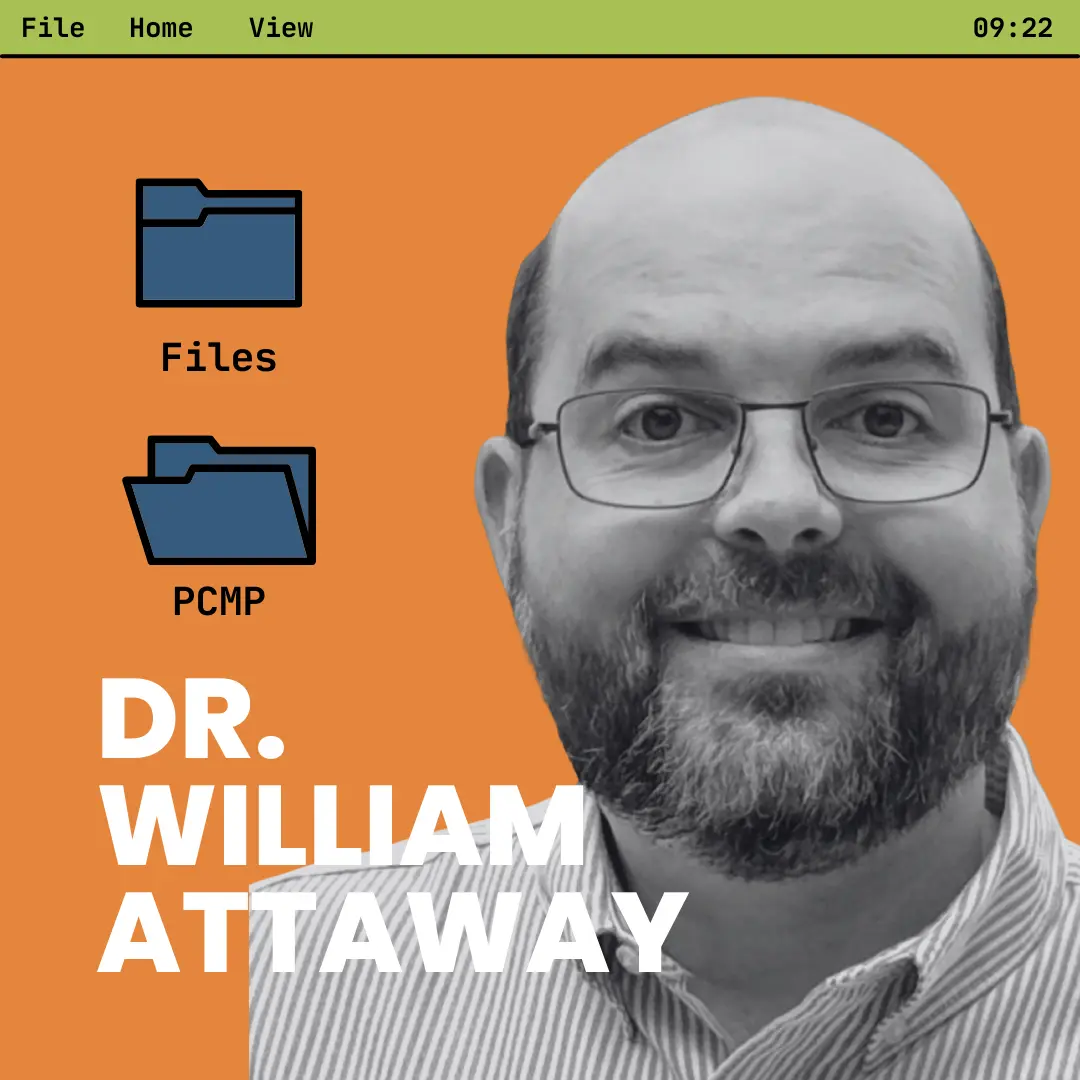
This Episode's Guest
Dr. William Attaway
Catalytic Leadership, LLC.
Dr. William Attaway is an Executive Coach specializing in leadership, mindset, and productivity who has been leading teams and coaching leaders for nearly 30 years. He's coached hundreds of agency owners and their teams on 6 continents, helping them to navigate and overcome the leadership and mindset challenges that can be overwhelming. William has spoken at events and to teams including Seven Figure Agency, Prospecting on Demand, Spyglass Ops, the All-In Agency Summit, Extendly, SHRM, and MinistryPass. He's written several best-selling books on leadership, and is currently working on his third, which releases in January, 2025. Pulling from his own nearly 30 years of leadership experience leading and coaching leaders and teams personally, as well as from the hundreds of leaders he has coached, clients have access to a knowledge base that is deep and wide, a coach who is FOR you, and a proven methodology that will help you stop spinning your wheels into overwhelm and overwork. He and his amazing wife Charlotte have been married for 26 years, and they have two exceptional daughters, one in college and one in high school.
Download the first 2 chapters of his book The Catalytic Mindset (releasing January 21, 2025):
https://catalyticleadership.net/mindsetbook/
Connect with Dr. Attaway:
https://www.linkedin.com/in/williamattaway/
https://www.facebook.com/williamattaway
Growth is a decision and growth only happens on the other side of change.
Episode Transcript
Expand
WIW (00:00) Hey, what's going on walk-ins welcome fam. We're glad to have you back for another episode dropping on the Wednesdays as usual. It's Nick it's Michael and we have Dr. Attaway with us today. I'll do a proper introduction of him in just a minute, but I did want to say hello to you, sir. Hi, what's up brother? are you? We've been like bunk buddies for the past three days at this conference. We just came off of which we'll have a whole episode about that guy because it was fantastic. A lot of cool things that came out of it, but yeah, happy to be here. Happy to have an interview on. This is actually our big interview month. Yeah, we got a lot stacked up, but I'm really excited about this one because I'm friends. Yeah, exactly. And we were even joking, like I usually do the intros, like, I know them really well. It's like, okay, well you do the intro because I won't sound as genuine as you would. That's right. That's right. But as always, we're here to help you get more patients to deliver better care, to get repeat visits and to scale your clinic. And part of that is bringing leadership principles to the table. And I can't really think of anybody that I know that does this better than Dr. William Attaway. Before I get you in here, man, let me just read off a couple of things. One, we met not too long ago at the commitment summit, right? With the heights. Right. And we, we just immediately hit it off and became friends. And I think that's part of like your personality, but even more so just the things that you bring to the table. And we found out very quickly that you're going to be speaking at another event, which this audience has heard seven figure agency probably ad nauseam at this point. But you, you not only were introduced. Dr. William Attaway (01:07) That's right. WIW (01:28) to that community, you were very quickly asked to step into leadership in that community, which is just incredible to me. So, let me read off a couple of things and we're going to bring you into the podcast. Here we go. Dr. Attaway is an executive coach, specializing in leadership mindset and productivity. And he's got 30 years plus of experience. That's crazy. coached hundreds of leaders, and teams across continents. That's interesting. I can't wait to hear more about that, including agency owners and healthcare professionals. spoke at a prominent events like seven figure agency, which we talked about SHRM spy glass ops, all the agency, all in agency summit. I know you have two books and I know you have a third one that's coming out in January. That's super exciting. And you even have, I think a couple of chapters you're going to let people have access to. and then you've been married the most important and best stat here is you've been married for 26 years and you have two amazing daughters. Dr. Attaway, say hello to the Walk-Ins Welcome audience and tell us one thing about you that nobody else knows. Dr. William Attaway (02:29) Man, it's an honor to be here, Nick. It really is. I'm so grateful for the invitation. One thing about me that nobody else knows that's getting harder and harder the more shows like this I'm on. WIW (02:39) That's right. Dr. William Attaway (02:40) I'll tell you something that you may not know. I don't know if all of your audience would be aware. I've spent a good bit of time on archaeological digs in the Middle East, working in Jordan to the Northeast part of the Dead Sea at a site that after 16 seasons of excavation, we believe is the site of Sodom. WIW (03:01) Well, like Sodom and Gomorrah Sodom. Dr. William Attaway (03:03) Bye, bye Sodom and Gomorrah. WIW (03:05) Like fire or brimstone coming down to the ground? does that release? I want to learn about this. Dr. William Attaway (03:07) I've got some of the ash from the site that I keep here in my office. WIW (03:15) Did y'all find the pure sulfur nuggets? Dr. William Attaway (03:19) Well, the interesting thing, we can go into this if you want. I can definitely bore you with the science if you want. What we believe based on the analysis of the site, you've got a site that is massive. It is the largest Middle Bronze Age civilization known in that part of the Near East at this point in history. The town of Abraham, you're talking Middle Bronze Age. And it looks like... WIW (03:25) I'm into whatever. Dr. William Attaway (03:44) from the analysis that has been done by scientists all over the world, it looks like there was an air burst, meteoric air burst that caused a flash point that, if you can believe it, caused heat that was not known to the world until the invention of the atomic bombs. It was immediate flash, heat, and cooling, and the glazing on some of the pottery that we found has the bubbling of what they call trinitite. And it's something that only happens when something gets really, really hot and then immediately cools. And we found this, we found this like in the middle Bronze Age layer there at this site. So just remarkable. There's nothing in the world at that point in history that could have caused that. WIW (04:20) That's wild. That's unbelievable. Dr. William Attaway (04:32) except for higher from the sky. WIW (04:34) That's cool. That's incredible. Well, I was going to say this tops the, the jail one for sure. As he, as he knows, Jonathan mass. I was going to say, as he already knows, he spent time in prison before he became the actual AI guru. Right. So yeah, we've had Jonathan on here talking AI. Well, listen, man, thank you for coming on the podcast. I'm so psyched about this. Dr. William Attaway (04:38) Hahaha! I had Jonathan on my show. I totally get it. That's right. That's right. Yeah. WIW (05:02) We just got back from a conference and I don't want to talk about us. We're going to very quickly dive into you. But we just came back from a conference in Nashville. We were with some very high up urgent care owners and decision makers. Hundreds of locations. think what was the stat they kept throwing out? All the urgent cares in the room are serving like 40 million patients a year. Yeah, something insane. Like something insane. Yeah. And it was real because like the top three urgent cares were in the room in the nation. Dr. William Attaway (05:26) Wow. WIW (05:32) It was cool. Yeah, it was cool to be in there, but it was very, very obvious that there is a leadership challenge in the healthcare community, not because it's not of interest. It's not because they're not capable. I think honestly, it's because they're doctors. If I'm being real, like their leadership extends to the patient, but that's not the same skill set. as a team of people. very broadly, real quick, talk about your leadership expertise and your leadership coaching. We'll start with that and then we'll dig in. Dr. William Attaway (06:07) My journey with leadership started when I was 15 years old. I was a high school student and one of my teachers invited me to attend a leadership conference. I was like, me? And he was like, yeah, he saw something in me I didn't see in myself. And I got on a plane and I went. and listened and learned and I was hooked. And now for almost four decades, I have been a student of leadership. I've been leading teams and coaching leaders now for about three decades. And what I've learned, not only from my own experience in leadership, leading my teams, but also from the hundreds and hundreds of leaders that I've coached one-on-one is that there are ways to lead and there are ways not to lead. And I'm not going to live long enough to make all the mistakes myself. I'm just not. I'd rather learn from as many people as I can and try to avoid as many ditches as I can. So I don't have to drive into those. I'm going to find my own and I have. But if I can learn from other people and then I can bring that knowledge base of not only my own journey, but all of those leaders, if I can bring that knowledge base to bear for my clients and help them to lead their teams, their businesses, their practices in ways that is going to benefit their clients. That's what fires me up. That's why I get up in the WIW (07:28) You know, it's funny that you say basically you're learning from other people's wins and mistakes. I think one of the best leadership books on the planet is How to Win Friends and Influence People. And wasn't that essentially a collection of just other people's mistakes and wins? Dr. William Attaway (07:45) 100%. And this is why we do interviews like this, right? So we can learn from other people because we can mind their stories for their wins and their failures. It helps us to grow and develop and it helps us then to invest at higher levels in other people. First, with the team that we lead, and second, with the clients that we serve. WIW (07:50) Right. When you're, when you're digging into a client and you are trying to figure out how you're going to best help them, what are the top two, three, five, you may have 20 things, but what are the top things that you're, that you're looking to expose? Dr. William Attaway (08:28) You know, the first thing that I want to do in part of my intake process is I want to understand where they feel the pain. And these are areas that I call primary focus areas. And we're going to define those. First, I'll let them take a stab at it. And they begin to put those on paper and tell me, hey, these are the things that I want to work on. These are the things I want to improve in. These are the areas where I'm feeling some pain. Now, most often, those are not in final form. Most often those are way too vague. They're not clear enough. It's really hard to hit a bull's eye when you can't see it clearly. And so what we have to do is then take those areas, dial them in to something that is then specific and measurable. Because I want my clients at any given moment to know, hey, this was the goal. This is where I was. This is where I am now. And you can see and measure progress. I believe anybody who says you cannot measure progress in your own personal leadership growth and development. They're just not trying hard yet. You know, you can absolutely measure. We measure what matters. And if you don't believe that, I want you to stop looking at your bank statements and just guess how much money you've got in the bank. You measure what matters. WIW (09:38) Pretty good indicator. Yeah, that's true. Well, the bank accounts, one of those employee turnover is another one of those. And, you know, your personal feedback loop, that's a good indicator of your leadership quality. Leadership though, yeah, at the end of the day, has an impact on the bottom line, right? Dr. William Attaway (09:40) F ya. 100%. But, and I've got a client that I started working with about 18 months ago, right? He had a high turnover rate among his team and he had a high turnover rate among his clients. And the things that I kept hearing from him during the intake process were, I just had better people, if I just had a better team, they're just, lazy, they're not doing what they're supposed to do. And the turnover was just so high. And I looked at this and it was not just a few people. This is over an extended period of time as we went back and looked at the history. And as we begin to dial it in, had to ask, because my job is not to be your friend, my job is to help you. I had to ask, what do you think the common denominator is here? And the common denominator is not that all you do is pick losers. Okay. The common denominator is you. And what we have to do is help you develop the systems and the processes that you need so you can lead your team in a better way. Because right now they're leaving frustrated. They're leaving discouraged. And that is. The cause of that, you can see every time you look in the mirror. And he received it. He didn't like it much because no one would, but he received it. And I can tell you 18 months later, he now has team members who have been with him well over a year. And not only has his team retention risen, but his client retention has almost doubled, right? Well, what do you think that does to the bottom line? He's seeing numbers he's never seen before. WIW (11:20) Well, yeah. yeah. Yeah. So this reminds me of a, example that I remember seeing 10 years ago here locally. There were, it's kind of a dumb example, but it makes it lines up perfectly. So there were, there was a little bit of an upset on Facebook of a local McDonald's and a local Chick-fil-A situation. And the McDonald's was like getting blown up about how horrible the service was, how it was just Dr. William Attaway (11:25) Like, okay, this is what leadership means. Okay. WIW (11:54) bad experience, right? And the, the manager or whoever of that store put on there, I can't find good people. So why are y'all complaining? He was just saying like, there are no good people in the area. And then people start coming. Have you seen the Chick-fil-A down the road from you? It's the same people and it's a hundred times better. You're the problem. And it's true. Cause like at the end of the day, like, you know, if your competitor down the street is killing it and they're doing the same thing you're doing it. Dr. William Attaway (12:12) Yeah. WIW (12:24) You tend to be the issue. there's the common denominator most of the time. Like there's something that you've created by accident or on purpose that's now created a place where people don't want to work there. People don't want to go there as a customer or a patient or whatever. And you have to fix it. If you can't fix yourself, you can't fix it. So I just, yeah. Dr. William Attaway (12:29) 100%. Ed Deming wrote many decades ago that your systems are perfectly designed to give you the results you're currently getting. If you don't like the results you're currently getting, Secure systems and leadership is a system. The culture that you have is a system. Every business, every practice has a culture. You either have one you created on purpose that you curate or you have one you didn't mean to have, but you have a culture. Your team knows what it is because they feel it. And you as the leader, that is something you can never delegate. Setting culture, curating culture, protecting culture, that is one of the first ways a leader really makes a difference and turns their team from just this constant churn machine into a catalytic, high capacity, high performance team. WIW (13:38) think it's a little frustrating that you would have the audacity to come on this podcast and just start yelling at me like that. I don't know. I thought we were, I thought we were on good terms and here I am finding out that I'm the problem. It's part of it, right? Doctor at away. It's not just will. It's doctor at away for a reason. man. No, that was good. That was some strong sauce that you're feeding. Dr. William Attaway (13:44) Hahaha! Yeah. You WIW (14:05) so we apologize audience if we just attacked you personally, but somebody just turned off the road. So, but yeah, if you're running your clinic right now, like you are the top of those chain food chain there and it's not doing what you want it to do. Go look at that mirror. That's maybe just that man. want to dig into this systems approach for a second. Yeah. Yeah, exactly. You, you, you are a result of the systems, which is a leadership issue, man. Go keep going with that. Dr. William Attaway (14:33) You know, everything that is important in your business is systematized. Okay. How you deal with money, how you deal with intake of patients, right? How you deal with treatment of patients, how you deal with follow-up of patients. Look, all of this is systematized. You have a system for these things because it matters. Right? Why would leadership, the leadership of the entire business, why would that not be systematized? And yet so often, when I'm talking to a leader and I asked them, what's your system for this? How are you intentionally developing and growing? The answer is, know, yeah, yeah, it's happening without a plan, without intention. It's happening. Here's the thing. And you guys know this, like your business needs you to lead at a higher level today than it did a year ago and three years ago and five years ago. You have to lead. The challenges are different, right? As you grow, that means new challenges, more difficulty. Three, four, five years from now, that is still going to be true. What are you doing right now to become the leader that your team, your practice needs you to be three years from now? You get to choose. You get to decide that. What's your plan? WIW (15:43) Right. Dr. William Attaway (15:56) It's time to put together a plan and it's time to execute just like you would in any other area. WIW (16:02) You know, we just, we talked briefly about coming off of this conference out of Nashville, this merchant symposium. And one of the themes was say the thing out loud. It was just kind of the thought process behind it. I know like for me, the thing to say out loud is it, it's leadership is hard. Like it's not, it's not for the faint of heart. It's very, very hard, but it is a simple concept. What is in, in Dr. William Attaway (16:12) Mm. Yeah. Yes. WIW (16:31) I know Dr. Maxwell says this and everybody else, but like what is leadership at its fundamental core? What is it? Dr. William Attaway (16:37) It's influence. It's nothing more, nothing less. This is what Maxwell has said for decades. Nothing more, nothing less. It's simply influence. You, every person listening to this has influence. Well, I'm not a leader. I'm a doctor. Well, I'm not a leader. I'm on staff. I'm not a leader. Careful. Because if you have influence with at least one other person on this planet, by definition, you're a leader. What are you doing to develop that? WIW (16:38) There it is right there. Dr. William Attaway (17:01) What are you doing to grow that? You get to choose, you get to decide. And so my challenge, my question for every person who is listening is, what are you going to choose? What are you going to decide? Growth is a decision and growth only happens on the other side of change. You cannot just continue putting out fire after fire, which is where most people are when they come to me. They're just firefighting their business. WIW (17:27) Right. Dr. William Attaway (17:29) fire here. fire there. Fire with this team member. Fire with this department. Okay, you can play firefighter all day if you want to. I'm going to argue there's a better way. I want to help you get on the proactive side of this so that the growth and development of you as the leader and of your team happens intentionally and systematically on purpose toward a defined goal. WIW (17:54) What happens to the clinic owner, the doctor, the practice manager that chooses not to lead well? Dr. William Attaway (18:04) Well, I think all we have to do is look at the results they're getting. More than likely, they're going to have high churn among their team. More than likely, they're going to have static results on the bottom line. Their revenue is going to be flat or worse. I do not see people gaining high performance results without intentionality in any business. This takes purpose. takes, you can, you can begin to see growth to a point. But at a certain point, you become the lid on the growth of your business, of your practice, of your clinic. You become the lid. Now, if you're okay with that and you are fine being the lid and it never growing beyond where it is today, I doubt this is the show you want to be listening to, really, right? But if you want to raise that lid, if you want to say, hey, I want to get out of my own way, I want to get out of the way of my team so that we can reach the capacity that I know is possible. WIW (18:50) Right? Dr. William Attaway (19:04) That's gonna take intentionality and that's gonna take a choice. You get to decide that. WIW (19:08) So let's go down that little rabbit hole right there. Getting out of your own way, getting out of your team's way, opening that lid. What's a practical view of what that actually looks like? If somebody said, I want to do that right now, how do I start? Like, what's that first, like, if you do this as a quick win for you and this will actually make a big difference, what is that? Dr. William Attaway (19:29) Your team knows what your blind spots are. You don't because they're blind spots, but your team knows exactly what they are. You need people around you who are going to help you identify and overcome the blind spots in your leadership. You need somebody who's going to help you see what you can't see. You can't see the whole picture when you're in the frame. And so one of the things that I did with my team, because I can't see my own blind spots either, WIW (19:55) But hold on, I don't mean to interrupt you, but just rewind about 15 seconds so that our audience doesn't have to that 15 second rewind button. You can't see the picture because what Dr. William Attaway (19:57) Yeah. No. Yeah. You cannot see the whole picture when you're in the frame. You can't, you're in it. You're in the weeds. You can't see the whole picture there. You need somebody on the outside who's gonna ask you questions that nobody else in your life might be asking you. Who's gonna help you see things that you can't see. This is what I do with my clients. You can do this with your team. I've built a team that is very focused on helping me see my blind spots and helping us as a team overcome them. WIW (20:14) Right. Dr. William Attaway (20:38) Let me give you an example. Part of a culture, one of our cultural values on my team is what I call the last 10 % of honesty. The first 90 % of honesty is incredibly easy to give one another. Right? We can all do that. That's not hard. But we hold back the last 10%. And the reason we do is because we're afraid for our job. We don't want to damage or break a relationship. We don't want to offend somebody. Right? And so we hold it back. We hold back the last 10 % of honesty. problem is that last 10 % is where the magic is. That's where transformation lives. And by holding it back, we are hindering capacity. What I've told my team for years and years, and they can say it with me now, and this is part of who we are as a team, we give one another the last 10%, not because we always all want it, but because we always all need it. And what we want to do for our clients is more important than our own ego. This is true and can't be true for every person listening. You simply have to choose to make it so. WIW (21:39) Yeah. All right. So that last 10 % feels like 90 when you're trying to deliver it. say the first 90 is like the status quo conversation where we're all like floating together. Don't hurt me. I won't hurt you. I have something in my brain. want to tell you, but I'm just going to ignore it by my tongue and get paid next week. right. That's the real thing. we had the last 10 % is Dr. William Attaway (21:52) Yeah. Mm-hmm. Right. Right, right. WIW (22:16) That's hard. I think I want to say we're we do okay. I promise you I'm failing at this regularly. Well, okay. You made me do it. Dr. William Attaway (22:23) You're not alone. You're not alone. Look, I had a conversation two hours ago with one of my team members about this very thing, and she gave me the last 10%, right? About me, about something that I did yesterday. I can't tell you that I was clapping like a seal about it, like, I'm so glad, thanks. I was like, yeah, you're right. Yeah, 100%. WIW (22:35) Hahaha No, there's, I'm thinking, I'm thinking of the last, we do monthly one-on-ones with our team, you know, here's your scorecard here, you know, give me feedback. How are we doing? And I'm sitting here thinking, like, I can remember a thing that I wanted to say, but I didn't say it because I didn't want to deal with the conflict that was going to come along with it. And the reasoning is, and I think this is where people fail on the 10%. Man, Dr. Attaway, tell me if I'm wrong here, but Dr. William Attaway (22:55) Mm-hmm. Yeah. Yes. WIW (23:16) It may not be so big of a deal in your brain, but those 10 % of all the conversations that you have add up to a monster, like a thousand percent at some point. And then there's a blow up. then yeah, everything breaks apart. Dr. William Attaway (23:17) So often, it is not any one thing that causes the explosion. It's a cumulative effect. good friend of mine has said something for years and years, and I've never forgotten it. He says, Bad news is not like a fine line. It does not get better with age. And this is true. This is true with what goes on between relationships, inside relationships. This is true with any kind of conflict, disagreement. This is true with team members. Just because it's not said doesn't mean it's not still there. We can sweep it under the carpet and we can hope that it's going to go away by itself. In my experience, that almost never happens. Most often it grows. And over time, it becomes bigger and bigger and bigger until you can no longer walk on that carpet. WIW (24:21) Yeah. mean, yeah. Bad news is like cheese. It just gets nasty as it gets older, stinkier, and eventually got thrown in the trash. Or you get blue cheese crumbles. you just love the bad news. I remember that movie, Robin Hood Men in Tights. Maybe if you could just tell me the bad news in a good way. Lord. No, keep going. You look like you have a thought. Dr. William Attaway (24:30) Yeah? Hahaha! Right, that's right. Yeah, you know, give me the bad news and the good news. That's a fantastic illustration though of how you can communicate the last 10 % in the right way and in the wrong way. All you say a thing matters as much or more than what you say. You can communicate the last 10 % and be a jerk. WIW (25:07) Right. Dr. William Attaway (25:09) percent. You can also communicate the last 10 percent and let me know that you're for me and that you're for what we're doing. When you communicate it that way, I receive that knowing that we're on the same team. That it's not me against you, it's me and you against the problem. WIW (25:36) You know, let's do some real time coaching with me since I got you on here anyway. So I've been, I've been going through this transition. I just want to get your thoughts on it and how it would apply to leadership principles. I've been going through this transition over the past couple of years of being a nice guy to being kind. And I think they're radically different. But with that, I used to do this thing that I'm all, I'm all PG this and call it a poop sandwich. And I think, you know, what I'm talking about, you know, like I here, here's, me tell you something nice. Dr. William Attaway (25:51) Okay. Yes. I do. WIW (26:06) And then I'm going to tell you the problem and then I'm going to wrap it up with something nice. and I, that's more for me than for them, I think, whenever I was doing that. And I'm not saying there's not a place for that, but I've transitioned a lot in that I feel like Michael may be able to either confirm or deny this. I think I've made enough positive deposits, enough buildup, enough leadership to tell you that I care about you. I care about your future. I care about the work that you do. Dr. William Attaway (26:29) Yes. 100%. WIW (26:34) and we hold high standards and we're, there's the accountability and the feedback loops to where when I do need to give feedback, I don't have to poop sandwich it. can just say like, look, you need to do better. That's just not good enough. And I love you enough to tell you the truth. Right? So how does it, how does the leader bridge that gap when like the world's told you forever, like you have this persona and then not to go to the flip side of that just be a jerk to everybody. Like you were talking about, like there's gotta be a balance, but you have to tell people the truth. Dr. William Attaway (26:57) You absolutely do. Nobody wants to eat that sandwich. Okay, no one does. Like the sandwich, I understand the principle of it, but that's not a sandwich anybody wants on their plate. You got to think about this a different way, right? You got to, somebody serves you that you're like, thanks. know, like, no, you got to. WIW (27:08) Right. Bloody, I've heard a lot of that. Thanks. Don't smell like it. Dr. William Attaway (27:27) You got to put a whole different frame on this. And this is where I go back to the for from thing. If know Jeff Henderson, his book Know What You're For, he expounds on this in such a powerful way. The concept is this, most relationships center around what I want from you. That's the target. And so you go into a sales conversation, right? It's about what I want from you. Right? Or your clinic owner goes into a conversation with a patient. It's not what I want from you. Right? What if instead of that frame, with the relationships that we're in, whether it's with a team member, whether it's with a patient, whether it's with another part of the business, we framed it instead, hey, what do I want for you? What do I want your experience to look like? WIW (28:21) That's good. Dr. William Attaway (28:24) What do I want your experience as a member of this team to be? What do I want your experience as a patient in this clinic to be? What do I want your experience being in a relationship with me to be? What do I want for you? If you begin with that frame, it will absolutely revolutionize every relationship in your life. I know this from firsthand experience, but you have to choose to frame it that way because the default and where most of us are going to land, without intentionality is transactional. It's gonna be about what I get from you, what I want from you. And the shadow side of that is that we can slide into, if I'm not getting what I want from you, then I'll manipulate you until I get what I want from you. WIW (29:10) Right. Let's do a quick practical application from this thought process that you have going on. I'm a clinic owner. I'm a doctor. I have a front desk person that I've asked a hundred times to answer the phone and be nice to the people that are calling because they don't feel good. Right. I'm tired of telling you to answer the phone with a smile on your face. This has become an issue that I've already addressed with you five different times. What is it at this point? Do I want Dr. William Attaway (29:24) Okay. WIW (29:38) for you, you know, like talk to that frustrated doctor that said the thing 50 times and now is tired of saying it and just gives up. Just that I want for you to get a paycheck. That's starting to disappear. I don't, want you to not go find another job yet. But yeah, we, cause we have, in the world of urgent care, front desk is a very interesting topic because, even from our discussions this past Dr. William Attaway (29:40) Okay. Okay. WIW (30:06) couple of days with the larger urgent carriers, they all agreed. If there's a problem at the front desk, it affects everything. Well, they're chomping at the bit to turn the front desk into AI. Yeah. And they're to the point, they just want to replace the person with a piece of software because it's so inconsistent for them. like, and they admit like they don't, they don't try to fix it. They just say that's just is what it is. I personally think it's a failure of leadership, but yeah. I mean, at the end of the day and, and you know, Dr. William Attaway (30:16) Okay. 100%. WIW (30:34) Because they used to make the argument, back in the COVID days, they were fatigued, they were tired, the front desk was just worn out because someone's going go. And revenue ignores problems, right? If you have problems, revenue just happily ignores them. And that's what COVID did for about two years in the urgent care space, because they went from 30 patients a day to 100 patients a day overnight. It didn't stop for two years. But yeah, that front desk situation is such an interesting topic. Dr. William Attaway (30:46) Okay. WIW (31:02) expand on it later on some episodes and some hopefully some talks at UCA about it. But yeah, I'd love to hear like that doctors like I'm done trying with this person. Like I don't know what to say them anymore. I don't want to go to the hassle of firing them and trying to find a replacement. I'm just going to live with it. What do we tell them? Dr. William Attaway (31:21) This might not be popular, but I'll tell you what I think. As a leader, you have what you tolerate. If you don't like what you have, you need to change what you tolerate. WIW (31:23) You yeah. Dr. William Attaway (31:36) Which means that you have to step toward the mess. Leaders walk toward the mess. We don't ignore it and we don't say, I'll just live with it. We walk toward it. In this case, very specifically, I would have a conversation with the person that is creating a less than optimal environment for the patients. And I would say, listen, we choose and create the environments that other people are going to experience here. We create that environment. Right now, you seem to be struggling to create the environment. And I'd love to know why that is. Can you help me understand? Always lead with questions, right? What's going on? Find out. You may discover information you don't have, something you could do something about. It may be this person is in the wrong seat on the bus to use Jim Collins terminology. It may be that this is not their gift. Great. Then I want to free you up to be in a place where you can be in your giftedness and your zone of genius, because this is not it. I need to free you up and holding you in a spot that is not the right fit for you is painful for the person and it's painful for the clinic. I would go directly toward it and I would not let another day pass. WIW (33:01) I'll only add because I think everything you said is 100 % accurate there. The only addition I would say is as a leader, be prepared to get the feedback when you may be the, like if you're failing to lead, then you're going to get feedback on your failure. Like, yeah. the way you react to the feedback will define if you'll ever get feedback again. That's right. Dr. William Attaway (33:12) Yes. Yes. Thank you. That's exactly right. If you don't receive it well, that's the last you'll ever get. You have to receive it. That's right. Exactly. Well, if you ask for 10 % and somebody gives it to you and then they don't show up for the next staff meeting because they don't work there anymore, you have just communicated something to the culture in your business. Everybody else now knows, he says that, she says that. WIW (33:27) Yep, no more 10 % for you, buddy. Alright. Right. He's a psycho. What happened to Bob? Bob just told him exactly what he wanted to hear. Dr. Attaway, I told you this was going to happen. We're going to be knee deep in great conversation and we're going to hit a wall and we're not going to be ready to finish. I it was going to happen. knew this. I knew how this call was going to go. But I want to do two things because here's the cool part about this, right? You have your own leadership podcast. Dr. William Attaway (33:50) They don't really mean it. WIW (34:17) And people can continue to hear your thoughts on leadership with different interviews, more promotions on what's going on in your world, in the leadership world. So take, take two seconds and talk about your podcast. Where, where can they find your podcast and what can they expect from your podcast? And then I'll wrap us up. Dr. William Attaway (34:36) So we are in the third season now of the catalytic leadership podcast. You can find it anywhere you listen to podcasts and we interview entrepreneurs and business owners of all stripes. to help you learn how to avoid ditches. WIW (34:49) I love it. All right. So go to the catalytic leadership podcast, subscribe, like smash the light button, all the things, right? The other thing that I want to talk about is you have a book that's coming up in January 25, and you already have a preview available for folks. Now we're going to drop a link to that in the show notes so people can get access to that. But real quick, just give us a, a 5,000 foot view on what this book is and what they can expect from it. Dr. William Attaway (35:14) You know, two years ago, I wrote a book called Catalytic Leadership, and it was 12 principles that I have seen common threads through the hundreds of coaching conversations I've had over the years. And these were these were principles that I think you can apply to move your leadership from where it is to be more catalytic. As I continue in my study and learning more and more about this, I discovered that there's a mindset that has to be in place for you to lead at a catalytic level. And so the new book is called the catalytic mindset. It's how to develop the mindset from which your thoughts, your words, your actions, and your beliefs grow. WIW (35:52) That's good. You know, it's been said that you're the average of the five people that you hang out with and we've been hanging out with Dr. William Attaway. So your average just went way up. I just gotta throw that out there. So Dr. Attaway, man, thank you for coming on to the podcast. I'm excited to also be a part of yours. That's coming up soon. But more importantly, man, I appreciate your friendship. It's been great getting to know you and I can't wait to schedule my first leadership session with you through Seven Figure Agency. That's going to happen. Dr. William Attaway (36:19) Absolutely. It's been such an honor to be with you guys. Thanks so much for having me. WIW (36:24) Awesome. And we'll talk to you soon. Don't hang up, but we'll talk to you soon. All right. Dr. William Attaway (36:28) Well, do.

Free Clinic Audit
Want the Strategy Behind the Episodes?
Book a free clinic audit and we'll apply these ideas directly to your clinic.
Schedule a Call + Free Audit