
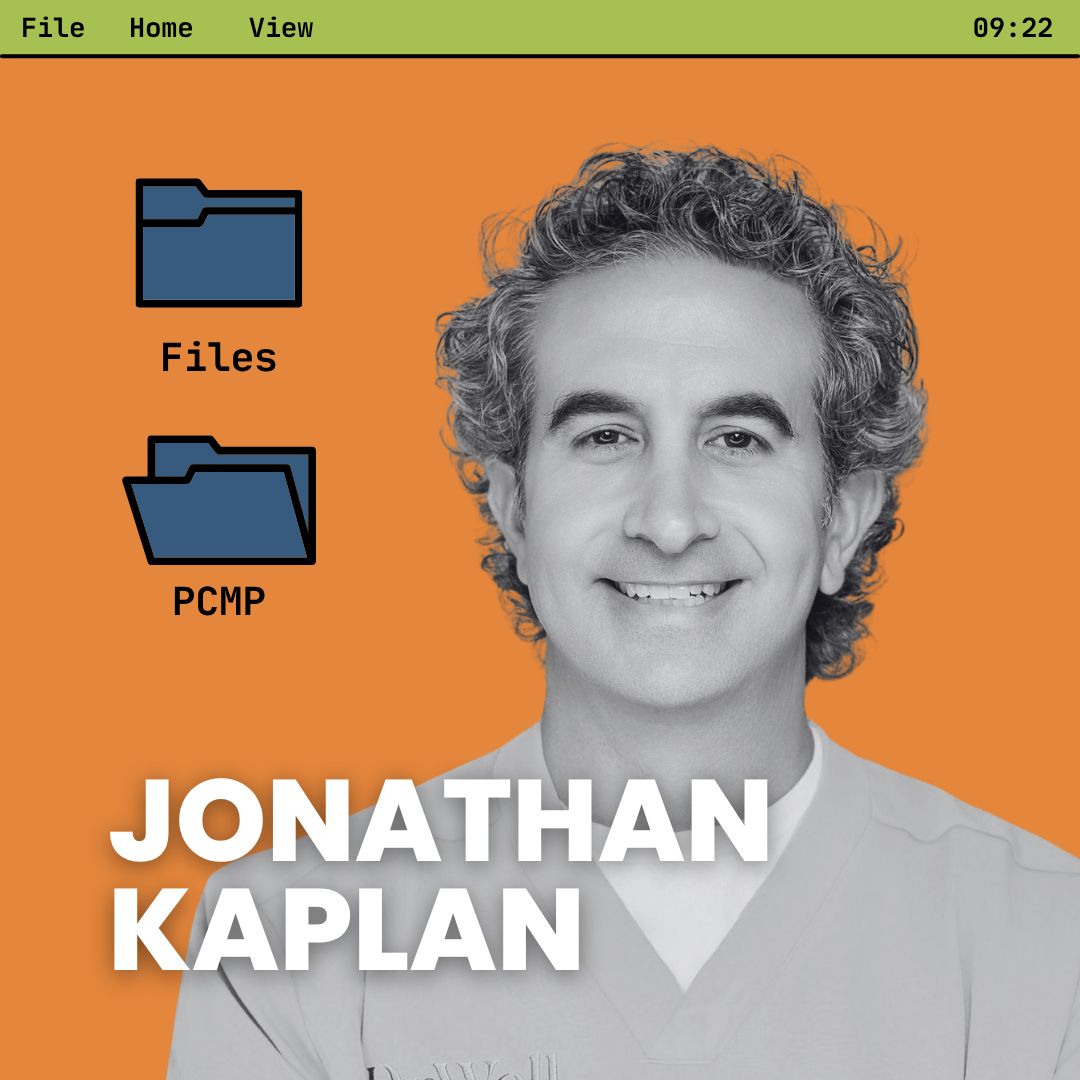
Ep. 240: Building Recurring Revenue with Medical Weight Loss Interview with Dr. Jonathan Kaplan from DrWell


About this Episode
Many urgent care owners want to add medical weight loss and wellness services but quickly realize it is more complicated than prescribing medication. Compliance requirements, pharmacy relationships, payment processing, patient enrollment, and ongoing management can make getting started feel overwhelming.
In this episode of Walk-Ins Welcome, Nick and Michael sit down with Dr. Jonathan Kaplan, founder and CEO of DrWell, to discuss how urgent care clinics can add weight and wellness services without building the entire infrastructure themselves.
Dr. Kaplan explains how DrWell helps practices stay compliant, manage medication offerings, create a smoother digital patient experience, and compete with direct-to-consumer platforms. The conversation also explores how vertically integrating medications can help clinics retain patients and revenue instead of sending both to an outside pharmacy or online provider.
If your clinic is looking for a practical way to add cash-pay services and create more predictable recurring revenue, this episode offers a clear place to start.
Topics Covered
💰 How medical weight loss can create recurring clinic revenue
🏥 Why urgent care clinics are positioned to offer ongoing wellness services
⚙️ How DrWell simplifies compliance, pharmacy access, and patient enrollment
📱 Why a convenient digital experience helps clinics compete with online platforms
💊 How vertically integrating medication offerings can help clinics retain revenue
🔄 How one-time urgent care patients can become long-term wellness patients
📈 Why subscription-based services can improve financial stability
🚀 How providers can launch without building every system from scratch
Healthcare has never been consumer friendly. We're making it easy for patients while keeping them connected to a real provider.
Dr. Jonathan Kaplan from DrWell
About Our Guests:
Dr. Jonathan Kaplan is a plastic surgeon based in San Francisco and the founder and CEO of DrWell, a provider-to-consumer weight and wellness platform. DrWell helps providers and practices level the playing field with direct-to-consumer medication offerings while maintaining a connection between patients and real healthcare providers.
PCMP (00:00.738)
Hey, what's going on, Walkins? Welcome, family. You're back for another episode brought to you by Patient Care Marketing Pros. As always, we're here to help you get more patients, deliver better care, get repeat visits, scale your clinics. Part of that discussion today is how to add another line of service to your urgent care. We got a great guest today. Michael, tell us about our guest. Yeah. So, you know, we've talked to urgent cares for a long time now. We're like, how do I add, or I want to add GLP one to my clinic, but I don't want to go through the process. I don't have the time to do it. Well then
Jonathan, Dr. Kaplan fell into our lap with Dr. Well. And he's like, I got this stuff figured out, man. Like, this is super easy. Turnkey. Like, okay. So we have Dr. Kaplan on today. He is the founder of Dr. Well. Dr. Well's been around for 13 years, but he's actually a plastic surgeon as well. So see, he's the like the I am a doctor, but I built this really cool business to help doctors, which is super cool because you don't get to hear about it very often. But Jonathan, thanks for coming on today. Jonathan.
Jonathan Kaplan, DrWell (00:56.729)
Happy to be here. Thanks for having me.
PCMP (00:58.69)
We're pumped to have you on the podcast. Say hello to the Walkins welcome audience and tell us one thing about you that no one else knows.
Jonathan Kaplan, DrWell (01:05.562)
I play the tenor saxophone.
PCMP (01:09.23)
Shut up. no. Well well I I'm just gonna walk away now. Yeah, I'm just gonna say, man, well, I don't I don't know about that. My son plays well now. that is wild. What kind do you have? Okay, do you like do you still do you still play though?
Jonathan Kaplan, DrWell (01:14.149)
But but not as well as you
Jonathan Kaplan, DrWell (01:22.459)
Tener saxophone. Never never got into the others.
Not not as much as I used to, definitely not. But but
PCMP (01:29.29)
I was gonna say like do you have a Selmer? Do you have a Yamaha? Do you have a you know? Okay. Yeah.
Jonathan Kaplan, DrWell (01:32.953)
I do have a Yamaha. Yeah, I do have a Yamaha, which was which is interesting. That's funny that you ask about a Yamaha because when I first got that saxophone, everybody was talking about Selmers and things like that. Like Yamaha was sort of at least seemingly new to the space. Because people like Yamaha, that's you that's a lawnmower or something, you know. but yeah, it's a Yamaha saxophone. I think that they make great saxophones.
PCMP (01:49.048)
That's right.
PCMP (01:53.316)
they really do. Mine's a Yamaha sixty two. It's a professional line and it's fantastic. I love it. Anyway, well, I love to hear that you played. That's what that was my schooling. So I went to school at the University of Tennessee for studio music and jazz performance. I did not become a doctor. but I can blow a horn from time to time. I still do that. So I feel like you're making a much bigger impact than the other. But today we're gonna talk about blowing some weight off of your body. There you go. Such a good shit. How about that? So well, I tell you what, let
Jonathan Kaplan, DrWell (02:06.158)
Wow. Wow.
Jonathan Kaplan, DrWell (02:18.67)
Nice segue.
PCMP (02:23.074)
Let let's scoot way back on this. first of all, love your love your icebreaker question. Thank you for that. But let's go back. I I believe if I read the notes correctly, it was around four years old where you're like, I'm gonna be a doctor, I'm gonna be a surgeon. You don't have to go way back, but let's go way back. Let's do that. Yeah.
Jonathan Kaplan, DrWell (02:36.302)
Yeah. But yeah, no, that's that's a true story. I I don't really remember it. I just but it's it's been told to me repeatedly. my father was a surgeon, so I just always I you know, you want to be what your dad is. I guess if he was a fireman, I would have said I wanted to be a fireman. But a family friend would always tell me the story as I continue to grow up. He's like, Yeah, I remember you were I asked you when you were four years old what you wanted to when you grew up, and you us I want to be a surgeon. And it was like kind of a really thick Louisiana accent, since that's where I'm from.
And and as I got older, I still was interested in surgery. And when I was eleven years old, I actually got to go watch my dad operate. that was back when they would allow you to do that. And I continued to go watch him operate. And then when I was 16, was in the doctor's lounge with him and a plastic surgeon asked if I wanted to come watch a case he was doing. And my dad encouraged me to go. And so that's when I saw that case, which was not like a facelift or a boob job or something like that. It was like a a cancer reconstruction to a woman's leg. And
PCMP (03:11.342)
wow.
Jonathan Kaplan, DrWell (03:32.129)
way the doctor took the skin from the neck to reconstruct the hole in her leg after they removed the cancer. I was I was sold on plastic surgery at that point at 16 years old. And then went through the whole process, you know, college. but that's maybe another thing people don't know about me. I don't actually have a college degree. I I did four years of college, but but all the stuff you have to get from medical school, like you know, you have to
You have to have certain number, you know, GPA in science. You gotta have recommendations. You you have to take all these specific science courses. But you don't actually need like everything that you would normally need for a college degree. So after four years of college, got getting all my prerequisites, taking my MCAT, getting into med school in October of my last year of college, I was like, Well, I I'm I was a bunch of credits short. I still did the whole four years, but I was a bunch of credits short. And I was like, Well, I guess I don't really need this college degree at this point. So
Went to medical school, you know, originally from Louisiana, went to med school at LSU in New Orleans. then did general surgery at LSU in New Orleans, then went to a Cleveland Clinic for my plastic surgery fellowship, then came back to Louisiana and went into practice for six years there in Louisiana as an employed physician and then had an opportunity to go and take over a private practice in San Francisco. And my wife and I moved here 13 years ago, and that's how that's how I'm in San Francisco now, still practicing plastic surgery, have my own in office accredited operating room, so super convenient.
And but then at some point in there, I realized one of the problems I saw was patients were always calling about cosmetic procedures asking how much they cost. And I realized there was no good way of giving them that information of how much something cost. You could, you know, you they would call and they would ask how much something cost, and you could, you know, there's two ways of handling it, and they were both wrong. One way was going through all of the different pricing, you know, the surgeon's fee, the OR fee, the anesthesia fee.
And then they'd All right, thanks, and they'd hang up. And so 15 minutes after giving that explanation, you know, you got nothing out of it. And then the other option was to tell patients they had to come in for a consultation first. And that just aggravated them to not have any idea of a ballpark figure. So I started this company that allowed for price transparency on your website, but only in exchange for the patient's contact information. So it was lead generation combined with price transparency, but it was accurate pricing. Like they would put in their they would choose from a wish list of things.
Jonathan Kaplan, DrWell (05:46.735)
And then they would get that pricing as as soon as they put in their contact information. So it was that instant gratification. And so once they were able to check pricing, the natural next evolution was: well, they can certainly purchase some non-surgical things, maybe not a breast dog, but some non-surgical things after they found out the cost. And then that got into subscriptions, and we built that whole e-commerce platform out in that company. And then fast forward to about five years ago, I had a TikTok go viral about GLP1s.
And we had all these patients who were s wanted to sign up for these medications from our practice because we had access to them through a compounding pharmacy. And luckily that other company I had was able to process subscriptions because patients, you know, get a monthly medication a vial of medication every month. So that's how we evolved into Dr. Well from price transparency to e-commerce to Dr. Well to help support my practice, but also all of our other practices so that they could provide these weight and wellness programs with a subscription based model.
PCMP (06:46.734)
That's very cool. I'm trying to unpack all that story at the same time. You did say something twice that it it wouldn't be a good episode if I didn't have a story to tell with something that you said. So we do that quite a bit. But you you you've now said boob job and breast augmentation. And I can't not tell the story where I had a plastic surgeon here locally that I was working on building their website out. And well, they wanted before and after pictures on their website, which is great. And you work when you can when you're a startup.
Until your twelve year old niece walks by and you're putting these pictures on the webpage and she looks at you and has not looked at you the same ever since. And that was, you know, eight, ten years ago. So anyway, I just thought that was funny.
Jonathan Kaplan, DrWell (07:23.471)
Right.
Yeah, I've got to be careful when I'm on a plane and like I'm getting prepared, like I'm on the way back to town and maybe I'm reviewing a patient's case that I'm gonna do in a day or two. And I have to make sure I position the laptop so that nobody is like looking at these before and afters of breast or a naked woman because I'm talking about doing, you know, looking at doing a tummy tuck on her. So yeah, I've got to be very careful about that. That does out of context, people are wondering what the hell's going on.
PCMP (07:48.77)
That's right. Yeah. no, I mean, honestly, she still hasn't looked at me the same since, even though I love my niece, don't get me wrong. But there's always that kernel in the back of her mind of is my do I have a creepy Uncle Nick? Is my like is that what it is? And I'm like, no, I'm not. I swear. What do you do with that? Go ahead, Michael. But anyway, so I love the background and I love how now like you saw you had to shift the company a little bit based on what was going on in in the market.
Jonathan Kaplan, DrWell (07:52.843)
Ha ha.
Jonathan Kaplan, DrWell (08:00.079)
Right. Is he that creepy uncle? Right.
PCMP (08:15.554)
And that's what's bringing our conversation today. It's all about the GLP one side of things. so you know, we work with urgent cares all the time. And one of the biggest things, like, hey, I've got my urgent care services figured out, but I want to offer Medicaid weight loss, I want to do the GLP one. Well, when they say that, we tell them, like, hey, you need legit script, you need this, you need that. Well, I don't want to deal with that. And then they realize, I don't really have an operational side of this to make it work. I thought I could just prescribe something and just it'll be fine.
And then they have this realization like, there's a lot more to it. Well, then you come along with Dr. Wells, like, actually, I have something that's very turnkey and can make it where you're s you know, prescribing within a day or two. And it's all com in compliance and all the good things. Talk about it. Connect the dots for us.
Jonathan Kaplan, DrWell (09:01.788)
It it's true. It's yeah, it it's really interesting. I think if you look back, look over all of the practices out there that are offering weight and wellness, GLP ones, peptides, then I would say ninety-nine percent of them are doing something wrong or even outrightly illegal, maybe not maliciously, but it's either noncompliant with either state or federal law, or it's not best practices, or they're getting something like you know, research grade meds and things like that.
So it's really interesting how it has gotten so much more complex because of the fact that there's a lot of money in it. And so there's been a lot of bad actors. And so that's where all these, you know, state and federal regulations come in, you know, state board of pharmacy, state legislature, your medical board. So it has gotten more complicated, but that's the thing, is that that's where we come in, is that we figured it out for ourselves. Thankfully, we never got in trouble by doing anything, you know, illegal or anything like that. But we were able to see all these things coming down the the road.
And so we were able to preemptively prepare for them. So the and when it comes like legit script, for example, if you want to advertise using the names like semaglutide, tears epitite, or even any medication, testosterone, if you want to advertise, you won't be able to do that unless you're legit script certified. Like you won't be able to advertise on meta or faith, excuse me, Meta or TikTok unless you're legit script certified. And that requires months of paperwork and fees, like thousands of dollars. And if you're not really going all in on the advertising, it probably isn't worth it to you.
We have gotten LegitScript certified because it's beneficial for all of our providers to work through us for it. But but so yeah, LegitScript is good is a big hassle and it's not necessarily an investment you have to make. But the thing is, though, when it comes to the actual medications, is that you got to make sure you're going through 503A pharmacies, not research grade, you know, powders and things like that. But then on top of that, the 503A pharmacies have to have a license in your state. So if you're a multi-location urgent care center.
Then and you're seeing these patients, you know, your options are you can just send them to Lily Direct, but you're not generating any of that revenue in the process. And you're probably still having to follow those patients to some extent if they don't have a primary care provider. So you're you're giving them the medications, you're taking all the the risk of supporting them f while they're on these medications, but you're not generating the revenue for the services you're providing. And so that's what we're able to do is we're able to encompass all that into the Dr. Well platform where
Jonathan Kaplan, DrWell (11:24.76)
If you're seeing a patient, it's not just GLP1s, it's anything a compounding pharmacy offers. So it could be, you know, if they're on GLP1s, they might be losing some hair. So they need pharmaceutical grade hair care products, or they might be getting a little bit of a Zimpic face and they need some pharmaceutical grade skincare, or the peptides, of course, which we're able to get from 503A pharmacies now. So the thing is that you would have to go find the pharmacy that's got a license in your state.
And and one pharmacy is never gonna have all the medications you need. So you need multiple pharmacies that have multiple far licenses to cover all your patients. And then the other thing is if you're just by yourself, you're not gonna get the lowest cost of goods. And so if you can't get the lowest cost of goods, then what you're having to charge a patient is gonna put you out of the market. So by going through Dr. Well, we work with all these pharmacies, all of our providers are submitting scripts through our platform. We're able to get the cost of goods down with all of our pharmacies so that you're able to you know, your cost of goods are this.
And then you're able to charge more than that, not upcharging the cost of goods. You're charging for your service. Nobody said you had to do this for free. And so you're able to not only provide the patient these medications for the same price that they maybe they're getting through Novo Care Lily Direct, but you're charging the same price, but you're actually able to generate profit margin within that by vertically integrating it into your urgent care center. And so we we help with all of those things. And and the fact is that you know you have to give these patients you know, monthly medications. Maybe the dose goes up each month and
You know, most people are probably like dealing with a spreadsheet where they're keeping track of that manually. Our system does all that for you, where the dose goes up automatically or you can lock them in on a dose, but they're automatically charged each month, which gets into another compliance issue. And this gets back to why I I feel confident saying 99% of people are doing things either not standard of care or illegal, is that when they're processing that payment when the card is not present because you're you know, you're sending the medication each month, you're not necessarily asking to come to the urgent care center.
PCMP (13:06.675)
Right.
Jonathan Kaplan, DrWell (13:15.468)
every week or every month. But when you're charging them, you have to be using a high risk payment processor for this medication. That's like a a thing. And if you go out and try and get a high risk payment processor on your own, it's like four and a half percent. So I can guarantee you your EMR is not a high risk payment processor because they want to offer you the lowest rates possible and that's not going to be possible. But since we're doing this on behalf of all of our providers, similar to the medications getting the lowest cost of goods, we're able to get lower rates for our high risk payment processors. So when the patient
You send the patient a link to sign up for whatever treatment plan you want. You choose whatever price you want. they sign up with this great mobile-friendly interface, got your logo at the top, so white labeled for you. And they pay for it. We process it through a high-risk payment processor that auto-generates a prescription in our system. You don't have to learn a different compounding pharmacy portal credentials. And you go into our system, you submit that script, and it's electronically routed to the appropriate compounding pharmacy. So the high-risk payment processors is a huge part of it.
And you know, finding the right medications for the lowest cost of goods that have a license in your state, all things that you would have to do if you're going to do it compliantly, which we handle all of it for you.
PCMP (14:23.95)
I think you bring a unique value in the fact that you're you're doing a turnkey service for the urgent care centers. So let's let's let's go a little different direction and and talk about why is an urgent care either better equipped or best equipped or even equipped at all to handle this service when you have a wellness clinic on every corner or you have Roe or what are some of the other ones? I can't even remember. Or even my White Watchers now kicking in. Yeah.
Jonathan Kaplan, DrWell (14:50.83)
Yeah, row and hems and things like that. Yes.
PCMP (14:53.004)
So you have all of these online solutions, you have all of these on the corner solutions, but how do we get our urgent cares to take advantage of this when they have the mind share of I'm only going there when I feel bad?
Jonathan Kaplan, DrWell (15:05.764)
Yeah, no, no, it's a it's a great question. And that's actually kind of one of the things you sp you mentioned, row and hems, and that's one of the things we do is that even if you're an urgent care center and you don't feel like you're competing against the rows and the hems of the world, you're just competing against other urgent care centers. The thing is, there's no reason for you to be turning these patients away if like they're coming in for their urgent care, but there's no reason for you to turn them away to go to a a row or a hems or something like that. You could be taking care of those patients still.
offering these medications so they don't have to go elsewhere. You can be a one-stop shop. You can make it convenient for them. And that's why they're there. And so you're going to be the path of least resistance for them to offer them these medications. And the thing is you might not think you're competing against the Rose and the Hems because those are healthy people. But the thing is if you make it really a a a very high threshold or a lot of friction for them to sign up like, you know, well we got to get your credit card. We got to hold it with us, which again
violates the terms and conditions of Visa and MasterCard. If the process is they have to call in every month to ask for the medications again, all those points of friction are going to drive them to direct to consumer websites. And that's what we do is we provide you that, we we give you the ability to offer that frictionless experience for patients. So they don't have to go row and hem. So row and hymns, the reason that's been so great is that they've got this great online user interface or mobile friendly user interface that the patients can sign up.
PCMP (16:02.85)
Right.
Jonathan Kaplan, DrWell (16:26.296)
You, as an urgent care center, probably don't have that. The practice we have urgent care centers that work with us. We have pro you know practitioners, practitioners like OBGONs, cardiologists, plastic surgeons, med spas. So they aren't gonna have the bandwidth to go build out that mobile friendly experience for the patient. So that's why you're gonna lose your patients to the rows and the hems, even though you don't think they're your competitors. So that's one of the things we do is we make it very easy for the consumers to sign up and then we keep you compliant in the process. But that's the thing, is if you're as an urgent care center are treating these patients.
I understand they may only come there when they're sick or something like that, but you can continue to have this monthly recurring revenue with those existing patients if you're making it easy for them. It might not be a business model you ever thought of, but if you're able to because the reason you haven't thought of it because it was a pain in the ass to do it with all, you know, keeping track of all these different compliance things I've mentioned. But if we're making it easy for you to keep these patients to be able to monitor them if you need, you can monitor them virtually. These medications are so safe that.
You know, I've knock on wood. We've never had anybody come in after thousands of patients that come in with pancreatitis. Obviously, one of the more serious risks. If they have pancreatitis, that's obviously terrible, but it that hasn't happened to us. The main thing that we're seeing, the most common side effect, is dehydration because people aren't eating as much and they're also not drinking as much. So if you're providing them with some feedback support, you can really take care of these patients on a monthly recurring revenue with these medications, providing support for them. And
They don't all have to keep coming into the urgent care and displacing patients that maybe have a more urgent situation going on. But if you're treating these patients with these medications, there's no reason you shouldn't shouldn't be incorporating that into your business model because we can make that easy for you and you can actually provide them with a better experience with these mob mobile friendly enrollment options that they won't necessarily be able to get from a wellness clinic. Cause the wellness clinics are doing everything like analog, you know, they're not, they don't have these nice mobile friendly websites either.
PCMP (18:24.258)
Well, I was like, it it almost sounds like Dr. Well has just evened the playing field in the world of what the national brands are doing. Right. And then the urgent care gets to add their personalization and like I get to see you in person mindset. So now while Roe or Hymns or whatever look good, well, we can match that with Dr. Well. That's super easy now. But now you can also see somebody when you do feel dehydrated, when you do feel like something's not going on correctly, and you don't feel like you have to go talk to
a random person across the country, you can talk to the the urgent care that talked to you originally just down the road. Right.
Jonathan Kaplan, DrWell (19:00.88)
I feel like y'all are y'all y'all have heard some other interviews I've done because it sounds like y'all are using some of my talking points, which I appreciate. No, no, absolutely no, no, it's exactly right. We're evening evening the playing field for providers that are independent providers or urgent care centers that don't have that bandwidth to build these these websites to make it easier for consumers. And so, yes, we're evening the playing field with those direct to consumer brands that you are competing against, whether you like it or not, or whether you believe it or not. And then it's
PCMP (19:06.54)
Well we're not trying to. We'd rather you deliver it.
Jonathan Kaplan, DrWell (19:29.934)
And then that's what we that's what we refer to ourselves. Instead of DTC or direct consumer, we're PTC provider to consumer. We're taking all the benefits of the easy enrollment with the consumers on the DTC brands, but we're doing DTC responsibly because we're actually connecting you to an actual medical practice or an urgent care center where you actually have follow-up. Like, for example, whenever the patient signs up through our portal from our practice, for example, they get an email.
With it, click our text, they click on the link and it brings them this beautiful web page that's got my logo at the top and it shows their care team. It's not some random avatar. It's actually like us and it's like our name and our phone number. So it's the because people forgot that they actually can that there should be that the that that healthcare is so difficult to see a doctor. That's why they've gravitated these DTC sites. But they forgot they actually could have a doctor, and that's what we're providing is the best of both worlds. the the that great easy enrollment experience.
With the automated recurring subscriptions and but also you have somebody you can connect with, an actual real person. Cause that's just not the business model of the rows and the hems of the world. That's there, they're they have they have independent contractors that review your online questionnaire and you will literally never ever see a real provider, and you certainly won't see the same provider if you have a follow-up problem. And it it's crazy. It's like terrible, terrible healthcare.
Because they don't have any of those connections. None of that continuity of care. And that's what we're doing. We're bridging that gap between making it consumer friendly, which healthcare has never been, but also connecting you with that with an actual real provider that you can follow up with.
PCMP (21:05.688)
So one of the things that you talked a few minutes ago was about taking your co your patient and turning it into a repeat patient. And one of the things we scream from the rooftop, you heard it at the very beginning and the opening of this podcast, is one of our core values is repeat visits. And we focus on that as a as a marketing agency, helping our our clinics get repeat visits. And one of those is to take it from a patient that meets maybe twice a year they get sick and go into the clinic.
To now you're turning it into an every other week or a monthly visit? That revenue is huge. So let's get to the business of this, right? The cool part about an urgent care, something that we're so attracted to, is this retail healthcare. And you're adding a retail, a retail component and a retail product line. I love way you said that. Yeah. a retail product line. So let's talk numbers. On average, what kind of growth or what kind of retention or repeat visits? Like what are you seeing from a pure
patient volume and and financial volume to a to an let's just say a a single location clinic.
Jonathan Kaplan, DrWell (22:08.516)
Right. So I would say on average our providers have about 40 patients on a monthly recurring basis. About 40 patients. But we also have some providers that are that have 200 monthly recurring patients. Other providers have 700. What's that? Recurring. yeah. yeah. Yeah. Absolutely. Yeah. All these numbers I've given you are recurring. So average of like 30 to 40, but but some of them have but have, you know, 200 recurring, 600 recurring, monthly recurring patients.
PCMP (22:20.534)
Recurring.
Recurring. Yeah, that's the key. I w I wanna I'm I'm underlining that like mentally recurring.
Jonathan Kaplan, DrWell (22:37.432)
And the thing that's really cool about it now is it that that GLP1s was just like opened up the Pandora's box in a good way for all of these other potential medications that patients realize that, okay, I'm feeling so great on a GLP one. What other longevity medication opportunities do I have? Now, they might not have all as the same amount of data behind them, but what I always say about peptides is at best they work, at worst they do nothing, but they're not harmful based on what we're seeing so far. So the thing is you have a patient, you come in.
to the urgent care center, woman comes in for whatever issue that she's having, but she's also got type two diabetes. Her insurance doesn't cover her medication. She's looking to just go online and get, you know, Lily direct for $299. So you could actually provide her the medication to your Zepitide for $299 a month. But then you can also, and what we call a stacks, that's a the that's what the kids are calling it stacks is that not only can you offer her
Send her a link that includes a treatment plan that's specifically customized for her. But it can be tierzepot, but then they could also have Celenc to help them sleep, or maybe they're worried about neurocognition issues. And so you can add in methylene blues capsules, or maybe they're they're worried about hair loss. And then you can add in Hair Force One, which is a really clever vitamin that really does work. But it's exactly it's it's a great name, but it actually works and it's pharmaceutical grade.
PCMP (23:50.787)
Air Force One. You had me at Air Force One.
Jonathan Kaplan, DrWell (23:58.181)
So the point is you can stack all those medications together. So instead of you now talking about $299, maybe you're talking about $599 a month. And not everybody's going to be able to afford that. And that's all right. And you can they can just go with the $299. That's what they'd be paying for the name brand. But you'll be able to get them the medication faster and you have the more proper follow-up. Because if you go through LilyDirect, it's the same thing where it's like a DTC platform where you have an independent contractor that reviews your questionnaire to make it legal so they can prescribe you the prescription, but that's not your ongoing provider. Whereas
Your urgent care provider could be that ongoing provider. So that's the thing is you could have, you know, dozens, hundreds of monthly recurring patients getting any you know, an average package size is going to be from like 250 to $650 per month per each one of those patients. And these are all medications that normally you would have had to outsource to somebody else, and you would have had to have somebody on your staff trying to figure out what pharmacy offers these things, where we make that all cons consolidated into one platform.
And you can take notes on the patient within our system if you need to, but that's but but the beauty of it is you're not having to manually, you know, swipe their card every month or type in their number every month. It's being done automatically. So it's it's really the stacking is really where the secret revenue really is. If they're not just doing one medication, if they're on two or three medications, then you're really seeing like exponential increase in your revenue.
PCMP (25:20.408)
So couple of math math things. Let's do the math real quick. You you just brought up, I want to know the profit you're seeing per patient that is doing this on a retainer. So is is this on a monthly basis? Did you say somewhere between three and six hundred dollars? Did I hear that correctly?
Jonathan Kaplan, DrWell (25:23.022)
Sure.
Jonathan Kaplan, DrWell (25:33.892)
I was saying you could charge a patient depending on what stack you're offering them of of prescription grade medications, it can be anywhere from two fifty to six fifty. You can charge whatever you want. We just show you're able to see what the cost of goods are. The net revenue.
PCMP (25:42.125)
Right.
Okay, so let's let's go to the let's go to the low end of that.
Jonathan Kaplan, DrWell (25:48.176)
Yeah, let's go with the low end of that. That's fine. We go with two fifty. But what we're seeing consistently on average is a fifty-six percent return on our profit margin. Fifty-six percent profit margin on all of that. So it's it
PCMP (25:58.957)
Beautiful. So the the where I'm wanting to connect this is is that the average clinic requires on average 23 patients per day to break even. Okay. That's just breaking even. And and you mentioned earlier, based on your profit margins that you just talked about, if you had 200 people on a retainer, you start next month day one, paid for. Paid for. Yeah.
Now every patient that comes through the door because they're sick is just nothing but profit for your clinic. So that that's the point I'm trying to make.
Jonathan Kaplan, DrWell (26:33.187)
And and I want to make two points based on that. So one, I I feel I feel their pain about the operating expenses, is that as a surgeon, I used to have to rely on surgery to cover my operating expenses. And you know, my staff and my because I have a nurse practitioner that's really, you know, paid a lot, she's worth it. but now with just our monthly recurring revenue from just the medications, all of our operating expenses are covered ahead of time, well ahead of time. And now surgery is just
Gravy. It's just a bonus. It's like a rain, it goes into a rainy day fund. So it it definitely makes my life less stressful to know that we've already got all of our operating expenses covered. The second point I want to make is that 50% profit margin, that's only going to be if you're getting the lowest cost of goods. If you go off on your own, your profit margin is going to be a lot lower. You still have a profit margin, but it's going to be lot lower because you're not going to be able to, you're not going to be able to negotiate with that pharmacy because you're just one urgent care center. Whereas if you're bringing them
You know, I'm bringing them 300 providers and you know tens of thousands of patients. We we have a lot stronger negotiating power there and they're happy to negotiate with us because they want our business. So that's the thing is the 50 per six percent average profit margin is after we, you know, that's after you've paid for the cost of goods. that's the other that's cool about is that when the patient pays and you submit the prescription through our system, we know what the cost of goods are. So we withhold that from the patient's payment. We pay the compounding pharmacy.
And we send you the net revenue. So you don't have some compounding pharmacy bill at the end of the month. And that 56% is taken into account after we've paid the the the compounding pharmacy cost of goods, after we've paid the shipping, whether you're shipping it to your urgent care center or to the patient, and the credit card fees. That's the 56% net revenue after all of those expenses have been paid. And you're gonna have a lot of trouble getting to that type of net revenue if you're one-on-one with the pharmacy and you're paying their retail rates.
PCMP (28:25.068)
I love it. Now, I mean it it's one of those things, like it sounds great and wonderful, but I'm curious like explaining to the audience. Well, this sounds great, but is it a pain to get started? What's it look like to like how how much buy in is this? It's like sometimes too good to be true. Like there's there's a bunch of costs involved. You know, explain it from the standpoint of I'm an urgent care owner, I like what I just heard, I want to explore this. What does that look like?
Jonathan Kaplan, DrWell (28:52.847)
Right. So we actually just implemented and we're very proud to say this that we think we're the first. We're we don't call ourselves an EMR, everybody hates their EMR, but we are a patient documentation system, a PDS. That's what we like refer to ourselves as. But but people can see how this could feel like an EMR. You're keeping track of patients, you're documenting patients all HIPAA compliant, everything, controlled substances, all that if you need to do that. so p I can see how it would be reflective of an EMR. And what I would say is that we are the first EMR.
That has self-sign up, that it's a self-sign up process. It's not this huge onboarding thing. Because what we have is you could go to our website, drwell.com, go to for providers, and you can start the process where you can actually sign up. And it's gonna be three different tiers, anywhere from 20 29.99 a year to 79.99 a year. And there's one tier in between that. But the thing is you can actually get started, you can sign up yourself.
And it'll walk we have this onboarding wizard that'll have you enter in all of your information as far as who's the provider, who's the front office staff, what are the state licenses, what's the MPI number. You can do all of that yourself. We walk you through step by step. You sign up, you sign the contract, you get the email copy of it, and then you're in there, and then you go into our marketplace and you can see all the different medications we have. It's the the website, I'm excuse me, the platform, it's a work of art. It is beautiful. It's got great imagery. It's like so user-friendly.
It's something like nobody's ever experienced, especially if they're used to working with EMRs. But it's got all of the different medications, GLP1s, peptides, hair care, all the medications. You can look at it them all, and then you can import them from the marketplace into your treatment plans. That's the way we describe these. and the treatment plan could be one medication, it could be multiple medications, it could have add-ons to it. And so you can design it however you want. You can decide what price you want to charge for it because you'll see your cost of goods.
You'll see that there's different formulations for different for the same medication from different pharmacies. And you'll get to pick and choose which one is your preference. And that's where you're able to self-sign up on that. So the again, the range is from $29.99 to $79.99. And then depending on which tier you get, that you're only going to be charged on an ongoing basis for the number of enrollees you bring in. So if you're only at 10 enrollees forever, you're never going to have to pay anything extra. But as you start to grow and get bigger and bigger,
Jonathan Kaplan, DrWell (31:17.349)
There may be additional like it's kind of like a SaaS platform software as a service where you pay for additional enrollees as you get up to that point. And so that's all done automatically. And you'll know when you're getting to that point. We warn you to let you know that you might be getting charged for more. It's kind of like if you think of a if anybody out there uses an email marketing platform, they only start to charge they the way they charge you is based on how many people you have in the email marketing platform, your the email database. So we're the same way that we are that that's the base rate we talked about.
PCMP (31:41.613)
Right.
Jonathan Kaplan, DrWell (31:46.798)
And you may never pay more than that out of pocket, but you're certainly not paying for the medications out of pocket. That's all paid for through us. And you and then you just as you ramp up, then you get charged based on the number of enrollees. But this is all self-sign up, and that's the way it's intended for. If you get in one of the higher packages, we will provide you with some onboarding. But the other thing people ask about like, well, what about the treatment protocols? All the SIGs are already built in. You can adjust them if you need to, but we provide you with the treatment protocols, it's already embedded in there.
And then people will say, Well, you know, I know about GLP ones, but I'm thinking about offering hormone or, you know, peptides. And then we have a chief nursing officer that can provide you with additional information to help get you up to speed on all of those different medications if you choose to add those verticals.
PCMP (32:29.526)
Love it. Last question that I have is on the marketing side, right? So we we all know, and and anybody who works with us as a clinic knows this at this point, is that if I want to run ads on Facebook or if I want to run on TikTok or Google Ads, I have to have legit script, which is a big old early pain in the butt. We talked about that. Can they leverage your legit script to market their clinic?
Jonathan Kaplan, DrWell (32:46.704)
Right.
Jonathan Kaplan, DrWell (32:54.053)
They can't, and I'll explain how that works. And it's gotta be a very specific way so it doesn't violate any terms and conditions of legit script. So yes, we're legit script certified. And so what you do, if you choose to do this, okay, first off I want to say that there is free paid marketing included. Like we will design an e-blast for you in you in in your email marketing system so you can send that out. No we don't charge you to design that e-blast to let people know you have a new weight and wellness program. So that's free. we are paying for advertising.
PCMP (32:55.768)
That's huge. That's huge.
Jonathan Kaplan, DrWell (33:22.715)
To drive people to the Dr. Well provider finder where they will see you listed there and it will show and you can choose to show all your medications there that you offer so people can actually purchase right through there. and then you just get an online questionnaire after the afterwards if they buy before they so that you can legally submit the prescription. so that's all free. We're driving people to the Dr. Well provider finder. The things you can pay additionally for, and as I mentioned, whenever your patients are paying, we're processing their payments and we pay you out the net revenue.
We do the same thing with the advertising, legit script advertising, that we can withhold the cost of the advertising. So you actually don't have to pay out of pocket. We just withhold it from your net revenue. But the way it works is if you decide to do this, you can choose to do this, that we will set you up with a landing page that is specific for your urgent care center, specific for your practice. It'll have your logo, it could have your before and after photos, your testimonials. And what we'll do is we'll run legit script ads for whatever you want to run it for for the weight and wellness.
That'll and that those ads will drive people to your landing page. The landing page is on the drwell.com domain because we're the ones who are legit script certified. So that is legally what we have to do to not get in trouble with legit scripts, but but it is a landing page for you. It's not just drwell.com where they could see other providers. It's a landing page specifically dedicated to you. They put in their information, that's a lead you get. Then they can take it one step further from that landing page where they can fill out an online questionnaire that's got your logo at the top.
They fill out that online online questionnaire. And that's what we call our Dr. Well smart consult. It's like an asynchronous consultation if people are familiar with that. That's how the direct-to-consumer websites do it. Is that you the patients fill out that questionnaire and then you can review that questionnaire in the back end of the Dr. Well platform? So that that's how the legit script advertising works, is that you can be kosher on Meta and TikTok, driving people to the Dr. Well domain, but it's your landing page.
You can get a lead and then they can fill out a smart consult and you're getting all that information. So that's how it works.
PCMP (35:21.878)
Very good. I like it. And it's one of those simple like if you want to try this, we have a a toggle to turn on, turn on a switch essentially, and we can give it a shot too. So and 'cause you know, we we joke about the legit script stuff because every single time we have a c a client say, I wanna go do or yeah, you need that like I don't want to do it anymore.
Jonathan Kaplan, DrWell (35:31.94)
Exactly right.
Jonathan Kaplan, DrWell (35:40.047)
No, no, it's a hassle. It it is definitely a hassle. And the only reason it really makes sense is if you're a big DTC company or if you're a PTC company like us, where we have multiple providers that we can offer it to at all at once.
PCMP (35:50.937)
Right. Love it. Well, I mean, to for me, like I look at the the to the urgent cares that are listening. If you've been thinking about it, this is probably the easiest path to get into Medicaid weight loss for your clinic. I don't I can't I've yet to find an easier path, honestly. And as you described it, you're you're more of like a software as a service than anything else. Like, yes, you are providing the prescription and so forth, but you're you focus so much on the interface and how people interact and like
And just making it simple, and that's where you're winning because you know, now the the playing field's you even that out now with the big players and to a little player can come right on in and just plug right in and then utilize their own personal abilities to help grow that, but then it's all the back end's already taken care of. So I to me it's a pretty slick setup.
Jonathan Kaplan, DrWell (36:41.445)
No, we're really proud of it. And it just it it's it like I said, it's a work of art. It's beautiful. I mean the thing is you just gotta remember patients aren't going to impersonal DTC because they like not having a doctor. They're going there because it's easy. And that's what we're trying to make it for you is easy, but with the added benefit of that continuity of care.
PCMP (36:58.818)
I love it. Well, let's let's go through our fire around real quick and then we'll take us out here. I like to just fire off some questions just to make it more personal. I'm not looking for long answers, just very quick. The first thing that comes to your head. favorite business book.
Jonathan Kaplan, DrWell (37:10.534)
Sure.
Jonathan Kaplan, DrWell (37:17.367)
Napoleon Hill, Think and Grow Rich. That's an old one.
PCMP (37:19.618)
That's such a good book. Such a good book. Yeah. All right. Favorite city outside of San Francisco.
Jonathan Kaplan, DrWell (37:27.405)
wow.
Wow. I would have to say I love going to back to visit New Orleans.
PCMP (37:36.244)
that is a cool city. We were there not too long. I'm about to say now the weather in San Francisco is better than New Orleans, that's for sure. All right. Surgery or startup? Which one's harder?
Jonathan Kaplan, DrWell (37:40.579)
Most definitely.
Jonathan Kaplan, DrWell (37:47.67)
surgery for sure. Cause you you have to be in the operating room to get anything done.
PCMP (37:48.758)
Yeah. I figured but I didn't know. I love it. That's good. W if you were going to use one word to define great leadership, what would that be?
Jonathan Kaplan, DrWell (37:55.14)
the
Jonathan Kaplan, DrWell (38:00.814)
absolutely. Finding people that the diamond and the rough that really and and and and be able to mentor them in a way that they will impress you and rise above anybody's expectations of them.
PCMP (38:13.922)
Man, I don't know how d how we're gonna top any more questions past that. I tell you what, I'll ask one more and then I'll take us out there. If if you weren't a surgeon, what career would you have done?
Jonathan Kaplan, DrWell (38:23.609)
I would have been a car mechanic. I actually
PCMP (38:25.518)
I was gonna call saxophone player. I was wrong. Yeah, man.
Jonathan Kaplan, DrWell (38:29.145)
I I was never good at I was never good enough at the playing the saxophone, but I always love working. I I actually worked in a a car mechanics shop during like some time off, like during, you know, high school or college. And then I took an auto mechanics course in college. I always enjoyed it. I was I was never great at fixing cars, but I I was just I was so amazed by it. Like even before now now it's like more of a com a rolling computer, you know, no more carburetors, but but yeah, car mechanics.
PCMP (38:56.728)
It's it's the whole like put you know hands-on type stuff, like trying to figure out how it all functions. That's right. Yeah, I love it. Well, we've been having a great conversation with Dr. Jonathan Kaplan. Dr. Kaplan, so glad to have you on with us today. Thank you for coming on. If you want to connect with Dr. Kaplan, go start by going to drwell dot com. That's gonna give you the best access to be able to check out the software, check out the products. Hit the four pro providers button. That's it. Yep. Yep. Hit the four providers. any parting words before we before we go, Dr. Kaplan.
Jonathan Kaplan, DrWell (38:59.813)
That's true. There is that similarity.
Jonathan Kaplan, DrWell (39:26.233)
No, no. Thanks for having me. And this is this is the future. because so many providers are have had you know, they're they're tired of banging their head up against the wall with insurance companies and they have to find a viable path forward with the career path that they've chosen. And cash pay is the way to do it, but but it's but you have to follow the rules and there's a way to do it now. And there's I mean it's just amazing to me how many people have given up on insurance. And I know urgent care is having to do that to some extent.
And and you just need to find a legitimate, recurring, honest, compliant way to do it. And that's what we offer.
PCMP (40:02.391)
Love it. Love it. Well, look, thanks for serving the urgent care community. Thanks for being on the podcast with us today. And audience, we will talk to you next week. Thanks again for coming on. We'll talk to you soon. Thank you. All right. We'll see you.
Jonathan Kaplan, DrWell (40:11.452)
Thanks for having me.