
Ep. 176: How Athena's EHR Helped TrustCare Scale to 12 Urgent Care Locations - Interview with Jim Dhein from athenahealth and Warren Herring from TrustCare Health


About this Episode
oday’s episode is all about choosing the right software to scale your urgent care clinic—without getting burned by the wrong vendor.
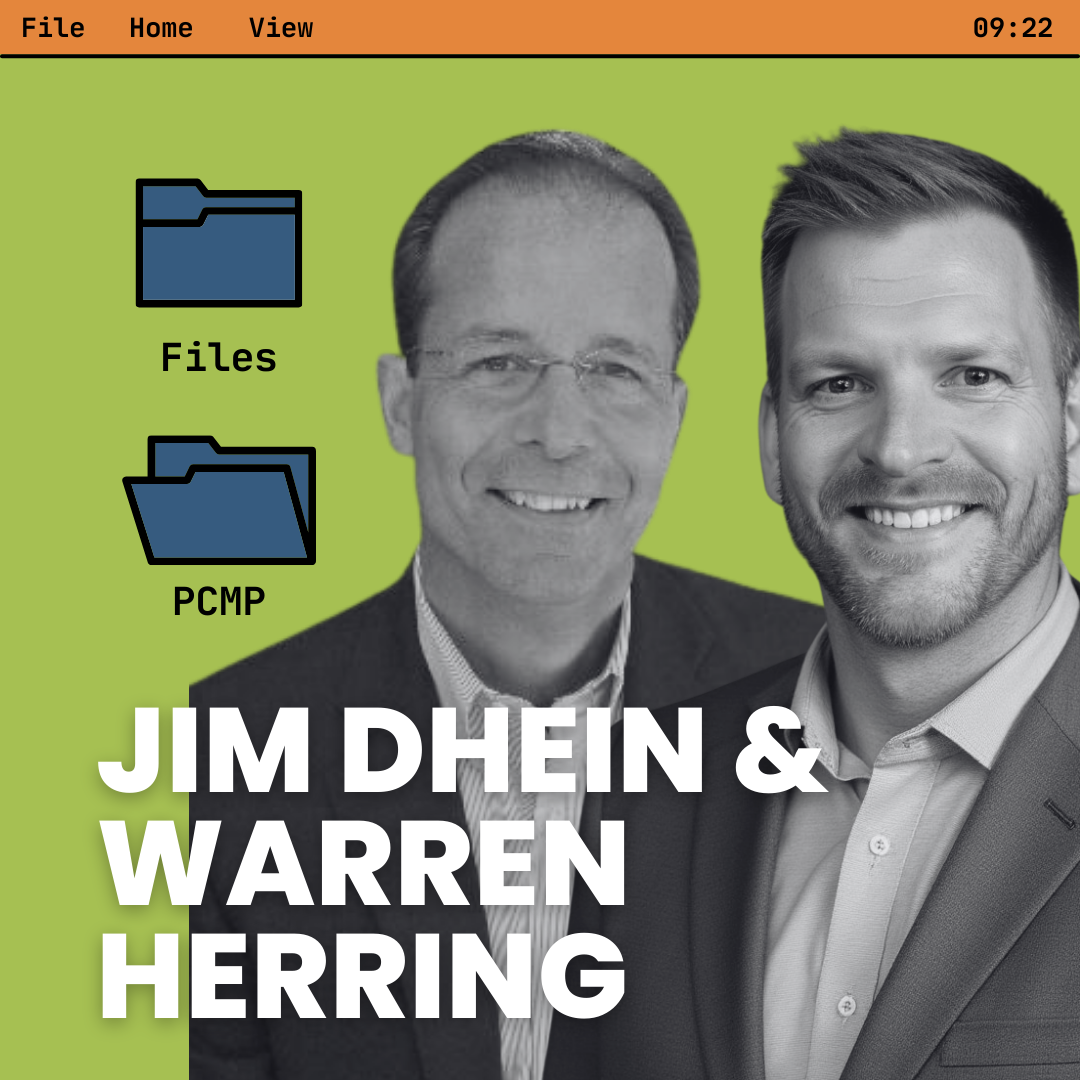
Nick and Michael are joined by two powerhouse guests: Jim Dhein from athenahealth and Warren Herring, President and CEO of TrustCare Health, a 12-location urgent care powerhouse in Mississippi.
This episode is a first for the show—bringing on both the tech vendor and the clinic leader using the tech in real life. You’ll get a full-circle view of what it’s really like to grow a multi-location clinic with Athena as your EHR and patient management platform.
From ambient AI tools like SUKI and automated phone systems like Flip, to the practical pain (and payoff) of switching EHRs, this is a can't-miss for clinic owners serious about scaling.
Topics Covered
🏥 Why TrustCare left their original EHR and how athena helped them scale
🧠 What makes athena’s open platform ideal for growing urgent care groups
📲 How TrustCare uses AI to streamline operations and improve patient experience
📅 Why summer is the best time to switch software (even if it’s still painful)
💡 The difference between vendors and true business partners
📉 Why clinics that delay tech upgrades risk falling behind
🎯 How to track ROI on digital ads—even when your EHR won’t play nice
“Our model allows urgent care clinics to pick the tools that work best for their providers—and still integrate them into a single, seamless platform.”
Jim Dhein, Director of Urgent Care, athenahealth
About Jim and Warren:
Jim Dhein has spent his entire career in healthcare—from clinical diagnostics to sales leadership—and now serves as Director of Urgent Care at athenahealth, where he focuses on helping clinics scale smarter with better tools.
Warren Herring founded TrustCare in 2012 and has grown it into one of the region’s largest independent urgent, primary, and pediatric care groups. With degrees from Samford and Tulane, and a track record of expansion into mental health and primary care, Warren brings the real-world operator perspective to this tech conversation.
📧 Connect with Jim Dhein (athenahealth): jdhein@athenahealth.com
🔗 Jim’s LinkedIn: https://www.linkedin.com/in/jimdhein/
https://www.athenahealth.com/
https://www.athenahealth.com/who-we-serve/urgent-care
👨⚕️ Connect with Warren Herring (TrustCare Health):
🔗 Warren’s LinkedIn: https://www.linkedin.com/in/warren-herring-15456411/
🏥 TrustCare Health on LinkedIn: https://www.linkedin.com/company/trustcare-express-medical-clinics
PCMP (00:00)
Welcome back. You're on another episode of Walk-Ins. Welcome with Nick and Michael. We are excited to have some guests with us today. We'll do that in just a minute, but as always, we're here to help you get more patients, deliver better care, get repeat visits and scale your clinics. man, Michael, selecting the right partners, selecting the right, vendors, I, call them business partners to us, but selecting that.
can do one of two things in my opinion. It can set you up for success or it can set you up for repeat failure as you move through vendors like crazy. So I'm excited to have both Athena and Trustcare, but I'll let you do the intro on Yeah, absolutely. And this is a neat episode for us because this is the first time we were talking earlier. This is the first time we've had a vendor interview, but they brought on the
client. Yes, that's cool. So it's really cool to see that because we get to hear both sides because you know, if Athena did something wrong, maybe we can hear that come out, know, for Warren over here. But real world bird it to the ground. I'll say we'll see what happens. But no, so I have Jim Dine with with Athena Health. And he's the Director of Urgent Care. So he speaks and breathes urgent care. And then I have Warren Herring. He's the President and CEO of Trust Care Health, which is the 12 location urgent care out of Mississippi has been around since 2012. So he's been
pre-COVID, COVID, post-COVID, and he's still growing, which is awesome. But man, guys, I'm glad to have you on. Jim, Warren, welcome to the podcast. We're so glad to have you. Say hello to the Walk-Ins Welcome audience, and I'll let you choose who goes first. I'll let y'all fight over it. Tell us one thing about you that nobody else knows.
Jim Dhein (01:33)
Hey guys, well thanks for the warm welcome and hello to the podcast audience. My name is Jim Dine. The one thing nobody knows about me would be that as I look at you through my glasses, I am actually nearsighted in one eye, I'm farsighted in the other, and I have astigmatism. So if these glasses came off, I wouldn't see anything. But nobody would know that.
PCMP (01:51)
you
So you're a natural phenomenon. There you
go. you will. That's good stuff. So you can see me close and far, not at the same time.
Jim Dhein (02:03)
Yeah
PCMP (02:04)
Gotcha. Warren, lay it on us, man. What about you?
Warren Herring (02:07)
Well, I guess if nobody knows it, I'll probably keep that to myself, but I do really, really enjoy saltwater fly fishing. It's probably my favorite hobby.
PCMP (02:12)
Okay, that's fair.
Nice.
Is your favorite movie a river runs through it, even though it's not salt water.
Warren Herring (02:22)
It's a good movie, but it's not my favorite.
PCMP (02:25)
Okay. was just wondering, a good shot, right? A lot of people that do fly fishing, like that's their, that's their anthem movie. So I was just curious. I love it. Well guys, we're glad to have you. So I tell you what we have some, we have some choose your own adventure here that we could go through, but I want to start, if we could, know this sounds weird, but I'd like to start with Warren. And what I would like you to do with Trust Care is tell us the story of Trust Care. And then from there, let's bring in Athena.
and bring Jim into that conversation. let's start with, tell me the background, 2012, you started clinic. How did we get here? Tell me about.
Warren Herring (02:59)
So I had just finished business school at Tulane in New Orleans.
Trustcare is a family business, so it's owned by me, my two brothers and my dad. And we're in the real estate development business as well. And 08 to 2010 was not a good time frame economically for commercial real estate. And so we actually started diversifying our business interests. And just through research, we decided to move into the urgent care space. So I spent 18 months doing the business plan, getting finance,
and getting the clinic, the first clinic ready to open. And then I had an office that was an exam room in the first clinic for two and a half years. Did the accounting front desk, pretty much touched every single piece of it. here was a fun fact I should have mentioned earlier. I was the first certified PP collector for TrustGare and was able to train the other people on how to do that process appropriately. So there's you a fun fact.
PCMP (04:04)
Wow. There you go. There you go.
Jim Dhein (04:08)
That's how you become the CEO.
PCMP (04:10)
That's it. You
gotta start somewhere.
Warren Herring (04:13)
And so each part of our growth has been somewhat in spurts. So, you know, we would go from, you know, we went obviously from one to two. And then after the two were built up and doing well, we had we had years where we had to we had I think it's 2016. We we opened four clinics and moved to clinic in all in one 12 month time frame.
PCMP (04:35)
God bless you. Are you okay?
Warren Herring (04:36)
That was challenging
to say the least. And so we basically grow, pause, grow, pause. And so now we're up to 12 locations in central Mississippi, which includes the Hattiesburg market as well. We're a little bit of an anomaly from the standpoint that we're not just traditional urgent care. So we've got our eight.
almost solely urgent care clinics. We have three that are pediatric, both pediatric primary and urgent care. And then we have a clinic that is strictly primary care as well. Our core business is still urgent care, but we are multi specialty in that that field.
PCMP (05:19)
Very good. So you're on this journey. You're coming out of wait, you're realizing that you have to go make some money. Urgent care is, a booming business at that point. For sure. It hadn't had the COVID effect yet, but at the same time it had gotten to a maturity level. So you're at multiple clinics. You're having to make some decisions on some software, EHRs, schedulers, communication with clients, all of the personal health records. At some point you have landed on Athena. I don't know if you
started with Athena and you've just kept them. I don't know if you had some experiences and switched. Tell me about that a little bit and then we'll bring Jim in.
Warren Herring (05:56)
So we've always been really early to embrace technology, just in general.
And we like to leverage technology to certainly increase efficiency, but also to improve the overall patient experience. And so we did not start with Athena. We started with another EHR out of the gate that was very specific to urgent care at the time. Actually, not any significant complaints about them other than their ability to be able to have add-ons and or integrate with other systems.
was so far at best. So the decision in our space for moving to Athena initially was highly related to the fact that they had open APIs that would allow us to customize our tech stack to work for us. And so that was one of the know, rationales behind doing it.
PCMP (06:53)
So what was the, what sizes of urgent care were you when you went down the Athena path?
Warren Herring (07:00)
think when we went down the Athena path, you're getting me to recall stuff from a while back. Let me think. was 2018.
PCMP (07:06)
We dig deep here, brother.
Jim Dhein (07:09)
You were like three or
four.
PCMP (07:13)
Okay, three or four locations, Jim, is that what you said?
Warren Herring (07:16)
I think it's more than that. think it's six. Yeah.
Jim Dhein (07:16)
That's what I'm thinking, Nick. Yeah, okay.
PCMP (07:21)
Okay, cool. Yeah. Because we even, we, we recognized with a lot of urgent cares that we work with, there's a big difference between one to five urgent cares locations and five to 10. And then from beyond that, then it goes from like 10 to like 40 or 50. Yeah. I want us to get like the 10 to 20 more like, just keep adding them. We'll figure it out later. Around 40 to 50, you're looking for private equities. Yeah. Then they just want to get bought. But, no, that's cool. So like, you know,
I love that you said that you were looking something more flexible that could integrate with other things. Cause I think that's a big selling point of Athena. It's like, we can do a lot. We can talk to other people pretty easily. We're not, think the biggest challenge we face in the software world is like they like people like, or us like people, but vendors like to silo themselves and say, I don't want to talk to anybody. I want you to live in my ecosystem or not at all. So it's really nice to hear like that was a selling point to you guys, which is fantastic. But Jim, yeah, come on in now, Jim, we can talk.
More about Sina and how that interaction went when you guys first started talking.
Jim Dhein (08:21)
Sure. I mean, real quick history on Athena. You know, we've been around, it actually did start as a provider organization in the late 80s and early 90s. And it was trying to get paid properly for the services provided that actually was the genesis of what is now the Athena Health Platform. And that was built so that we could actually manage payer rules, submit claims properly the first time around.
all of which we didn't really see a whole lot of solutions in the market that were kind of ready to commercially do that at the scale that the guys who founded Athena really needed at the time. So our genesis was actually in providing service and then trying to get paid for it. And as we scaled the company and added services and capabilities, it's always been just on that core piece of technology. And what I mean by that is we talk about
different kinds of software. What's really unique about Athena, I still think it's very unique in the industry, even in 2025, it was certainly unique in the mid 90s when they were called application service providers or things where you'd sort of dial into your software back then. Athena is a single instance of software, meaning all of our clients access the same version and the same instance of
as we call it, AthenaNet. And we access that same system in providing a lot of the services that are part of our business model. And so that model, just scaling that across a number of specialties, as we develop that technology further and further, added the capability for electronic health record and clinical workflow and patient access tools and things of that sort, it was just building on that same piece of technology.
kind of rather than acquiring and stitching together behind the scenes. And that has always been a very open platform. We've always believed that trading data is a very important part of being in a healthcare ecosystem. And as we've scaled that, the platform services or what is literally north of 800 APIs to access the system, that allows for innovative organizations like Trustcare.
to create their own tools and integrate that directly into Athena, or it has also opened up a marketplace within Athena of many hundreds of partners who serve niche solutions that Athena might do, but a particular niche solution might work better for a particular specialty. We see that with certain aspects of urgent care. And all that is really central to
how the technology platform itself started and how we scaled it over time.
PCMP (11:18)
So I've got a two-part question based on what you just said. One, you said that TrustCare is an innovative urgent care. And so the first part of my question is for you, Jim, how do you visualize TrustCare as being innovative? Like what defines that for you? Second part of that question, Warren, is for you. And that is how has Athena helped you be top of your game with that?
Jim Dhein (11:35)
Yeah.
Yeah, so from Athena's perspective, the thing that we've seen in just the marketplace over the last three to four years has been playing very much to the strength of what Athena brings to the table, which is that urgent care operators, you see it across all sizes really, but certainly mid-market to upmarket, more and more operators want to get into
primary care, they want to be part of a patient's longitudinal care. They may even be opening up particular subspecialty capabilities all in that urgent care on demand care model. At the same time, we've also seen a lot of our large health system clients that are on Athena in their ambulatory environment want to open up some access to that environment. So they open up an urgent care location or two.
sort of new marriage of a very quick high throughput care model to a longitudinal care model. That is something that Athena does quite well, but that's part of what we've seen as really kind of the innovation in, I think, just the on-demand care model in the last, I'll call it post-COVID era.
PCMP (13:04)
Right. Love it. So then I'll, I'll pose the question to you, Warren, kind of in the same way. How do you see Trustcare as one being innovative just in, general, not just in tech, but just in general. And then how are you incorporating Athena to stay on top of that innovation?
Warren Herring (13:23)
I mentioned earlier that we've always been very quick to embrace new technologies just in general. know, Athena has their marketplace partners that allow you to very, very quickly onboard a new type of technology that might streamline a workflow for your group.
So just to give you a couple of examples, and this is a recommendation from Jim, but FLIP AI, it's a new AI phone system that answers the calls for you. And we implemented it and got to know other folks over there. And the system's not perfect. It's got to learn over time. But we're now using an AI phone system that's reducing call volume to our front desk personnel and billing department.
We wanted to do a different front end workflow that we could plug into our own app that we develop. So we used Cure4u for that, which handles registration payments and gets everybody in the clinic and gets them on the Athena schedule. We plugged in an AI tool for documentation for that solution. use SUKI. And that's been a really game changer for us as far as efficiency.
Our primary care physician and medical director is spending 90 minutes less per day by using that tool on documentation alone. And then I've already mentioned this briefly, but we have our entire TrustCare Plus app that ties into our membership program. And so we actually offer a membership that allows patients to be able to text us securely within our app. But they also can schedule an appointment in our clinics.
And that appointment moves them to the front of the line. So if they are a member, they do not wait. And it also has a pharmaceutical savings functionality in it as well. Kind like a good RX, but it allows them to be able to check medication pricing. And so we've got two different models that we offer on the membership. One that's for uninsured or underinsured, and that would be $75 a month. And then we have one that's a lower cost one, tends to be our main membership that we
Jim Dhein (15:14)
you
you
Warren Herring (15:41)
that we leverage, is only $15 a month. But when you do come into the clinic, it obviously still requires you to pay your copay, and we're still going to file it to your insurance. So think we're up to about 1,400 members on that now. And so that's been going in the right direction for us. But just in general, they're open APIs, and how quickly you can get a resource to integrate something into your practice.
PCMP (15:55)
this.
Jim Dhein (15:56)
you
you
you
Warren Herring (16:10)
you know, it's just been really helpful on that front. Like right now we've got a brand new CentralISIL lab and being able to, you know, to integrate in an LIS system with Athena in a relatively short period of time has been helpful to us organizationally as well.
Jim Dhein (16:25)
you
PCMP (16:27)
So you're not kidding about the innovation part because I was jotting down everything that you were saying. And you, when we talked to urgent cares, one, most of them are afraid of AI and you're like, no, no, no, no, we're using AI in every aspect of our business and look at the benefits we're getting from it, which is fantastic. I love to hear that too. You are doing the membership program, which urgent cares don't know much about. I like it.
Jim Dhein (16:33)
you
PCMP (16:51)
The traditional phrasing is called like a concierge. Concierge is what we hear and think of when we think of a membership model, but this is different. But this is a little different, right? And so, but you're embracing it and it's, I mean, you have 1400 members, like that's, that's a good. Listen, I won't leave my house without a reservation. Yeah. Yeah. Ever to go to dinner.
If I could pay a membership fee, that'll put me in the front of every line I ever go into. I'm paying it. It's like the fast pass at Disney. I will lose money to get to the front of a line that I'll take. Time to me is more precious than the money. don't, anyway, keep going. Sorry. Yeah. I was gonna say, I get it. I get why you say they're an innovative urgent care because most urgent care is we talk to, they might check one of these boxes and you're checking off.
Jim Dhein (17:26)
you
you
PCMP (17:39)
multiple boxes and you're like, there's more to come, right? Which is just fantastic. Yes.
Warren Herring (17:42)
Yeah, I'd to give you an example. Sorry to
give you an example. We've got an AI solution we're testing right now that'll be able to handle 95 % of our coding without a human being involved.
Jim Dhein (17:46)
it.
you
PCMP (17:54)
Yeah. And so like, there's going to be a moment where I'm seeing this transition where we're trying, because at the end of the day, as we've talked before the episode started, the costs aren't getting cheaper, the run and urgent care, and then the reimbursements aren't that awesome. And that's not catching up either. And so you have to be efficient and an AI is finally becoming that truly efficient model that you can plug and play. And then you can start dialing back
Jim Dhein (18:13)
you
PCMP (18:24)
the, I mean, it sounds terrible, but you're dialing back, some of the human side, letting AI step in and then let the people who do do have be more effective in their job and not be.
Jim Dhein (18:25)
you
I think a
really interesting game changer going on right now, of course, is ambient listening. And as an example, the way Athena is approaching that is rather than to say, hey, here's the ambient vendor that we think you should use, we actually have three. And so even within a single organization, one provider could choose partner A, another provider could choose partner B.
Because at the end of the day, they're all integrated into Athena in the same fashion. So the data flow is standardized across those partners. And it really then becomes more about what's the workflow look like and what's the note that's created going to look like. Because that seems to be the differentiator for ambient. And there are so many players in general in that space. There are already those who are starting to kind of rise to the top.
And so our model just allows for the flexibility to kind of pick and choose or even change on the fly as you go there. So that's an interesting way that Athena has chosen to leverage what is really kind of the hottest piece of AI these days in the ambient, but still offer a lot of flexibility around.
Warren Herring (19:52)
Yeah, the and Suki is one of their folks that they work with and that's the that's the ambient technology we move forward with and we've been we've been extremely pleased with it. And it's it's worked really well for us.
Jim Dhein (20:04)
If you haven't figured it out yet, I'm being Switzerland and Warren is just flat out telling you who he's using.
PCMP (20:04)
Nice.
Yeah,
Warren Herring (20:10)
you
PCMP (20:12)
one of you has to do that. The other one gets to say what they want, right? So let's take a few minutes and talk about Athena one. What is it? Where are you going with it? How's it helping urgent cares? Let's go with that. Athena one.
Jim Dhein (20:15)
You bet.
Yeah, we refer to it as our model quite often. it starts with that technology that I mentioned, that single instance, multi-tenant piece of technology, where then we wrap that with particular services. If you think about the areas of, as software tends to be known, practice management, electronic health record, and patient communication. Those are the big three categories.
If you think about the practice management space where we began, all of that, the service is a lot of on the front end eligibility verification, even patient outreach to confirm schedule, kind of more in a primary care model where you're scheduling yourself a longer time in advance, and also patient communication services. And then with the electronic health record, kind of the clinical workflow.
We said, we need to just sort of remove paper from this process in general. And think about the fact that this was like 1995. So pre-HL7 lab interfaces in some cases, there's literally paper coming back from the lab. Obviously, now that's all automated. But there is still a lot of incoming paper into a lot of medical practices. And so we categorized that, codified that, and introduced that into an electronic workflow. And that was done with
what was called machine learning back in the day. And now that's kind of a component of AI. So there's the technology. There's the service delivery that's always tied to that technology. And then there's the kind of keeping the technology current, or what we refer to as managing the rules engine that is inherent in our platform. And when you think about that in those same kind of three areas, claim submission, we proactively
look at either why a claim is denied on behalf of one client to any given payer, and we'll reverse engineer the reason for that denial. So if it gets denied once for a particular client, it's not going to get denied for the other clients who are submitting to that same payer, know, anytime subsequent to that first, you know, learning that we had. We also proactively just comb through, you know, CMS guidelines and things to be ahead of that curve.
When you think about patient outreach, confirming appointments with voice, paying with text and other tools, that's all part of the service component that goes along with the patient communication. Think about sort of testing the model of patient outreach. Is it text with friendly messages? Is it email with very focused messages, obviously PHI and...
and other things taken into consideration with links that bring that patient into the ongoing portal. All of that is part of the components of the service offering. And we pull all that together, the technology, the work, and the knowledge component into a model that's aligned with financial incentives. Most often, that's around a percent of collections model, but we can tailor that sometimes in value-based care where folks are
are not necessarily looking at how much they're collecting on a per claim basis. They may be in a per member, per month model. We can tailor the solution for that as well and tailor the price model. But Athena 1, the highest level to answer your question is really that model of the services, the technology, and the knowledge that we gain in that in delivering that for driving our clients' outcome.
We've tailored that now to the needs of urgent care and I can go into that, but I gotta probably take a breath for a second.
So.
PCMP (24:25)
All right, Warren.
that's all. Athena 1, that's a huge opportunity, an open door for people to make a software switch. Okay. And I'm not advocating for everybody to make a software switch. I think there's a place to do it when it's the right time. So two questions for you. When is the right time to make a switch if you need to make a switch? And then what's holding people back from making that switch?
Warren Herring (24:56)
looking at straight away from an urgent care standpoint your best time to switch would be during summer months. Yeah and and as
PCMP (25:01)
Yeah. Okay. Perfect. We've heard that. Agreed. Yeah, we've heard that.
Warren Herring (25:10)
The apprehension to switch is because everyone knows how miserable it is. Because it's core, it's literally the core of what you operate, your core operating system.
PCMP (25:14)
You
Warren Herring (25:21)
I mean, it's more core than your accounting system to the business. It's how you, it's how all of your revenue comes in. And so, you know, unfortunately, there's no way for it not to be painful just because anything that's new that has to be communicated across the board to multiple different individuals that are leveraging a new system.
PCMP (25:24)
Right.
Warren Herring (25:45)
you're just gonna, you're gonna naturally have pain points with that. But I will say that the, you know, the people that they put with us, and I'll give Carrie a quick shout out so she can listen to it later, but she's our CSM and she does a phenomenal.
I she's a true partner. She busts her tail to make sure that we've got the functionality and the things that we need to continue to push the strategy and the vision forward for where we want to be. But I hate to be the bearer of bad news. There's never an easy time to do it, and it's never fun to switch systems.
PCMP (26:24)
Right.
Well, so I was going to say, so summer's coming. Is there a painful projects that you're planning in this coming summer that you're not looking forward to at all?
Jim Dhein (26:26)
Yeah.
Warren Herring (26:37)
No, thankfully we got pretty much everything kicked off and moving forward that we needed to. We're changing to a different LIS system, so that might be a little bit painful, but I don't think it'll be that overwhelming.
PCMP (26:57)
All right. So Jim, I got a question. I'm going to do some self-service here because I just have questions and I've got you. So I love that Athena is an open system. So help me understand, not from Athena's perspective, just in general, the adversity, you work with all these different kinds of softwares, but marketers are closed off to the systems. Help me understand that a little.
Jim Dhein (27:25)
What do you mean when you say marketers are closed off to the system?
PCMP (27:28)
Very few EMRs, systems, schedulers will allow me as a marketer to put a tracking code or a conversion tracking code directly on the system to show that and, and Warren step in, because I feel like this would be super valuable for you to know if I paid money and an ad generated a result, but I have no way to track that that result came from something like how do you make better decisions? So that's my question is,
How can, how can we as marketers work better with Athena that supposedly, and you're saying an open system for APIs, how can we work better as marketers to deliver for a trust care return on ad spend return on investment, make it easier for our, our urgent cares to track that critical ROI.
Jim Dhein (28:21)
I think it's an interesting question. So that's part of the aspects of just the urgent care business that I think, you know, the aspect of patient access, get in line, queuing, and you know, some of the strong companies that exist there. Warren mentioned Cure4U is a really strong partner to Athena in that space. Solve is a really strong partner to Athena in that space. And so we do lean on some of the partners
PCMP (28:27)
Right.
Jim Dhein (28:50)
to have that data as to where that patient came from. Did they come through a Google search urgent care near me? Did they come through anything a little bit more targeted that then ultimately they kind of landed at our operators individual website. With the open API's we can pull that data into Athena. We don't necessarily have the tools that gather that data. It's really kind of more the partners who leverage that. What we came to.
PCMP (29:18)
So that's that that's
the extension on that to warn is like even the partners won't allow that. And so we're trying to trying to work with Athena's and solves and again, more of a self-serving side because but I asked I asked the question in a very important way. I think our urgent carriers who are listening and even on the call like they want to be able to track, especially with the low margins, the low reimbursement rates from the payers like
Jim Dhein (29:30)
Yeah.
PCMP (29:48)
making every dollar count in every aspect of the business. It all comes down to knowing what you're doing.
Warren Herring (29:56)
But this is just a simple front, though. But as far as tracking, you know, how did you hear about us?
on those front end systems like the one we use is Cure4U, you can put that as a question as they're doing their intake. You can do a simple drop down with four avenues in which you're marketing and you can even have an other where they can type it in if they wanted to. The problem I've found with that historically is they don't care enough to give you accurate information.
PCMP (30:11)
Right.
No,
they just default to the first one most of the time.
Warren Herring (30:31)
Yeah, so they just
default to the first one. And so as you're tracking some of that information, it becomes less relevant. We try to be a little bit more proactive by tracking it on our digital sides when we're doing the different types of, you know, advertisement avenues that we utilize and leverage. And that's where we found it to be most effective is on that specific front.
PCMP (30:59)
Right.
Well, look, I could go down rabbit holes with that. I am excited that we're going to be having conversations coming up in the near future with Jim and other experts in the industry that are going to be talking about how to incorporate AI and how that's going to work for clinics in the future. Warren, you guys are incorporating AI at a high level. I love that. So I'm going to ask you this question. What AI functionality that's built into Athena are you most excited about?
Warren Herring (31:30)
Currently the one I'm most excited about because we're getting the best ROI on it is our partnership with SUKI, which is our ambient documentation tool that we leveraged.
And you know, I was telling you guys, we always embrace technology. What we love about embracing technology early is that when you partner with these folks early on and open the door for them to be able to have other clients, whether it's getting on the marketplace and where they've got someone that they're working with the first time in the urgent care industry, obviously on this front. So a lot of those partners, we were really early to move with them. So we got to actually kind of customize some of the workflows that they now leverage for urgent care.
Jim Dhein (31:49)
you
you
you
you
Warren Herring (32:14)
And basically some of those ideas came from us. We helped them build out those avenues and so that's why we've always been an early adopter on that front. But that SUKI ambient technology has been very, very beneficial for us.
Jim Dhein (32:29)
you
PCMP (32:29)
and works seamlessly with Athena.
Warren Herring (32:32)
Work seamlessly.
PCMP (32:33)
I love it. That's a good
selling point, right? And so what Nick was leaning into, we have a webinar coming up in a month, not this month, but in May, correct? it's going to be after the urgent care Association. Yeah, after the urgent care, the UCA event, we're doing like an AI panel. And we get to chat about what what the AI is looking at for urgent care. But it's really cool to hear that from you because it's because we recognize that there are certain AIs that
make a big difference in urgent care, but having you say, you know, yes, this is making a huge impact and I can't go without it type of thing. Like I can't go backwards now. And so it's fantastic to hear that because I, at the end of the day, I think AI is still scary to people. Right. And so the adoption of it's still kind of slow. But it sounds like you're just embracing it now.
Jim Dhein (33:21)
you
Warren Herring (33:22)
80 % of our charts are closed using Pepsil.
80%.
Jim Dhein (33:27)
you
PCMP (33:28)
Say that again. I didn't hear you.
Warren Herring (33:30)
80 % of our charts are utilized SUKI for the documentation.
PCMP (33:35)
Awesome.
And how much time is that saving your clinic since before you incorporated this AI?
Jim Dhein (33:42)
you
Warren Herring (33:43)
I'll give you an example. It's harder to calculate it. So in urgent care from a time saving standpoint, because it's so templated, it doesn't take more time, it doesn't take really less time. So I would say in the urgent care space in particular, maybe not quite as an efficiency game. For Dr. Trim, it's saving her 90 minutes, 90 minutes a day in documentation time. And she's increased her patient volume by three patients a day, three or four patients a day.
Jim Dhein (33:49)
you
you
PCMP (34:09)
All right, so twofold
there, right? One, what do you pay yourself an hour as a doctor? Yeah. Right. Two, what are three new patients a day of value for you in your time? So to me, that's like, you know, here's the line. I'm increasing here and decreasing here. That's all gap. That's fantastic. Yep. All right. So I'm going to give you an opportunity, Warren. You can turn it down. You can, you can turn it up however you want to do it. If somebody were thinking about Athena as I want to switch, I'm not a hundred percent.
Jim Dhein (34:15)
you
PCMP (34:41)
on board with the current system that I'm using. Now's the right time. What is your experience? How would you recommend it?
Jim Dhein (34:48)
you
Warren Herring (34:50)
Well, the experience I've had with them has obviously been a very good partnership. We've been working with them now for, I guess, over six years. We're getting close to that mark. I I recommend them. mean, our CSM has been absolutely amazing. That's our customer service individual, Carrie, that I referenced earlier. It's like an extension. She's an extension of our team. And she goes to bat for us on a regular basis.
Jim Dhein (35:03)
you
you
you
Warren Herring (35:19)
And I think that the way technology is moving forward that these EHR systems that have decided to be siloed and I won't mention any of them by name, have decided to be siloed and not allow.
PCMP (35:30)
Yeah
Warren Herring (35:33)
for ease of integration. think they're going to start either having to pivot or they're going to have to change, they're either going to pivot or they're going to have to change their business model because the more and more technology that's coming out right now, Athena in my opinion is ahead of the curve because of their flexibility on being able to plug in additional tools. Getting my app that we developed from scratch integrated with Athena, albeit it took a significant amount of time because it's
Jim Dhein (35:45)
you
you
Warren Herring (36:03)
new technology and we were building it from scratch. I don't know that we could have afforded and or done anything with with an Epic or a Cerner or any of the other big ones and Athena didn't even charge us to integrate our app into their their HR.
Jim Dhein (36:06)
you
you
PCMP (36:20)
That's
that's worth its weight in gold right there. Jim, we're going to have to hold you to the fire on that one. He all didn't charge them. we got to, he's like, we now charge. now charge. That's awesome. We'll have to edit that out later. That's fantastic. I love that's a good glow in review, man. I appreciate you. Appreciate you doing that. So, Jim, we have listeners right now that are, are considering making a switch. I think the
Jim Dhein (36:26)
I'll see.
PCMP (36:47)
It's not a matter of whether or not, mean, Athena is an industry standard. We know that already. Athena one, you're moving in the right direction in a big way. I think the biggest question, if I were a clinic owner and I was thinking about making a switch is how can you make this as easy as possible through a painful process?
Jim Dhein (37:04)
Yeah, you know, I'll
answer that with kind of two pieces of the puzzle that really work hand in hand. First and foremost, as we've scaled our urgent care focus, the folks who, as the members of the team that Carrie is a part of, our customer success organization, they only handle urgent care clients. So they know the urgent care of space. They know the business.
And they really can be a true business partner to our operator clients. And we're really, really proud of how that model is scaled. We've replicated that now in onboarding. So in making that painful transition from one system to another, the folks who come to that table as well, first of all, your customer success person is a part of that. And they become sort of the longitudinal partner over time. But the onboarding team,
largely only handles urgent care. And if they do handle another specialty, it's typically within the scope of what we see going on in urgent care. So it might be just a good old fashioned primary care area of knowledge or pediatric area of knowledge. And in some cases, that's very helpful for the operators as well. But the technology, going back to good old fashioned Athena net, as we refer to it, it's so open and
The process for onboarding and customization and tablespace build is such that as we assign work to the clients to be done, and particularly as we assign modules for training for clinicians and RevCycle support staff to take part in, we can monitor how they're doing and make sure that A, folks are actually doing the work that they need to do.
and taking the courses that they need to take so that we can assess readiness long before go live. And if there are folks who are kind of silently suffering and they're not really getting ready, we can proactively address that. That model exists once you're a client as well. certainly with new staff members coming on and things like that, that technology model and that ability to put all that training and then surveil how folks are doing is really powerful.
PCMP (39:01)
Good.
Jim Dhein (39:22)
And then we bring up an army to the table, depending on the needs of any individual operator with respect to what that go live looks like. You know, with a single two or three location operator, we can do a lot of that work. And we can even support the go live in a remote fashion so that it's not super intrusive, but it is very well staffed and very well monitored from a productivity perspective. And as folks get a little bit larger and they need some boots on the ground.
We have a huge army of folks who are available to be those boots on the ground for training and for go live support as well too. So our model is just really well built to make those transitions, know, with thousands and thousands of clients across hundreds of specialties. now, you know, just around 325, 330 clients in urgent care specifically, about 1100 locations. You know, we've got that model tailored.
to urgent care operators needs really well. So we stand ready to help folks kind of make that leap. But most importantly, we stand ready to make sure that they're ready to make that leap when the time comes for that Tuesday morning go live.
PCMP (40:39)
So do you agree with Warren that summer is a wonderful time to make this happen?
Jim Dhein (40:44)
Absolutely. the
current busyness of our organization would suggest that a lot of folks are looking exactly at that time frame. Smaller organizations to talk about this summer, larger organizations talking about next summer. But certainly not in the dead of winter respiratory season.
PCMP (41:06)
Exactly. Well, yeah, January, right? That's when things really seem to say you don't want to be a part of that. So those silently suffering clinics need to schedule a time to either get a demo or find out what the next steps are. Where would you send them?
Jim Dhein (41:11)
Yeah.
Reach out to me. I'll get you plugged into the appropriate folks on the Athena side. If you've already had some communication with folks from Athena, please reach out to them as well too, but I'll be happy to be the conduit.
PCMP (41:35)
We're going to have Warren's information and Jim's information in the show notes. Warren, you wouldn't have any problem. I hope if somebody reaches out to you, maybe they're looking, maybe they have questions about Athena from your perspective, or maybe they just want to know how to get to 12 clinics. That could be a fun email.
Warren Herring (41:54)
Yeah, yeah, no, that's a perfectly open to that. And some of these, you some of the other folks that I was referring to earlier that are the different pieces that we put together for our tech stack. We have really good relationships with those individuals as well. And so if anybody has the interest on getting plugged in with some of those, we can certainly help out on that front.
PCMP (42:16)
Love it. Gentlemen, we have been having a conversation with Warren Herring, with Jim Dine. And if you're the average of the people you hang around, I hope we raised your average today because we were heavy hitters in the urgent care, heavy hitters in software, urgent care software. Gentlemen, we really appreciate you coming on and being guests on the podcast. And we look forward to having you on again here in the future.
Jim Dhein (42:41)
Thanks guys, been a pleasure.
PCMP (42:43)
Awesome. Thank you so much. We'll talk to you soon.