
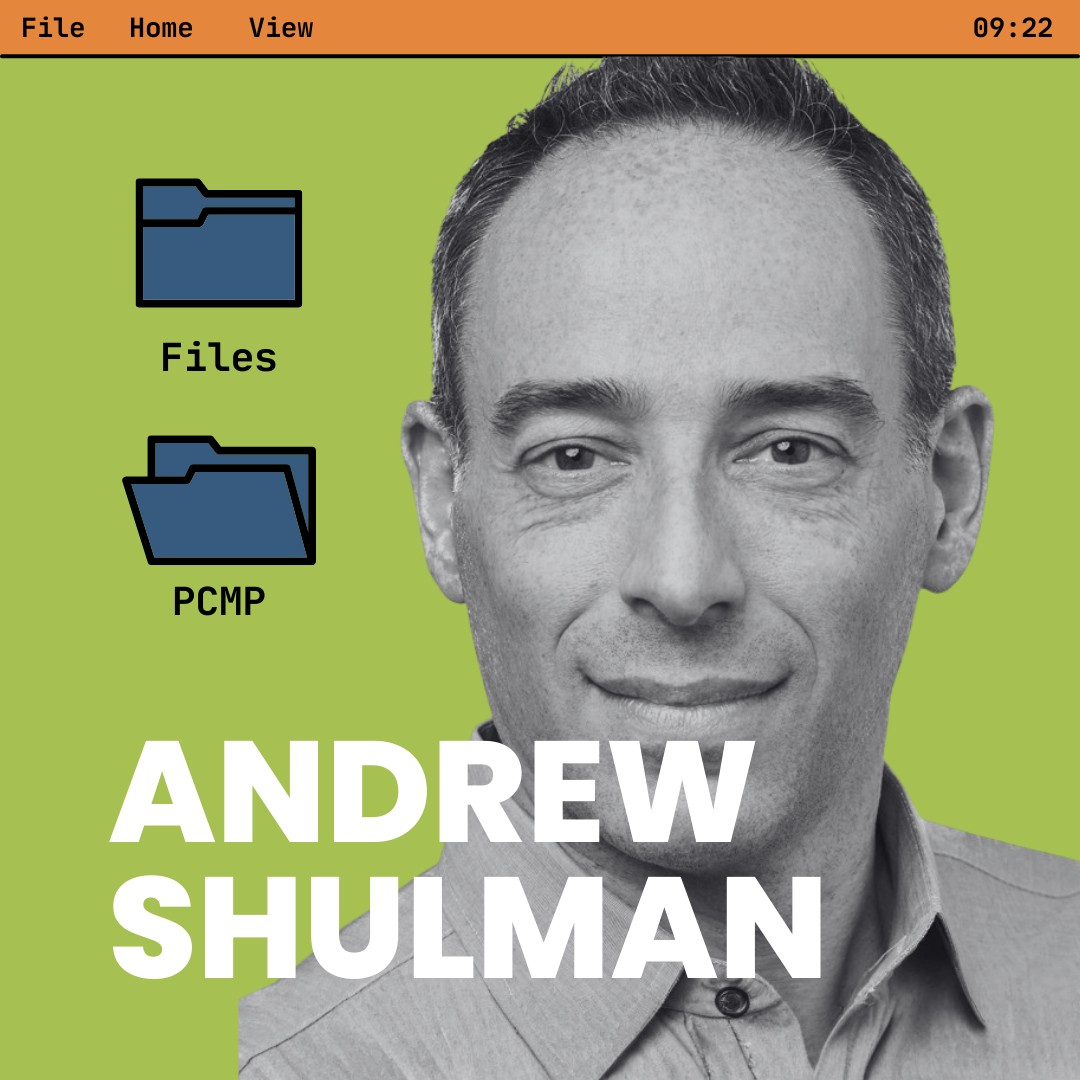
Ep. 218: How Modern MD Built a Top Rated Urgent Care Experience - Interview with Andrew Shulman, ModernMD Urgent Care


About this Episode
Running a multi-location urgent care is rarely about bold growth moves. More often, success comes from discipline, culture, and getting the fundamentals right before scaling.
In this episode, Michael sits down with Andrew Shulman, CEO of ModernMD Urgent Care, for a candid conversation about what it really takes to lead a 14-location urgent care organization serving underserved communities across Brooklyn and Queens.
With more than 20 years of healthcare leadership experience, Andrew brings a rare perspective shaped by hospitals, occupational health, national employer services, and now direct-to-consumer urgent care. Since stepping into the CEO role in 2024, he has focused on stabilizing operations, restructuring management, strengthening culture, and building systems that support sustainable growth.
Together, they explore why spreadsheet management alone fails in urgent care, how patient experience is driven by frontline leadership, and what metrics actually matter when you are responsible for multiple locations. This episode is a practical look at urgent care leadership from someone actively in the trenches.
Topics Covered
🏥 Why culture is the foundation of strong patient experience and retention
⭐ What drives consistently high Google reviews in high-volume urgent care settings
📊 Which CEO-level metrics matter most for multi-location urgent care owners
👥 How boots-on-the-ground management changes team performance
⚖️ The balance between speed, quality, and patient expectations
📍 Why location and community impact performance more than many operators expect
🚫 How avoiding shiny object syndrome protects long-term growth
“Focus on what you do every day and what you do best, get it perfect before trying to differentiate into other fields.”
Andrew Shulman, ModernMD
About Andrew:
Andrew Shulman is an innovative, results-driven healthcare executive with over 20 years of experience scaling and growing early-stage and multi-site healthcare organizations. He currently serves as CEO of ModernMD Urgent Care, which operates eleven locations serving underserved communities in Brooklyn and Queens, along with three additional clinics in partnership with The Brooklyn Hospital and St Barnabas Hospital.
Prior to ModernMD, Andrew spent twelve years as CEO of Mobile Health, where he scaled the company into a national occupational health provider with over 6,500 partner locations. He also previously served as COO of Affiliated Physicians, helping transform the organization into a national executive wellness and employer health services company.
Andrew is known for his transparent, high-EQ leadership style and his ability to build strong cultures during periods of growth and operational change. He holds a Master of Public Health from Columbia University and a BA from Emory University. Andrew lives in New York City with his husband, Jeremy, and daughter, Savannah.
🛠️ Resources:
- Learn more about ModernMD Urgent Care and their mission to provide accessible, high-quality care in underserved communities.
- Website: https://modernmduc.com/
- Instagram: https://www.instagram.com/modernmdurgentcare/
Patient Care Marketing Pros (00:00)
Well, hello everybody. Walkins welcome crowd. I playing a little different today. Nick is not here. He had something he wanted to take care of, so I get to run an interview today, which is super fun. We're already almost done with January, which is wild. We're recording this January 22nd, 2026. I'm not sure where you're going to hear this, but that's when we are recording it. But we have an interview today and this was the fun part of this interview. It's not a vendor. We have a lot of vendor interviews, which is great and wonderful, but I want you guys to hear from other urgent care owners that having to deal.
with the challenges that you're dealing with, the successes you're seeing, and just have an honest, good conversation. So today I have Andrew Shulman. He's the CEO of Modern MD Urgent Care, which is a 14 location urgent care in the Queens and Brooklyn area of New York. So he's seen a lot, right? When you think about where that area is, it's really cool. But he's been in the healthcare space for over 25 years. So he's seen COVID, he's seen
Y2K area, like he's seen it all in the healthcare space and I guess the emerging of EMR. And so his background is so deep. Even before he was at Modern MD, he was with Mobile Health, was CEO of that and they had over 6,500 network locations that he worked with. So he's seen giant and now he's down to 14 and everything in between. Andrew, so great to have you on and just like we always say to our guests, what's one thing about you that nobody knows?
Andrew Shulman (01:15)
Hmm?
It's great to be here. Thank you for having me. One thing that nobody or very few people know is that my ideal vacation is actually renting as large of an RV as possible and just getting out of the New York City area and enjoying nature. It's something pretty unique and odd for someone who has lived in New York since 1999, right in New York City.
Patient Care Marketing Pros (01:46)
You know, you and I could be good friends on that because one of our favorite like so I'm in your same boat. love nature. And if I can go on a vacation that's nature driven, I'm happy. Last year, my wife and my six year old, drove to, we're in Birmingham, Alabama. We drove to Maine, went to Acadia National Park. we, and we, as my six year old daughter says, it was an eight day camping trip, because it was an eight day camping trip. We had a rooftop tent on my truck, camped out it for eight days.
Andrew Shulman (02:03)
Love it.
Patient Care Marketing Pros (02:13)
And then next week, I'm going to swim with the manatees. Yeah.
Andrew Shulman (02:19)
I love it. My daughter
goes to sleepaway camp in Maine, but I am forbidden to drive a 42 foot RV into the parking lot on visiting day, which is fair considering it's a 12 year old girl. She's like, not an option.
Patient Care Marketing Pros (02:32)
There you go. I respect
the RV drivers because that that just seems stressful to me. Just driving in a big RV in those places, but especially for pulling it out of New York. All right, vehicle. I love that. I love it. We can connect on that. If we want to trade camping stores, we will for sure. But OK, so there you go. Exactly. I actually was on a camping podcast once talk about. So there you go. I'm in the glacier. I've been the out west quite a bit. It's a lot of fun, but
Andrew Shulman (02:39)
Yeah, yeah, I love it. I love it.
Yeah, start another podcast.
Cool.
Patient Care Marketing Pros (03:00)
All right, so let's get into it. So you're CEO of Modern MD Urgent Care. It's a 14 location urgent care in the Queens Brooklyn area. So you guys see a lot of volume, you see a lot of things going on, but like you haven't been in this role terribly long. You were brought into this role. I think it was 2024 you were brought in and you were coming from a different place for sure. Like it was not pure urgent care related and so there's some learning curves along the way.
But kind of tell me the, the hit, like the background of that. How did that even come up as an option to you? And is it what you were expecting or like, wow, that's a whole lot more different. thought it was going to be.
Andrew Shulman (03:37)
Yeah, no, my background, like you said, is this is only the third, well, fourth company that I've worked for. Right out of grad school, I worked for a hospital for a couple years in a variety of administrative positions, then worked for an organization that focused on wellness services for employers, flu shots, biometric screenings, et cetera, and then 12 years for an occupational health company, really becoming a TPA.
So after 12 years of, and going through COVID, it was time to look for something different. like everything in life, it was just about timing. The former CEO of Modern MD was entering into retirement. So they were looking for someone else. I started to look in the market and I was looking to transition out of just the purely B2B space.
the Ock Health space wellness is super interesting. But I kind of did that for 20 years and was looking for something new. So it's been a fairly smooth transition, I would say. I'll start by saying I enjoy the direct-to-consumer component of urgent care a lot. Mostly because
When you make a mistake, you make a mistake with one person. And if that one person doesn't come back, then that one person doesn't come back, as opposed to when you're only in B2B and you make a mistake, you're putting a whole account at risk. ⁓ So the stress and the pressure associated with that is different. But so far, I'm really enjoying the industry.
Patient Care Marketing Pros (05:03)
yeah. ⁓
That's awesome. Well, and you it's you talk about B2B because the only thing think about urgent care and B2B, the only thing that an urgent care could opt for some type of like occupational medicine situation where, which your background that would be helpful. But yeah, that direct to consumer model, it is true, like where you're given multiple opportunities to mess up. You really are. Now, if you keep messing up, you have multiple opportunities to not get any more opportunities, because that's real. Yeah.
Andrew Shulman (05:31)
Yeah.
This is true. This is
true. And Google reviews are pretty powerful. ideally, you don't want to mess up. And I've gotten pretty good at being able to flag some of those reviews for being improper, which helps. yeah, we are actually, I am proud to say we have somewhere like 4.7, 4.8 stars, which is great. So I'll keep it.
Patient Care Marketing Pros (05:40)
they are.
Yes.
Well, I mean,
that's kind of awesome. Because you know, we talk when we talk to urgent cares, like a lot of urgent cares suffer on the Google review side where they're below four, you know, touching three average and like, hey, you gonna have to fix that because that people don't want to do business with you when you're the question like, I am I 5050 shot of getting a good experience? Yeah, if you're pushing 4.7, that's really awesome. Let me ask you though, because because going into that, what do you think is driving that
positive experience because you know obviously you have competition, have lots of urgent cares around you that could be offering some more experiences. What are you guys doing that you say this is probably what's driving the positive reviews? What do you think is happening there?
Andrew Shulman (06:38)
Yeah, and we put, and we really do focus on our people. We try extremely hard to recruit and retain talent and spend time training and on de-escalation and making sure that we're always treating people with a smile whenever possible. Our locations also happen to be in our mission and when we were founded was...
focused on underserved communities. So I will say that I think some of that has to do with, traditionally, the underserved populations. We have over 62 percent of our payers on Medicaid. They're typically not treated well, right? The red carpet is never rolled out. And perhaps the emergency room was really their only other entry point.
So when you walk into a facility that is built out nicely and you're greeted nicely and you get in and out quickly, it leads to five stars.
Patient Care Marketing Pros (07:34)
Now you mentioned briefly like treating people with a smile, which also is that part of you need to treat people equally, right? Where you don't know where they're coming from. You don't need to put a prejudgment on who they are when they walk up. You have to treat them as fairly as the next person coming through. How is that type of training work for you guys? because when I think treat, because I do a lot of like front desk training with our clients and some things. And I say, when you answer the phone, you have to answer it with a smile because they can hear and feel that tone coming through.
And people are like, yeah, yeah, yeah, I understand. like, no, no, no, think about your Chick-fil-A and how they want to say my pleasure. Like, it sounds so simple, but it's it's creating this culture of like, we want to serve you the best that we possibly can. We want to make sure you feel good the whole time. Like, how do you translate? Because I imagine, like, because I've talked to a lot of urgent care, they struggle with like, our people don't care, or they're overwhelmed, and they don't really want to go the extra mile of some sort to make that patient feel that much more special. Like, how do y'all combat some of that?
Andrew Shulman (08:34)
Yeah, I mean, think the vast majority, be completely honest, starts at the recruitment. I think sometimes you either have it or you don't. And we try to recruit people that have it. And then I think it's walk in the walk, right? It's the on-site management, it's leadership in general, making sure that the staff really feel supported, that we...
Patient Care Marketing Pros (08:39)
Okay.
Andrew Shulman (08:57)
understand what they're going through on a day-to-day basis, that we give them the tools that they need and listen to them when there are concerns or issues. So I think a lot of that becomes systemic. And the frustration at the front desk is often not at the person walking in the door, but it's at me or the manager who has set them up for failure.
Patient Care Marketing Pros (09:19)
It's real. I'm actually so I'll be speaking at the UCA convention in Chicago this year. And I'm talking about culture and how it can help with the idea of turnover and retention with your employees because what you're just describing there, you have a culture of where we're here to help our people, not just say here to the wolves. I don't care what your problems are. Yeah.
Andrew Shulman (09:32)
Mm-hmm.
Yeah, yeah, more, more, more.
Yeah. And it's not, I will say, you know, in one of the challenges that I hadn't necessarily appreciated walking into the role is, you know, we're open 80 hours a week. So the, don't have the ability to pull people into a conference room and say, let's spend two hours going through this workflow and asking questions. You know, it's 12 hour shifts, it's split shifts, it's
Patient Care Marketing Pros (09:56)
Yeah.
Andrew Shulman (10:10)
We're on these nine o'clock Zoom calls of people commuting home, they're half listening. It's really difficult to communicate with the staff, especially when you're rolling out new things. So that is one area that I definitely focused on trying to figure out what is the best way to communicate to people so that they feel supported.
Patient Care Marketing Pros (10:33)
So, know, part of your role, of course, is to help empower your managers to follow that flow. And because, you said, you yourself, you don't have the capacity or the ability to talk to every individual staff person. Like, it's just not feasible because the numbers are too high. But you have people that need to reflect that, right? That need to reflect what you want, and then hopefully they can bring that down to the individual. you know, but it's working for you guys. Because obviously, like you said, with
I really think a Google review is a pure reflection of the culture and the drive of that urgent care and far less about the patient not getting a good diagnosis. Because like those happen, like we get that, but when you actually look at it, most of your negative reviews focus on this doctor didn't tell me just a bad experience or the front desk was rude to me or I didn't know where I was walking when I came in, you know, just all these different things that
They sound small, but they add up over time, but they are a reflection, right?
Andrew Shulman (11:31)
Yeah. Yeah.
Or, you know, I got to the pharmacy and my prescription wasn't there. That's a big one.
Patient Care Marketing Pros (11:36)
That is,
I hear that one a lot. Like you, I literally had a conversation with an urgent care and I was saying like, Hey, you might have an issue with this location because there's been multiple calls about the pharmacy does not have my prescription. And it's been two hours since I left your place. What's, what's up? And like some of that's like, Hey, whoever checked them out did not communicate right. Or the doctor just chose not to send it yet.
Andrew Shulman (11:59)
Yeah, yeah. And the answer that I've gotten is the providers like it was really busy. I was running to the next room and I forgot and it's really difficult to hold someone accountable when you're also saying door to door time is really important. Let's keep moving. Let's go fast. So I think also that balance is something that I didn't necessarily appreciate. Right. The I want to make sure that you as a patient are fully heard and you feel listened to.
But I also know you want to get in and out of here quickly and there are people waiting. So making sure that the providers have the skills to do that and being able to kind of read the room and read the patient a little bit to understand which are they on the, I'd rather get out of here fast, I don't really care about thorough or I'm a thorough person, you know, pull up a chair. Let me tell you my life story. Right, that's a delicate line to...
to walk.
Patient Care Marketing Pros (12:49)
It is because like there's a line of efficiency and then quality and then the margin of some patients desire something more than others. And you're hoping the providers and the staff recognize it and adjust accordingly and not just rubber stamp a patient through the door because that creates other problems as well. I love it. So let me ask you, so when you first came into Modern MD,
Andrew Shulman (13:06)
Exactly. Yep. Yep.
Patient Care Marketing Pros (13:13)
What was one of the bigger problems that you had to overcome that you were not expecting or like, okay, we got to fix this. We got to make this better. What was that when you first came up?
Andrew Shulman (13:22)
I think it was actually the structure of the management team. There was not an on-site manager associated with one or two or three locations. Right now, I've got four multi-site managers that manage anywhere between three and four locations each. When I walked in the door, was management, obviously. We were providing good services, but it was very centralized.
and a lot of almost like managing by spreadsheet. So we completely restructured and got boots on the ground again to more walk the walk and really get a good sense of who your strong employees are and who needs some assistance and that active management. So that was the first thing that we changed.
Patient Care Marketing Pros (14:06)
really fascinated by this. I don't know what you can give away in information because I told you in the beginning, you don't want to give this away, it's fine. But from a multi site, because I we work a lot of multi location urgent cares. And you're right, there's a lot of urgent cares that do spreadsheet management. And they just look at numbers, and they have to count to a board. And then they have to just say, that's bad, but I'm not going to investigate why it's bad, it's just bad. And then I have to like send off an email, you guys have to do better, whatever.
it loses some of its empathy and mix. But you're talking about like a multi, I want to know like from a multi-site manager that's looking over 304 location, boots on the ground, like walking into those locations. What are they like checking for? What are the red flags are looking for? Where are the green flags? Like, Hey, this is great. I'm glad this is happening. What are their goals ultimately?
Andrew Shulman (14:52)
Well, mean, we do both, right? So we've got the metrics that we can provide to those managers to give them a sense of what to look for. you know, obviously volume, door-to-door time, we look at, you just growth in terms of like percent of new versus percent established patients. So they can walk in
with some sense of maybe what the problems are. Maybe it's overtime, right? Maybe one site might be operating at 2 % overtime and the other is at 12. So, and then I think it's really just being present and doing the things that you expect your staff to do. Like I will walk in a site and my managers are changing table paper, they're rooming patients. They'll jump in and draw blood if you need.
whatever it is, and in doing so, they get a really good sense of how the staff is measuring up.
Patient Care Marketing Pros (15:50)
You know, I love that you said they're basically walking the walk with them where we're all we're big fans of a good manager is in the trenches with their people and not afraid to go into the trenches with them. I've seen others where like, well, that's not, that's not my job. yeah, yeah, it's the most painful conversations to have. Well, that's not my job. Well, cool, but that's your responsibility. So we need to figure this out.
Andrew Shulman (16:04)
Not my
Yeah. Yeah.
When I first started, sat and I got, I should do it again. I sat in front desk training for two or three days and I got called out so many times for different things. So I would be the worst front desk person. But my goal was to, you know, the event of a call out, I would love to sit at the front desk and do that for a day. And when I sit there, right, it's like, you know, one of the other things that I struggle with is X-ray.
Right? We have a very high, high percentage of payers who pay us a global rate. So every X-ray I do, make no more money. Yet I've got 14 locations, 80 hours a week. If I were to put X-ray tax in every location, I'm talking, you know, two and a half, three million dollars a year in X-ray tax. So where was that going with that? I apologize. What were we talking about? What was the...
Patient Care Marketing Pros (17:03)
You're about you're going to front desk training piece and then how you're part of that.
Andrew Shulman (17:03)
I lost my train of thought.
Oh,
so just sitting at the front desk, thanks. Just sitting at the front desk, just listening to how many times they pick up the phone and say, no, no X-ray today. No X-ray today. Sorry, not today. Or, you know, and this is New York, right? Like I won't, I have a lot of trouble going to a Starbucks across the street if that's not the side of the street I'm on. So I'll hear my staff saying, oh, we don't have it here today, but you can go to this location, which is like, you know.
Patient Care Marketing Pros (17:16)
Yeah.
Andrew Shulman (17:36)
In another borough like that's not like there's no way They're definitely going to a competitor instead So those things that I couldn't capture in the metrics because unless I ask some to with a spreadsheet and count that Which in and of itself is never going to be accurate That's data that that I wouldn't have
Patient Care Marketing Pros (17:55)
Yeah, and that's 100 % real. like one of the things almost every single time when I have a client or my RCSM say, Hey, we need to go ask about front desk training for this particular client because of XYZ. And I go in and listen to calls. It's like, Oh, yeah, you guys have a huge compassion issue. You don't your people don't give a rep about your patients.
Andrew Shulman (18:18)
Yes, I mean, I will say there are times I listen to some of the phone calls and I like, there are still improvements to be made. I will say I listened to you this morning, I don't know when you recorded it, but our no answer rate is very low. I think it's like 2 % if that. I was actually disappointed when I looked at the data, because I was like, oh, another thing I can fix. And it wasn't broken. It very disappointing.
Patient Care Marketing Pros (18:27)
Yeah, and that's
Hmm.
Well, and that's great. That's kind of funny because that's you're probably hoping like that's an easy fix. I can fix that. Yeah, there you go. Well, and just let you know too. So it's very interesting on the answer rate. So what can be deceiving about that metric is if you don't verify that the cause, because there's two sides of that answer rate metric. There's one did it answer. Now, sometimes the answering is a person or a device that answered.
Andrew Shulman (18:48)
Yeah. Totally. I like, I know another lever. Yeah.
Patient Care Marketing Pros (19:12)
So it's no longer a missed call, technically speaking, from a metric standpoint. Then you have to look at the time linked to the phone calls. If it's all under 60 seconds, there's a bigger problem most likely happening, especially if it marks it as a...
Andrew Shulman (19:12)
Mm.
All right, so
we'll dig deeper. Yeah, yeah, yeah, yeah. That's a good point.
Patient Care Marketing Pros (19:28)
Yeah, so like you have to dig
deep because I had a non client that we like basically wouldn't work out for us to do work for them. he's best. Hey, I'll do some front dash training for you because I want you to win. I just want to see something. I'm curious. And I went and we did all the things I got access. And I said, Hey, man, he's like a he's a four location urgent care. I said, Hey, you have 50 % missed calls. And he's like 50 % I said, Look, it's deceiving because it your phone system, your phone tree picks up.
And so it doesn't look like a missed call, but then they just stay on the phone tree or they hang up by the time somebody gets to you. this is an Oprah. And then I introduced them to a friend that does AI stuff and they said, yeah, we confirmed it with our AI. They were missing 50 % of their calls. I was like, all right. ⁓
Andrew Shulman (20:14)
Yeah, yeah,
that's what I was looking, I was gonna look at some of the AI telephone options. We'll see, I'll dig deeper.
Patient Care Marketing Pros (20:20)
Yeah.
Yeah, absolutely. We usually recommend like a flip AI that there tend to be a good standard out there. But anyway, going on to the podcast more so talking. So you talk about front dash, you know, the culture side of things, which sounds like, mean, once again, that Google review or rating reflects a good culture ultimately, in my opinion. Now I am curious because I hear this a lot and I get a lot of nods of yes in the year and you have 14 locations, nine times out of 10.
Andrew Shulman (20:26)
Okay.
So.
Mm-hmm.
Patient Care Marketing Pros (20:47)
If you have 14 locations or 10 multi-location, half of them are carrying the other half from a pure revenue profit standpoint. Is that in the same boat for you guys?
Andrew Shulman (20:56)
Mm-hmm.
I think we've got, there are probably two or three that are, I will categorize as underperforming. And the rest are certainly holding their own. You know, we've got one or two that are, that certainly stand out as, you know, our favorite child, favorite children, but no, they're all our favorite. But yeah, it's, some of it's just neighborhood. You know, we, again, New York City,
The neighborhoods are very different. The cultures are different. We focus a lot on making sure that we've got accurate representation of the neighborhood working in those facilities. Just a couple blocks can change everything. So, yeah, it's not 50-50, but it's certainly not equal.
Patient Care Marketing Pros (21:36)
Now, you guys have something very unique where, like you said, a couple of blocks can kind of change a lot. And we had an urgent care that we had worked with, I think it had 56 locations or something. it was funny, they were not in a big city. They were in regular size cities like a Birmingham, where I'm from. But they would have two or three locations that you could physically see from each other.
Andrew Shulman (22:01)
Really?
Patient Care Marketing Pros (22:01)
And we're like, and we told him like, Hey, this isn't gonna work. Like this is good, but they didn't care. And then it became the reality. Hey, you're cannibalizing your patients. We tell we tell urgent cares all the time, if you're adding another locate, like in traditional sense, if you're adding another location, it needs to be at least three to four miles away from your current location. Now in your case, it may be it needs to be X amount of blocks away.
Andrew Shulman (22:23)
Right. 20
blocks. Yeah. Yeah, we looked at one a couple of months ago, a single site urgent care that had closed. And we were debating whether or not to take it over. You know, it's very tempting when it's built out and, you know, all you had to do is change the signage to take on another facility. But at the end of the day, it just made more sense to just
hope that we could take a good amount of that market share and funnel it to one of our existing clinics. It wasn't far enough away and different enough for it to warrant an acquisition in that sense.
Patient Care Marketing Pros (23:02)
Yeah, it's
real. You have to do those evaluations and make a reality check out of it.
Andrew Shulman (23:08)
And those things get exciting, you want to do them, but you got to look at the numbers first, for sure.
Patient Care Marketing Pros (23:13)
Absolutely. So that's a great
transition to my next question because so let's let's paint a quick picture here. So the audience right now, if you have a multi location urgent care, or you just got into one where you were single location, you just add to a two tree locations, or you just add your 20th location. So I know something that a lot of owners are going to ask is, what are my key metrics like as a CEO?
I make this joke like you need a CEO dashboard, right? If you got the perfect dashboard of it, and you may have one, I don't know, have a perfect dashboard that tells you everything you need to know on the health of your urgent care locations. And then, and then throws up red flags that, Hey, we need to go focus on that location. Here's why. What are those key metrics that you really like? They're good indicators of like, what's something good or what's something bad? Basically saying, I know where to go and I know how to keep my company healthy.
Andrew Shulman (24:05)
Yeah. ⁓
Yeah, I mean there are so many and we are, I am trying to reduce the number of KPIs and metrics that we've got because you can go crazy. ⁓ Obviously volume, right? Volume by clinic and we're looking at year over year. New patients versus established to make sure that we're still growing. So volume is clearly a key indicator.
Patient Care Marketing Pros (24:17)
Yeah. Yes.
Andrew Shulman (24:34)
average revenue per visit is, and that's one, again, coming into, prior to this, even though I spent 25 years in healthcare, this is really my first time since I worked for a hospital that I had to deal with insurance billing in real life. Everything else was just invoice. you know, so I had like receivable issues and things of that nature. But, you know, I also did not have a great appreciation for the...
Patient Care Marketing Pros (24:49)
well.
Andrew Shulman (25:00)
complexity and all the different components associated with that contribute to the average revenue per visit. So that number and then trying to dig in to understand if it's not where you want it to be, is it a front desk issue? Is it a post, is it a claim issue? Is it denials? All of that, the average revenue per visit is a very strong indicator for us.
And then honestly, the last one is just NPS. We moved to an NPS. It's great that the Google reviews are good, but the NPS score we find to be just much more actionable because we do get it down to the provider level, which is a little bit more difficult to then, you you can't go into every Google review and then say, okay, who do they see? And then track it, right? You can hire a full-time person to do that.
the NPS score, we ask in a post-visit survey, we ask, what's the likelihood you recommend ModernMD? What's the likelihood you recommend the provider you saw? And those two, if they give one a bad score, they're giving the other a bad score. They're very tightly correlated. It's very, very rare that you would see someone be like, I love the brand, hate the provider. So those are like...
Patient Care Marketing Pros (26:15)
Makes sense.
Andrew Shulman (26:21)
You get those, mean, again, you can go on forever, retention and everything, but like if you have patients that are satisfied, good volume and the revenue's good, like most things are running pretty, pretty well.
Patient Care Marketing Pros (26:33)
Well, and I'm curious, does a positive overall MPS score typically reflect a healthy location as well?
Andrew Shulman (26:43)
No, not necessarily.
Patient Care Marketing Pros (26:43)
No, okay. ⁓
Okay, so you could have quality care, but it's not making money.
Andrew Shulman (26:50)
It's not. Yeah, yeah. I think it's just. It's location, location, location. It really like a lot of it is we have because we have providers who run around from, you know, jump around from one to the next. It's the community that you're serving and where you are. I think that's really and obviously the competitive landscape. ⁓ But and then it becomes a chicken or an egg game.
Patient Care Marketing Pros (26:55)
It's so funny, it's true.
Yeah, that's
Andrew Shulman (27:12)
Like is the NPS score driving the volume or is the volume driving the NPS score? Like you don't know which, like it's a very busy site, yet I have a really high NPS score. Like, I don't know, it's hard to figure out exactly which comes first.
Patient Care Marketing Pros (27:30)
Yeah, and I understand that. And it's that classic where, well, this looks really good. Why is this not working over there? And then you got like, well, let me go dig a little deeper and see if I can find the missing piece. And it's not.
Andrew Shulman (27:40)
Over quieter
on weekends, for example, we just did this analysis. So we would have thought that our weekend NPS score would have been great. The providers have more time. No, they were actually a little bit lower than the weekdays.
Patient Care Marketing Pros (27:55)
no, no reason.
Andrew Shulman (27:56)
I stopped looking. Oh my god, I don't really know what to do with this. No, no, but I know.
Patient Care Marketing Pros (27:58)
You're like, this doesn't make sense. You know, honestly,
my guess would be as a patient, my guess would be I didn't want to go the urgent care in the first place on the weekend. Because I'm missing out on like, because if I get to go to an urgent care during work, I get to miss work. So it's like, hey, I get to miss. So it's like, there's a more positive side to that versus
Andrew Shulman (28:10)
Mm-hmm.
Yeah, or maybe
my employees are more pissed off to be at work on a Saturday or Sunday. You know, I don't know.
Patient Care Marketing Pros (28:22)
Yeah, on the weekend. They didn't want to be.
That's so funny. And that's the beauty of data. It only tells so much of a picture and then you have to like dig into the why which is always entertaining.
Andrew Shulman (28:33)
And
then I got to the point where was like, what am I really going to do about this? And I was like, I'm probably nothing, you know, like maybe give, you know, I'm not going to, I'm probably not going to pay more on weekends. So I just kind of like moved on to, moved on to the next.
Patient Care Marketing Pros (28:46)
And that's
real because like actionable metrics is a challenge because you can, in our own digital world, impressions don't create actions. Clicks don't create the actions. You look at the conversion data and say, OK, there's some action there. What can I do to make that better? And that type of stuff. And the same thing here. You're given all this wonderful data, but how much can I take an action on it? Or am I just wasting time? And it's just cool to report on, but you know.
Andrew Shulman (29:11)
Yeah. Yeah.
I will say some of the marketing data is also somewhat of a, a mystery to me in terms of being, a walk-in, predominantly a walk-in facility. It's really difficult to track a Google ad to know whether or not that individual click the ad, saw where we were, closed the browser and walked in.
Patient Care Marketing Pros (29:18)
Yes.
yeah.
Yeah, that's a unique challenge that I wish we had, as we've talked in the past, like a complete answer for, but it's just hard. Back in the day, they had Google Beacons, which was like the promise of that, but then those went away real quick. Probably 10 years ago, maybe more now, there was Google Beacons and they were actual devices provided by Google that you could place in your business and based on cell phone, like it could track and connect the user walking in.
Andrew Shulman (29:44)
I don't even know what that is. I don't even know what that was.
Patient Care Marketing Pros (30:02)
which honestly from like a HIPAA standpoint, that ain't gonna work. You know, we can't do that. And then it went away. It was a beta program. We tried real hard to get one ourselves whenever it came out. And it was like, no, like, and it just went away really fast. But, well, cool. So reaching toward the end of the podcast already, we're already over 30 minutes, which always goes super fast, which is awesome. But I want some, piece of advice. So I want some advice for...
Andrew Shulman (30:03)
Super cool. Hippo, I was about to say, like, you know. Yeah.
Patient Care Marketing Pros (30:27)
Because you kind of went through this, right? If you were going to give one piece of advice for a brand new urgent care owner, like they just either just open one or they just brought into an existing system, what's one thing like, hey, you should focus on this or don't overthink this? What is that one piece of advice you could give them?
Andrew Shulman (30:44)
Yeah, I guess I would say, cause when I walked in the door with my background, I was ready to start implementing new stuff. was like, we're going to do occupational health. We're going to get into workers comp. We're going to, and like I said, pretty quickly, I realized some of the, the management structure and things needed to change. But even, even like a year later, year and four or five months later, we're still, we're just starting off health. because we needed to get the.
Patient Care Marketing Pros (30:54)
you
Andrew Shulman (31:11)
operation as it with our core business running as smoothly as possible and getting all of the pieces, especially with RCN compliance, all of the core pieces of the core business in place first before we went on to the new bright, shiny objects. And I'm renowned for being into bright, shiny objects. So I had to have some discipline, but I would say focus on what you do.
every day and what you do best, get it perfect before trying to differentiate into other fields.
Patient Care Marketing Pros (31:44)
Yeah, and we can preach that all day. tell urgent cares all the time, focus on what you're good at. Don't be distracted by all these other, because there's this push of like, we need all these extra services to offer to combat summer slumps and all that stuff. But we always say, hey, maybe. But how solid is your urgent care itself? Is that as smooth as it can be? And we even tell them, do not, because shiny object syndrome, adding a location.
They're like, well, we're breaking even and we're making a little bit money. I won't go add in our location. No, no, no, no. You need to like be maxing out your current location where you are solid on it. And before you say, let's just go add, because that next location could suck it dry and you don't want to have a bankrupt business because of a shiny op.
Andrew Shulman (32:25)
Yeah, think I've heard you guys say like the easiest patients to sell is the one you've already got, right? Like making sure you get, like, I love that. Like making sure you get those revisit rates up is the easiest way to increase your profitability and your revenue.
Patient Care Marketing Pros (32:29)
Yeah.
⁓
Absolutely, especially when seasonality comes around, bring people back in that's beyond just an upper respiratory issue. It does work.
Andrew Shulman (32:44)
Yeah.
And apparently
we had a crazy December, but a very quiet January. It's weird.
Patient Care Marketing Pros (32:51)
Yes, so it's kind of funny you mentioned that because we're hearing so 2025 was a weird year in the urgent care from a pure. So we saw it with our clients. We saw it from Google search trends from a nationwide standpoint. It was very interesting because summer wasn't as slump of a summer as it usually is like actually had some like we actually saw in some of our clinics. They had more volume in July than they did in October. It just it is crazy. It doesn't make it doesn't.
Andrew Shulman (33:17)
That's crazy. I don't think we have that. Yeah.
Patient Care Marketing Pros (33:20)
actually makes sense. But then when December hit, it hit really hard about the second or third week in December. And it kept going until like the first week of January, and it kind of sizzled down. And we're seeing that right now. And some of that you can easily attribute to just the time of the year and how the weather's doing and all the things. But it's not as predictable as it was prior. And so now we're trying like, I wonder what's happening now. And then oddly enough, in the when it comes to flu,
Consistently, Oklahoma is like the flu capital of this country. Yeah, it's super weird. For those who are listening, if you're just very curious, go look up Google search trends. And it's Google search trends tool. And you can plug in like flu symptoms. And you can see national coverage on that and historical data. So you can see what's happening when and where. It paints a really fun picture. But anyway.
Andrew Shulman (33:52)
That is so weird.
in.
Patient Care Marketing Pros (34:15)
That's a shiny object syndrome for you right there.
Andrew Shulman (34:15)
That's cool. Yeah, yeah, yeah.
Next thing you know, I'm gonna have 14 locations in New York City and two in Oklahoma. You know that? It's a weird story. Yeah.
Patient Care Marketing Pros (34:21)
That's so good. Well,
Andrew, thank you so much for coming on today. I love having an urgent care owner come on and just talk about like what's actually happening in the trenches and which is super cool. And also just right then and there, Hey, we had a really crazy December and it kind of settled down January a little bit faster than we thought it was going to. And you're just validating some things we've also seen. So
Andrew Shulman (34:44)
Yeah,
yeah, now this has been fantastic. I loved it.
Patient Care Marketing Pros (34:47)
Awesome. Well, thank you, Andrew, for coming on. Audience, thank you again for listening and we'll catch you on the next one.